



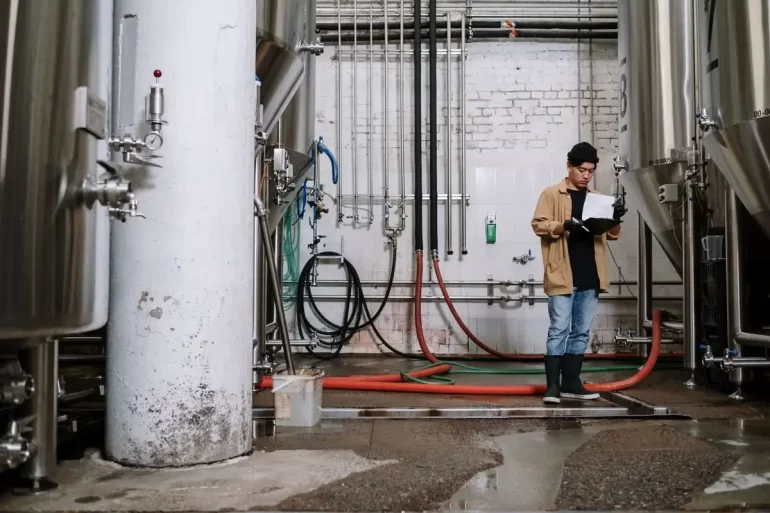
A storage tank failure rarely announces itself ahead of time. One week everything reads normal on a routine walkthrough, and the next there’s a leak, a corrosion spot that got missed, or a compliance letter from a regulator asking why an inspection record doesn’t match what’s sitting in the ground or on the yard. That gap between what gets checked and what needs checking is usually where the in-house versus third party tank inspection decision starts to matter for a business.
Most businesses working with fuels, chemicals, or any other type of regulated liquid will require the tank to be inspected at some point in time. The dilemma that arises is who would conduct this process, either a team within the company itself, or one hired from an external business just for this purpose. Both options would result in the tank being inspected; however, both would approach the task differently, and this is apparent in terms of expense, quality, and accountability.
What In-House Inspection Usually Looks Like
Companies running in house inspections typically train existing maintenance or safety staff to handle routine checks on a set schedule. This keeps costs down since there’s no outside contractor fee, and staff already know the facility layout, the tank history, and any quirks specific to that site. Familiarity has real value here. Someone who’s walked past the same tank every week for years notices small changes faster than someone seeing it for the first time.
The tradeoff shows up in depth and objectivity. In house teams juggle inspection duties alongside other responsibilities, which can mean checks get rushed during busy periods. There’s also a harder to quantify risk of a team growing used to minor issues over time, sometimes overlooking a slow developing problem simply because it’s become part of the normal background of the site.
Why Businesses Bring In a Tank Inspection Company
For a tank inspection company that has been brought in only to conduct this inspection, there is no past history with the site that may prejudice their decision making process, nor do they have any other commitments that could take away their concentration from the inspection being conducted. An external viewpoint always tends to identify issues that an internal viewpoint misses out on.
Specialized firms also bring equipment and certifications that most companies don’t maintain in house, things like ultrasonic thickness testing tools or staff certified specifically in API tank inspection standards. Building that expertise internally usually costs more than hiring it out unless a company owns a large enough number of tanks to justify the investment.
Side by Side: In-House vs Third-Party Inspection
| Factor | In-House Inspection | Third-Party Inspection |
| Cost | Lower ongoing cost, no contractor fees | Higher per visit, but no training or equipment overhead |
| Familiarity with site | High, staff know tank history | Lower initially, builds with repeat visits |
| Objectivity | Can be affected by familiarity over time | Generally more objective, no daily exposure |
| Regulatory weight | Sometimes questioned during audits | Often preferred or required for certain compliance checks |
| Equipment and certification | Requires ongoing investment to maintain | Already in place, no added cost per job |
Neither column wins outright for every business. A single small facility with one or two tanks often does fine leaning on trained staff for routine checks, while a company managing multiple large tanks across sites tends to lean harder on outside expertise, at least for the more technical assessments.
Signs Your Business Might Need a Tank Inspection Company
Checklist: Reasons to bring in outside tank inspection services
- A regulatory deadline requires certified third party documentation
- Internal staff lack certification for a specific inspection type, like ultrasonic testing
- A tank is approaching the end of its expected service life
- There’s been a near miss or minor incident that raises questions about current practices
- Insurance requirements specify third party sign off
- Internal inspections have become inconsistent due to staff turnover or workload
Checking off even one or two of these is often enough reason to bring in outside help, even if a company otherwise handles most inspections internally.
Combining Both Approaches
Plenty of businesses don’t pick one path exclusively. A common setup uses in house staff for frequent, routine visual checks, catching obvious issues early, paired with a tank inspection company handling the more technical, less frequent assessments required for compliance or insurance purposes. This split keeps day to day costs manageable while still satisfying the deeper inspection requirements that regulators and insurers often expect.
Facilities running this hybrid model tend to get the best of both. Staff familiarity catches everyday issues fast, and the periodic outside review provides the documented, objective assessment that carries weight if a tank’s history ever gets questioned.
What to Look for When Hiring Outside Help
Not every provider offering tank inspection services brings the same level of expertise. Certifications matter here, particularly ones tied to API standards for storage tanks, along with a track record of working with facilities similar in size and industry. Asking for references from comparable clients, and confirming what equipment a firm owns versus subcontracts out, helps separate a solid provider from one cutting corners on a quote.
Frequently Asked Question
What is the frequency of a storage tank inspection?
The frequency of storage tank inspection depends on the type of tank, what it stores, and relevant laws, although many above-ground tanks are inspected either annually or after periods of five to ten years.
Is it necessary by law for an outside company to inspect the storage tank?
In many businesses, yes, especially those dealing with hazardous chemicals, although this varies based on local regulations and tank classification.
Is there any possibility that in-house employees can be trained to do what the tank inspection company does?
If employees receive adequate certification, then it is possible. Internal staff can handle many routine checks well, though certain technical assessments still typically require specialized equipment and expertise..
Does hybrid inspection cost more than choosing one approach? Often it costs less overall, since frequent routine checks stay in house at lower cost while only the less frequent technical assessments require an outside fee.
What happens if a tank inspection reveals a problem? Findings typically get documented with recommended next steps, ranging from monitoring to immediate repair, depending on severity and applicable safety regulations.
Deciding between in house and third party tank inspection isn’t about picking a winner. It comes down to matching the approach to a business’s size, risk level, and what regulators or insurers require. Businesses that take the time to map out where internal staff can handle things well, and where outside expertise genuinely adds value, tend to end up with a tank inspection program that holds up both operationally and on paper.