

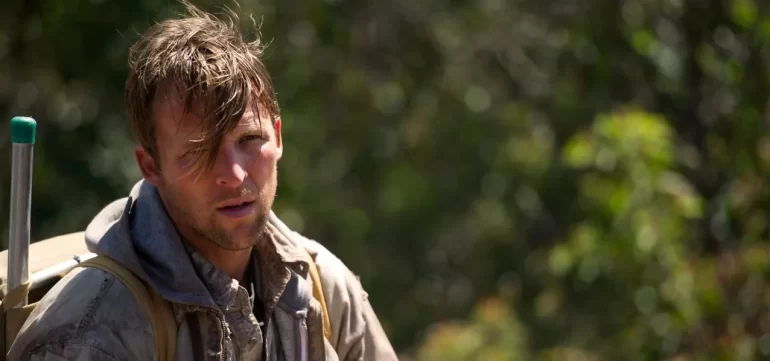
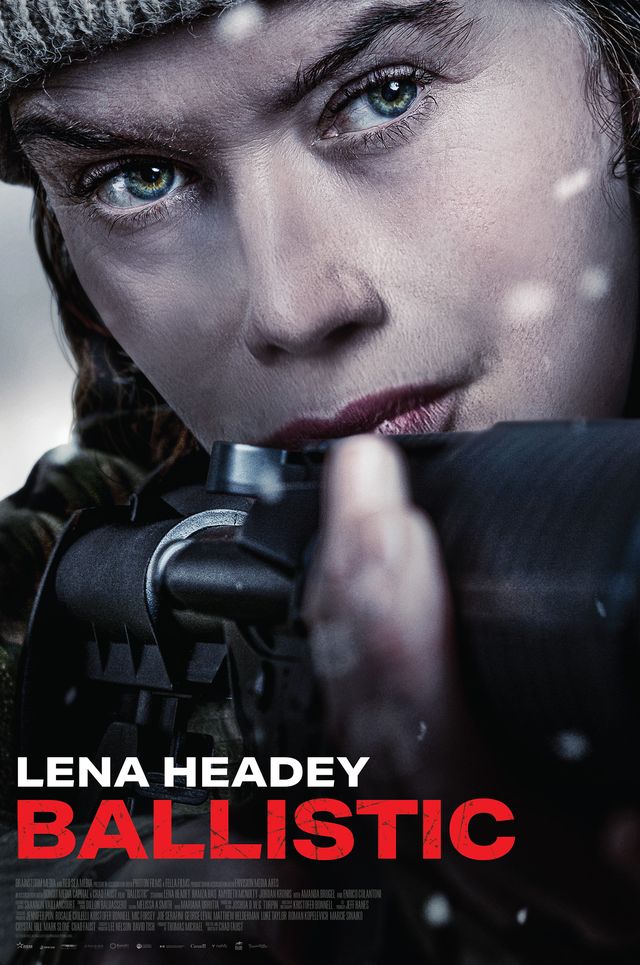
Chad Faust directs the new emotionally charged action thriller Ballistic starring Lena Headey.
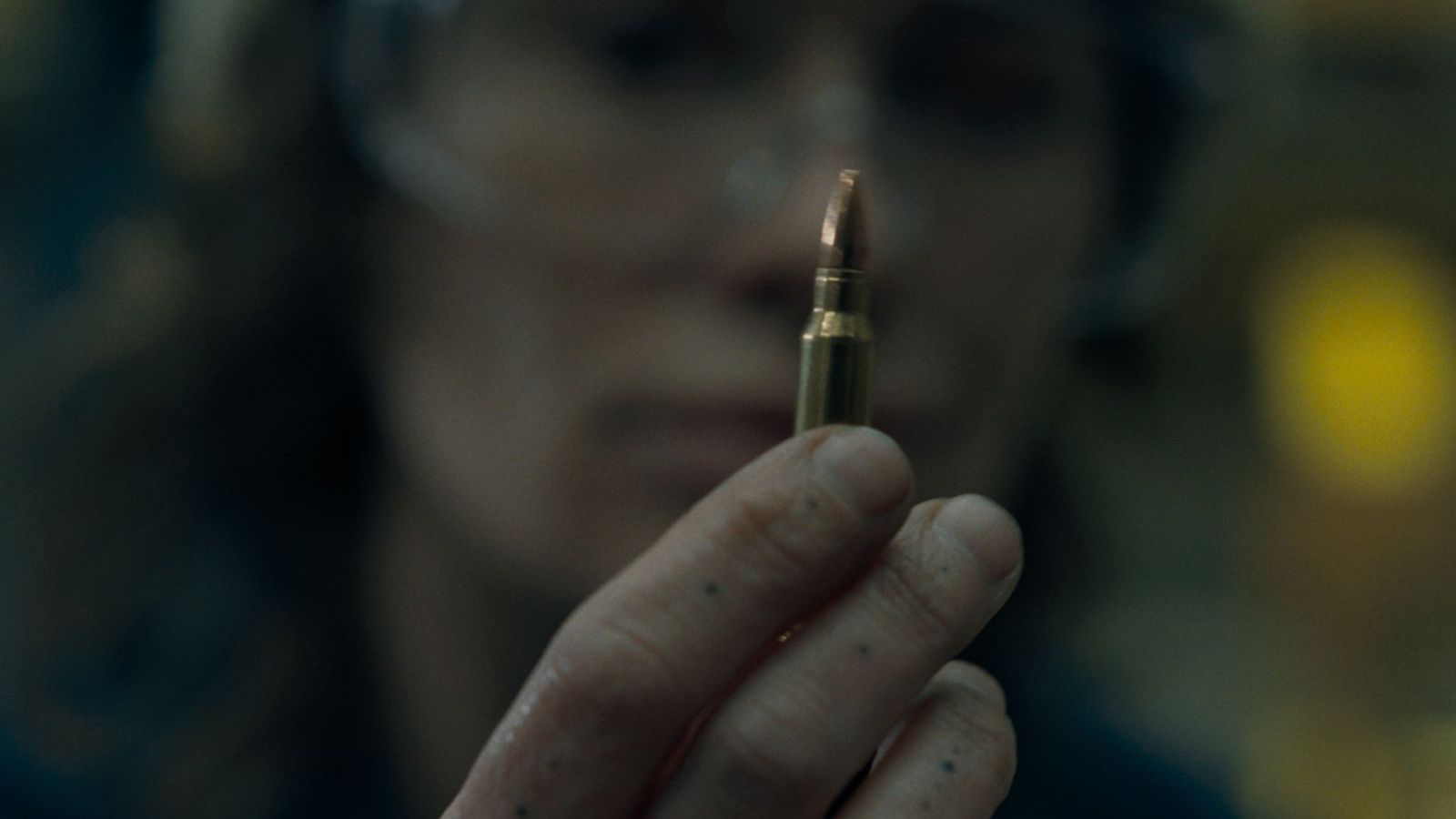
SYNOPSIS: When a soldier’s mother (Lena Headey) discovers the bullet that killed her son in Afghanistan was made at the factory where she works, she sets out on a path of revenge against those responsible.
Chad stopped by to chat with us about the movie.
Today we’re talking about your new film, Ballistic. I loved this movie, but where did the inspiration come from initially for it to come together? It feels like it’s based on real facts.
Yeah, that’s kind of where it started actually. I’d read this statistic, and of course nobody can measure such a thing, but the estimation was that 30% of the lead that comes back in American soldiers is American made. And the people that I’ve talked to about this, who had to speak off the record because it’s such a touchy thing, estimated it’s actually probably about double that. The statistic is played at the end of the film, but I stuck with the conservative estimation because that way at least, I’m quoting somebody. But I wanted to take that idea that felt so politically charged and actually tell it through a personal lens. What would it feel like for a mother, a parent who had sacrificed so much to raise this child that through this job, for the very thing that they produced to come back in their child’s body is the thing that took their life. And what do you do with that grand sense of injustice? It’s not just a societal injustice, it feels like a divine injustice.
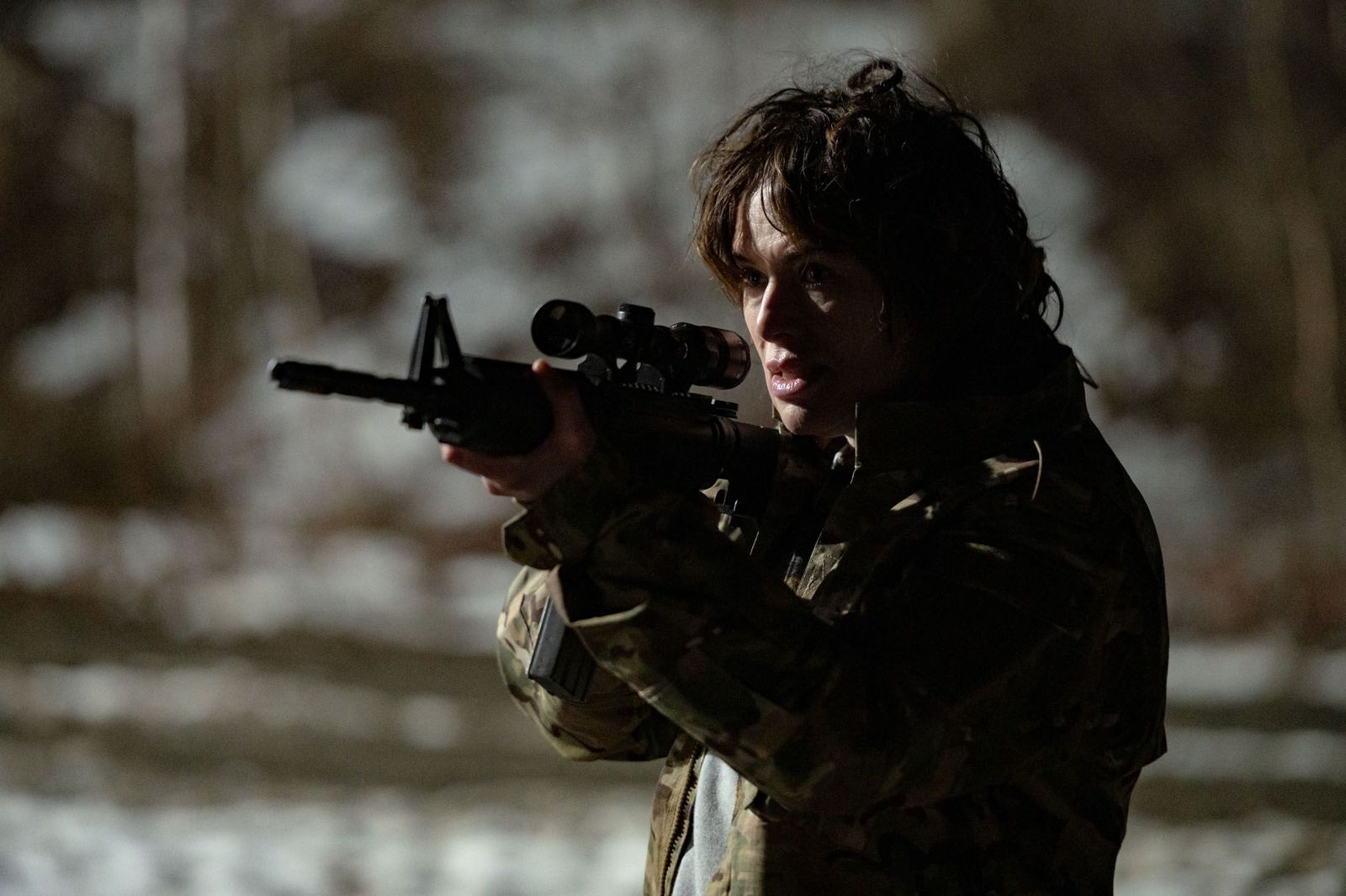
Now, Lena Headey’s performance I think is Oscar-worthy. I think she’s fantastic. I almost felt like I was intruding on her grief. So why was she so perfect for you, for the role?
I’m writing that down, intruding on her grief. I’ll tell her that later. That’s really cool. Yeah, so to be honest, that was a stumble upon in the sense that I had originally written this for a dad. My dad worked in a pulp mill to raise us and I was honoring; it was a single dad. I wanted to honour that relationship. And so that was the heart of the thing for me. And then I was trying to get at this certain actor and Lena knew him and I said, “hey, can you get this to so-and-so?” And she goes, “what’s the story?” And I told her and she goes, “oh, what if it’s a mom and it’s me?” And off we went. It just became suddenly unavoidable and now looking back, it’s like, gosh, first of all, it could never have not been a mom. Nuclear love and that volatility that goes with a mother’s love is just so perfect. And secondly, it could only have been her because she sits on a volcano as an actor. It’s so funny because she’s not like that in life. She’s playful and irreverent and does not take herself seriously in the most humble, beautiful way. And yet she cares deeply about the art. Then as soon as she clicks into a character, it’s just like, boom, boom, boom, boom, boom. You just feel like this seismic ripple through the universe. The fact that that was what got to come through, that this story got to go through her artistry was just such an honour.
How did you work with her and the rest of the cast just to prepare to get into the characters?
I think half the time it was just her and I, we never rehearsed. I was just talking with Lena about it, sometimes assuaging concerns. Sometimes there’s just things that come up, and just talking through it and getting excited about what this thing was about. And I knew emotionally she got it from the start. I wasn’t concerned about her accessibility to relating to the material or anything like that. It was more about like, I think most of it came down to the expression of the story and where the tone was going to fall. So much of that I just shaped around who she is and I knew how she was going to approach it, which is she’s got this classic, almost like 1970s film star artistry to her. It’s so, no frills, like right to the heart of the matter. That’s the kind of films that I love so much, and I wanted to just kind of bend that around who she was a bit almost like, I was thinking about like Meryl Streep and Deer Hunter. I was pictured like that was kind of who I picked, how I pictured Nance to be and that was sort of the same kind of world, you know? What if that woman had taken a job like this and this happened to her? And it just all kind of fit once I knew she was going to be the role.
It’s funny you mentioned 70s movies because when I was watching it, I thought this feels like those gritty 70s style thrillers. Are there any movies apart from Deer Hunter or filmmakers that were sort of a big inspiration for the film?
Yeah. I mean, there’s, that’s obviously a major one just because it also touches on similar themes. But so many of those films from that time, like Tender Mercies I think it’s such a beautiful film. That’s a little bit later, like 82 with Robert Duvall. Not a lot of people saw that movie, but it’s beautiful. Something like the Nicholson things, like Five Easy Pieces. Those films are the ones that speak to me the most. I think some people go into like the whole New Wave, Truffaut world and for me, it was always like that run and gun time that those guys were making. I mean, there’s just such a classic time.
I’m a big music score fan. I love the music to this from Dylan Baldessaro. I thought that we were just creating just someone who’s mental health is just deteriorating as it goes on. How did you work with him in creating the musical sound to create the atmosphere for the film?
Yeah, it’s the second time I worked with him. He also scored my first film, Girl. And it was all about subjectivity, like digging deep into the psychological world of that character and making that terror, that internal terror, external through the music. We were pushing and pushing and pushing and trying to find it. I mean, when we did the mix of this in the theatre, it was rumbling the entire building because the way we mixed it; if you get the chance to watch it on a big screen, the base is just like from the center of the earth. That was one of the things I kept saying to him is like, “I want to feel like an earthquake through her being through you”. Then the original songs that Joshua Stephen Hewitt performed and produced, that was actually those are three songs that I wrote for the film because wanted we couldn’t afford music and I wanted to get really specific lyrics. I was originally going to try to get these Stephen Wilson, Jr. songs because I’m just obsessed with his music but we didn’t have the money for it. I wanted something that really spoke to that part of the country and this kind of a poetic working-class experience and so I had to end up writing the songs myself. Then my wonderful friend Joshua Stephen Hewitt just made some beautiful songs out of them.
Do you find having acted in many projects over the years that gives you a better understanding of the acting process as a director?
Oh, yeah, I would be terrified stepping on set as a director if I didn’t know how people work. People who come from the VFX world, I’d be so scared. I mean, you can’t just go to like three acting classes and I know how to talk. It’s a whole world and for me, I think a lot of directors are scared of actors. For me, it’s the place that I’m most comfortable. It’s the place I can rest. I think it’s everything else that I’ve had a steep learning curve on. But especially when you’re working with somebody as generous and integrative as Lena, you just get to kind of go on the ride with them. And often half the time, I’m modeling my design of the film off of her, even down to the shots that I’m doing. It’s all a reflection of how she’s approaching the character and the psychology. I know that she’s applying and through those discussions we’ve had, that’s usually how I ended up deciding to shoot the thing. I basically direct as an actor would approach the movie and form the whole thing around the psychology and down to the music, too. Like I said, that’s a very subjective way to approach the music as well.
Is improvisation an important part of your creative process as well?
You know, I have a mixed relationship to improvisation. I think if there’s a part of me where I spend a lot of time finding the rhythm of a dialogue when I’m writing it. So, part of me wants to hear the music of what I wrote, but I know that that doesn’t help create this kind of very authentic experience. So, usually what I do is I allow you to tell the actors, like, “look, you make this your own”. I want to get this across and this and this and this across, but make it your own. But I usually find by allowing the freedom to improvise, people usually stick closer to the script. Whereas if you tell them, it’s got a word for it, they just start riffing because it’s like this rebellious nature within the actor. Usually what happens if you tell them they can go wherever they want, they’ll probably stick closer to the script and it’ll be way better because of the freedom and they have an improvisational spirit of this. They explore your thing. So, it’s something I have a relationship to and usually something I embrace with the sort of hope of keeping the musicality that I discover alive.
How would you like the film to resonate with audiences?
Yeah, it’s almost two parts. Like, one is the emotional aspect of it. I think any anybody who’s a parent who’s watching it is going to just; it’s sort of an unavoidable thing to kind of relate to what happens if you lost your child and you felt responsible for it. But more so, I think there’s a societal and intellectual hope that I have for this thing, which is that we’re talking about a topic that is so divisive and so politicized and so charged that we can’t even really get anywhere on it. And by that, I mean our relationship to guns and bullets. And again, I’m not taking a political position on it, but I’m hoping by the very nature that we had people from all across the political spectrum involved with this film and believing in it wholeheartedly gives me hope that it could actually be a unifying conversation starter in a topic that is just usually people of two extremes screaming at each other and us getting nowhere in protecting our children. I think my daughter is one year away from starting kindergarten and every day she goes to preschool now. But even when I drop her at preschool, there’s just this fear of like, what could happen, you know? And it’s beyond comprehension. So, my hope is that the emotional aspects of this film would allow us to have a conversation that could lead to us protecting our kids a little bit better.
Thank you so much for taking the time to chat and congratulations on the movie.
Thank you. I appreciate it, man. Thanks for the support of the film.