

Hi Geoff, thanks for taking the time to talk with us. I can’t wait to see Good Luck, Have Fun, Don’t Die and especially your score.
Of course, thanks for reaching out.
How closely did you work with director Gore Verbinski in creating this score, and what was his main piece of direction?
Gore and I spoke almost every day for months while the score was being written. Music is one part of filmmaking that Gore loves deeply. He’s a musician himself, and you probably know, but a lot of his early career was spent shooting videos for artists. He made some for Bad Religion, one for Crystal Method and plenty of others.When Gore called me about the film it was an easy thing to say yes to. One thing about working with him is you inevitably come out the other side having learned something about filmmaking and storytelling. That’s exactly what I’m looking for these days when I score something.The first bit of direction I got from him wasn’t what I expected. He said “this is the first time I’ve made a film where I have no idea how to start with the music.” The laboratory doors were open, in other words! Pretty quickly, we settled on an ethos which you could sum up as “if we don’t do it on this film, we may never get the chance again.” So there’s a lot of risk taking with the score and I hope people find it bold but relatable. It’s a real challenge to create a cohesive score for a film that takes so many quick turns. Stylistically, we’re all over the place and that was embraced from the start.
Having worked with him before, do you guys have a shorthand in terms of communicating where you just understand how each other works?
Well, we do to an extent, but Gore and I approach every new thing with a desire to not repeat anything we’ve done before, so in a way we avoided any shorthand in search of novelty. You’re right to point out our history. I met Gore on the first Pirates of the Caribbean movie over twenty years ago! We marveled about that just the other night at Norm’s Diner in Hollywood.We do understand how each other works, though. We both appreciate the details and have an appetite for making incremental improvements over and over during the process. There’s not much “ok, that’s done” going on. It’s more about applying some new discovery in scenes we’ve already worked on. We went back to the music in Norm’s for Sam’s opening monologue over and over again to get it right.I think it takes a certain kind of composer to enjoy that process. I spent over 100 days on the train chase finale in The Lone Ranger because we were both enjoying putting it together. What can I say? I’m a glutton for punishment!Finally, once the score was written and I was recording the orchestra, I remember Gore saying to me, “I love just sitting here, watching you work.” He’s seen me do that before but maybe not in this capacity. Composers live in their secret world and build up all these skills over time that aren’t really visible until you’re in a room with 64 musicians. It’s a bit like imagining what it’s like to direct a film if you’ve never been on a set before. Magic is happening on set, and on the orchestra recording stage.
I hear that in the score there is a choir singing intentionally absurd Latin; can you talk about that idea and where that came from?
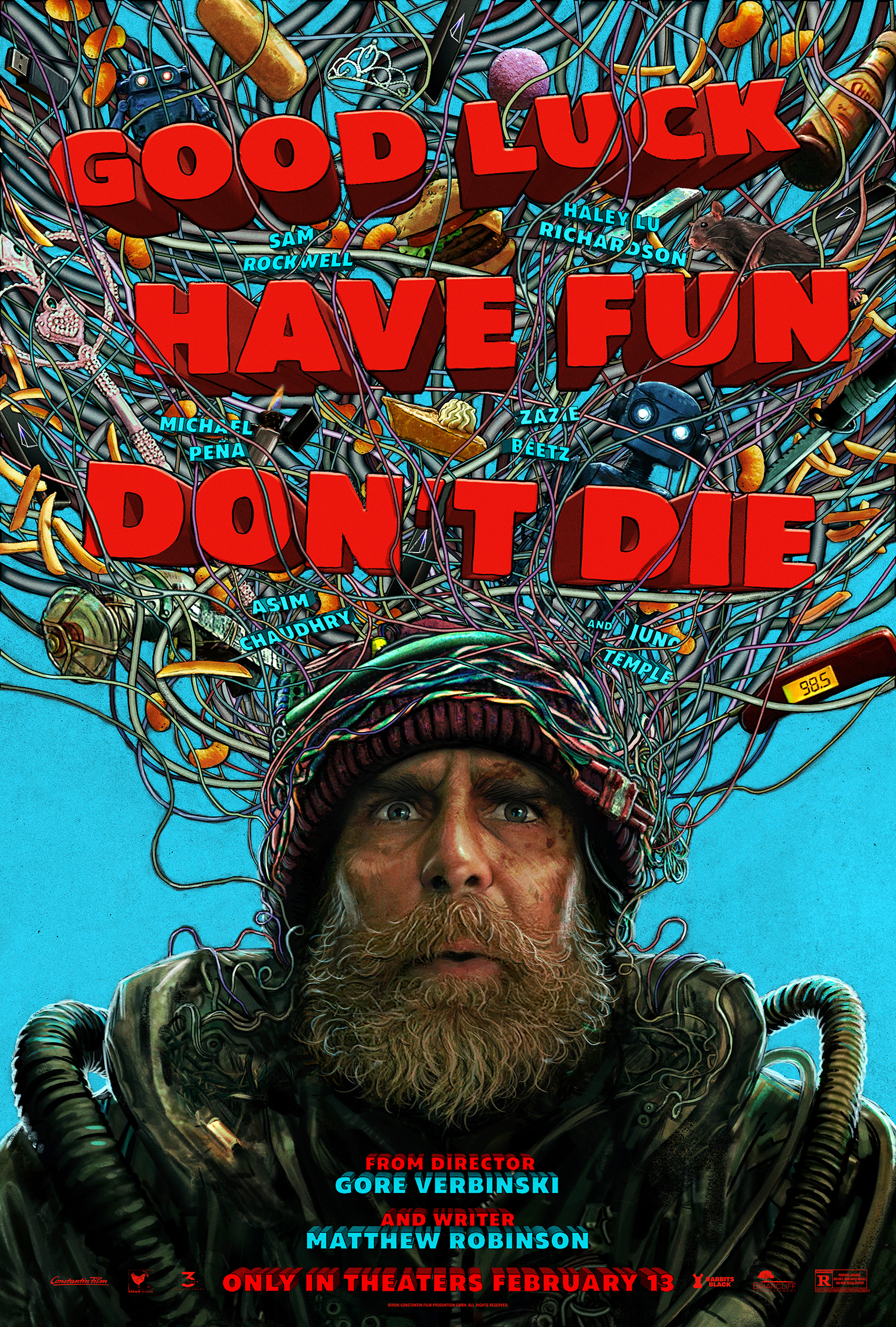
Yes, they’re singing “Sanctus, Kitty, Vitae, Kitty-cat” but I don’t want to spoil the movie for anyone by saying why. I’ll just say I love the juxtaposition of two very serious Latin words which mean “sacred” and “of life” with “kitty cat”. It’s the combination of ancient, reverent language and the absurd which intrigues me. It embodies the film in a way. We are dead serious about certain things but not afraid to remind the audience that the world is absurd, too, and it’s ok to enjoy the ride and have fun while the whole thing is crashing down.
How did you choose the instruments for this specific tale?
That’s a tough one to answer! The short version is I tried everything I could think of and anything that stuck got to stay in, but that’s simplistic. We were looking for choices that weren’t ordinary, so pairing an electric guitar, marimba, upright bass and coconut shells together rose up from that. But it’s not arbitrary. It never is. It had to make sense at all times, even if you tilt your head when you hear it and go “interesting choice…”Gore and I have a real love for handmade sounds, so that informs it too. I played a cello in this score and shoved it through a pitch machine to take it down into the bass range. I can’t play cello, by the way, but that doesn’t stop me. I didn’t want it to sound professional, I wanted it to sound like a struggling human which is exactly what I am if you ask me to play a cello! You’ll hear quite a lot of lo-fi sounds in the score, the synths and the guitars which Gore and I played ourselves, juxtaposed against a professional orchestra called F.A.M.E.s in Macedonia, and the greatest rock drummer I know, Ilan Rubin. He played this score and joined the Foo Fighters about a week later.And all of the cello solos which sound professional were played by Mariko Muranaka. She’s fierce. She played acoustic and electric. Tim Lefebvre played the upright bass and he’s my go to for this cause he plays upright like a punk. Kristin Naigus played the woodwind solos which are just extraordinary, she does a lot of the heavy lifting emotionally on the score toward the end of the film. We had a little choir led by Briana Gibbs and she did these vocal solos way up in the stratosphere in a couple spots that Gore and I didn’t even think were possible. So not just the instruments were chosen, the musicians themselves were cast much the same way our gang of Norm’s patrons were cast by Gore.
What is the primary emotion you wanted the audience to feel, and how did you use the score to achieve that?
Well, I don’t know if bonkers is an emotion, but if it is, that’s what I want the audience to feel. Maybe I just want the audience to know that this is an optimistic film at a time where pessimism reigns supreme. This really is a film that aims to be a fun ride through our absurd reality. There’s a certain amount of emotional whiplash built into the story so it’s hard to have a primary emotion, but no matter how bleak we feel in our bizarre times, there’s always a little light shining through the cracks.
Were there any specific characters or themes that required unique musical signatures or leitmotifs?
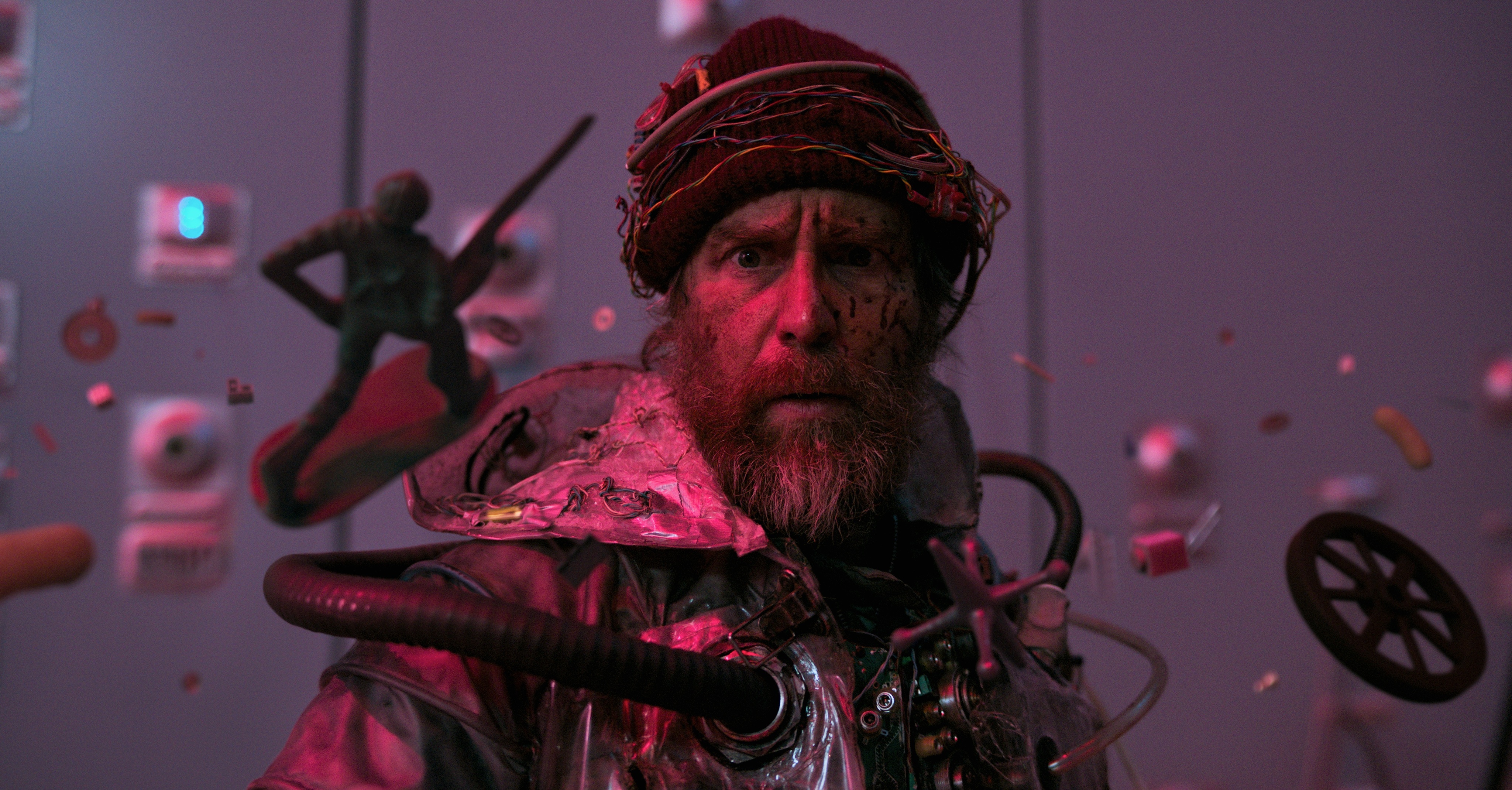
Sam Rockwell plays the Man From the Future and he has one. It’s angular, unpredictable, and makeshift so you’ll hear our guitars, buzzy and blemished rather than pure. Ingrid has her own motif which engages both her fairy tale life and her unusual allergy which prevents her from fully enjoying the modern world. The AI itself has a third motif, and it’s mainly synthetic but not quite the way you imagine. It glitches out, it’s imperfect, it’s vaguely threatening but partly because there’s mystique to it. I don’t want to say too much, but I did want to get at the uncanny valley effect with the score for the AI, cause that’s what that technology invokes in me.
The film is about AI, was it important for you to do everything for real in creating the unique sound for this film?
Yes. No AI was used in the score. Crucial. That is Everything to me.
Will there be a physical release of the score? I still have a CD and vinyl player…
Isn’t this the perfect score to release on vinyl? Yes, we are going to do a vinyl pressing. Epitaph Records is going to release it, which is a dream come true for me. My SoCal punk heart swells. I believe it will be ready in June and Epitaph have pre-orders now available now. (https://epitaph.store/collections/vinyl?srsltid=AfmBOopgqQUEd8G1yBTX4fp8Z6Y8cDjrR3U1tlvQBaKDfwT6xN3zXu3S)
Thanks so much and I can’t wait to see the film!
I can’t wait for you to see it and join the revolution! And thank you, too for this.