



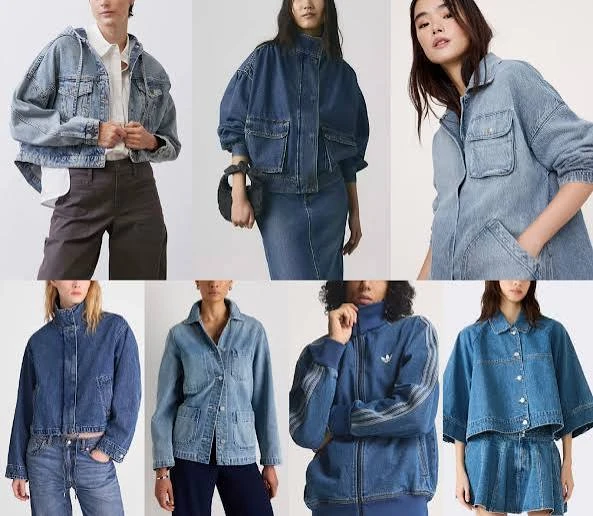
A complete, SEO-friendly styling guide to the lightweight jean jacket — the wardrobe piece that works in every season.
A lightweight jean jacket is one of the few pieces that earns a permanent spot in a wardrobe. It is thin enough to wear in warm weather, sturdy enough to layer over a t-shirt on a breezy evening, and casual enough to dress up or down depending on the occasion.
Unlike a traditional denim jacket, which is often made from heavier 12–14 oz denim, a lightweight version uses thinner fabric — usually blended with cotton, tencel, or a touch of elastane — so it moves with the body instead of feeling stiff. This guide walks through why the style works, how to choose the right fabric, and the easiest ways to style it for 2026.
Article At a Glance
|
Aspect |
Details |
|---|---|
|
What it is |
A denim jacket made from thin, breathable denim (usually 4–8 oz), cut for layering rather than warmth |
|
Best seasons |
Spring, summer evenings, and early autumn |
|
Popular styles |
Cropped, oversized, boyfriend fit, sleeveless |
|
Price range |
$25–$120 depending on brand and wash |
|
Why it trends |
Versatile, breathable, and pairs with almost any outfit |
Why the Lightweight Jean Jacket Keeps Trending
Fashion cycles come and go, but the jean jacket has stayed relevant for decades because it solves a practical problem: most people need a light layer far more often than they need a heavy coat. A lightweight version takes that everyday utility and makes it wearable almost year-round, since the thinner fabric doesn’t trap heat the way a traditional denim jacket does.
Part of the appeal is also how easily it moves between dressed-up and dressed-down settings. The same jacket that looks relaxed over a t-shirt and jeans can be layered over a dress with heels for a slightly more polished evening look, which is why it shows up so often in both casual and semi-formal outfit inspiration. It is also available in enough fits — cropped, oversized, tailored, and sleeveless — that almost any body type can find a version that suits them.
Choosing the Right Denim Weight
Denim weight is measured in ounces per square yard, and it is the single biggest factor in how a jacket feels and behaves. A jacket labeled ‘lightweight’ should generally fall under 8 oz — anything heavier starts to behave like a classic denim jacket rather than a warm-weather layer. The table below breaks down how different weights compare and where each one performs best.
|
Denim Weight |
Ounces (oz) |
Best For |
|---|---|---|
|
Ultra-lightweight |
4–6 oz |
Hot summer days, layering over dresses |
|
Lightweight |
6–8 oz |
Spring, early autumn, everyday wear |
|
Mid-weight (for comparison) |
9–12 oz |
Cooler weather, structured looks |
|
Heavyweight (for comparison) |
13 oz+ |
Winter, workwear-style jackets |
How to Style a Lightweight Jean Jacket by Season
Spring
In spring, the jacket works well layered over a floral midi dress with white sneakers, or paired with high-waisted trousers and a tucked-in blouse for a slightly more put-together look. On cooler mornings, adding a lightweight scarf keeps the outfit comfortable without needing a heavier coat.
Summer
During summer, it is best worn open over a sundress or a sleeveless top rather than buttoned up, since the goal is breathability rather than warmth. A cropped or sleeveless version handles hot evenings especially well, and pairing it with denim shorts in a contrasting wash keeps the outfit from looking too matchy.
Early Autumn
As temperatures start to drop, the jacket layers naturally over a thin knit sweater, paired with ankle boots and straight-leg jeans. A scarf or beanie can round out the look for the in-between weeks when it’s too warm for a coat but too cool for the jacket alone.
Fits That Flatter Different Body Types
The right fit changes how a lightweight jean jacket looks far more than the wash or the color does, which is why it’s worth spending a little extra time choosing the silhouette rather than the shade. Petite frames tend to look best in a cropped length that hits above the hip, since anything longer can overwhelm a shorter torso. Curvy frames are usually flattered by a fitted waist paired with slightly structured shoulders, which creates balance without feeling restrictive.
Taller frames generally have more room to experiment, and an oversized or boyfriend fit tends to look proportionate rather than boxy on a longer frame. Athletic builds, on the other hand, often benefit from a tailored cut with a defined waist, since it adds curve to an otherwise straighter silhouette. None of these are strict rules — they’re simply a useful starting point when trying on options in a fitting room or comparing product photos online.
Caring for Lightweight Denim
Because lightweight denim is thinner, it needs slightly gentler care than a heavyweight jacket to keep its shape and color. Washing it inside out in cold water helps protect the color, and air drying it flat or on a hanger is generally safer than putting it through a dryer, which can shrink or warp thinner fabric blends over time.
For everyday upkeep, spot-cleaning small stains is usually enough rather than washing the whole jacket after every wear, since frequent washing is one of the fastest ways to fade lightweight denim. Storing it on a hanger instead of folded in a drawer also helps it avoid permanent crease lines that can be difficult to remove once they set in.
Accessorizing a Lightweight Jean Jacket
Because the jacket itself reads as casual and neutral, it leaves plenty of room to experiment with accessories without the outfit feeling overloaded. Thin layered gold necklaces add a slightly elevated touch to an otherwise everyday look, while a structured tote or crossbody bag helps balance a more relaxed, oversized silhouette. For evening plans, swapping in statement earrings is often enough to shift the whole outfit from casual to dressed-up.
A belt worn over the jacket can also define the waist on looser, oversized fits, giving the outfit more shape without changing the jacket itself. Keeping sunglasses simple and classic tends to work better than anything too bold, since the goal with most jacket-based outfits is to let one or two accessories stand out rather than competing with the denim for attention.
Mixing Denim on Denim Without Looking Matchy
One of the most common questions around lightweight jean jackets is whether they can be worn with jeans without looking overdone. The short answer is yes, and the trick is contrast rather than avoidance. Pairing a light-wash jacket with dark-wash jeans, or the reverse, creates enough visual separation that the outfit doesn’t read as a single matching set.
Mixing textures helps too — a smooth jacket paired with slightly distressed jeans, for example, avoids the flat, uniform look that makes denim-on-denim feel dated. Breaking up the two pieces with a plain colored top underneath, or anchoring the outfit with a non-denim accessory like a leather belt or canvas bag, also keeps the combination feeling intentional rather than accidental.
Frequently Asked Questions (FAQs)
Q: What makes a jean jacket ‘lightweight’ compared to a regular one?
A: It comes down to fabric weight. Lightweight jean jackets use denim under 8 oz, often blended with cotton or tencel, making them thinner, softer, and more breathable than the standard 12–14 oz denim jacket.
Q: Can a lightweight jean jacket be worn in winter?
A: It works best as a layering piece rather than a standalone winter coat. In colder months, wear it over a sweater or hoodie, or save it for indoor wear and mild winter days.
Q: Is a lightweight jean jacket suitable for formal occasions?
A: It leans casual by nature, but pairing a well-fitted style with tailored trousers, heels, and minimal jewelry can push it toward smart-casual for events like brunches or daytime celebrations.
Q: What color jean jacket is the most versatile?
A: A medium or light blue wash is the most versatile because it pairs with almost every color palette. White and black are close seconds for a more modern, minimal look.
Q: How do I keep a lightweight jean jacket from fading too quickly?
A: Wash it less often, use cold water, turn it inside out before washing, and skip the dryer. Sun exposure while drying also speeds up fading, so air-dry it in shade.
Final Thoughts
The lightweight jean jacket earns its place in a modern wardrobe by being effortlessly adaptable — light enough for summer evenings, sturdy enough for spring mornings, and simple enough to match almost anything already in the closet. Choosing the right weight, fit, and wash makes it a piece that works for years rather than a single season.