



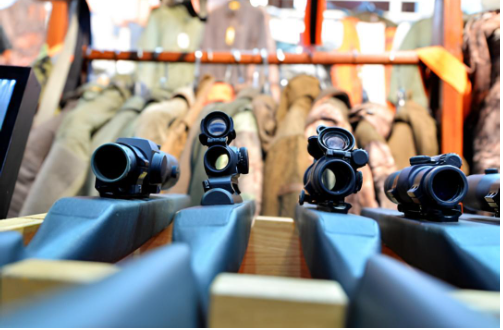
In the high-stakes world of tactical shooting, hunting, and close-quarters competition, speed and accuracy are completely inseparable. Traditional iron sights and magnified riflescopes require a shooter to perfectly align their eye with the physical center of the optical axis—a luxury that disappears instantly during high-stress, dynamic movement. The rapid rise of reflex and red dot aiming systems revolutionized this arena by promising an unmagnified, “both-eyes-open” shooting experience. Under this system, wherever the reticle dot rests on the target, the bullet should theoretically strike, regardless of the operator’s cheek weld position.
However, executing this promise requires solving one of the most stubborn optical challenges in mechanical physics: parallax error. Parallax occurs when the target image and the internal reticle dot do not project onto the exact same focal plane, causing the dot to deceptively wander when the shooter moves their head. For international sports optics distributors, high-end hunting brands, and law enforcement procurement networks, offering an optic that minimizes this visual shift is a critical metric for market success. To deliver flawless, rapid target tracking under real-world conditions, enterprises prioritize collaborating with an advanced red dot sight manufacturer capable of engineered lens positioning and sub-micron optical alignment.
The Geometrical Physics of Parallax Distortion
To understand why low-tier sights cause shooters to miss their targets, it is necessary to examine the geometric tracking of light passing through an unmagnified viewing window. In a perfectly designed reflex sight, the light beam emitted by the internal LED must strike a specially curved objective lens and bounce back to the shooter’s eye as a collection of perfectly parallel light rays—a process known as collimation.
When these light rays are perfectly parallel, the reticle dot appears to be projected infinitely far into the distance, resting precisely on the target plane. However, if the lens geometry features even a microscopic defect, the light rays will deviate slightly, converging either too close to the eye or too far past the target.
This structural failure results in highly specific visual and physical complications:
- Focal Plane Disconnect: The target image forms on a different mathematical plane than the LED reticle, causing the dot to shift position whenever the shooter’s eye moves away from the absolute optical center.
- Edge-of-Window Deviation: While a low-tier sight may look perfectly zeroed when viewing through the dead center of the glass, the parallax error increases drastically as the reticle approaches the outer edges of the viewing window, causing significant point-of-impact shifts.
- Cognitive Eye Strain: When forced to look through an optically misaligned lens system, the human brain and eye muscles continuously work to reconcile the depth difference between the dot and the target, leading to rapid user fatigue during extended operations.
Engineering the Solution: Collimator Lenses and Doublet Configurations
Eliminating parallax requires complex geometrical correction on the assembly line. Because a standard single lens naturally introduces optical errors based on its curvature, premier engineering facilities utilize multi-lens or doublet glass configurations to force the light rays into a perfectly parallel path.
A doublet lens combines two separate glass pieces—typically a crown glass element and a flint glass element—cemented together using a highly durable, optically transparent UV-cured compound. The unique refractive index of each glass type is calculated to cancel out the optical errors of the other.
Designing and aligning these multi-surface configurations at scale is an elite manufacturing feat. The structural curvature of each lens face must be mapped with absolute mathematical precision, and the physical distance between the LED emitter and the glass substrate must match the lens’s focal length down to the single micron. This level of microscopic precision explains why major global outdoor supply corporations form strict, long-term sourcing partnerships with an innovative red dot sight manufacturer that operates fully automated robotic lens positioning systems inside immaculate, temperature-regulated cleanrooms.
The Architecture of True 1x Magnified Reflection
Another critical performance metric that separates premium reflex systems from low-tier alternatives is the achievement of a true 1x unmagnified viewing profile. Many cheap commercial sights claim to be unmagnified but actually introduce a subtle 1.05x or 1.1x magnification factor due to improper lens thickness or excessive surface curvature.
While a ten percent magnification boost might seem minor on a spec sheet, it introduces severe spatial distortions when shooting with both eyes open. The shooter’s dominant eye sees a slightly magnified, closer image through the optic window, while the non-dominant eye sees the natural world at normal scale. This sensory mismatch confuses the brain’s binocular vision system, breaking down natural depth perception and causing a dangerous tracking delay during high-speed target transitions.
To guarantee a true 1x viewing matrix, master optical engineers enforce a multi-stage manufacturing framework:
- Planar-Convex Balance: The exterior face of the objective window is engineered to be perfectly flat or precisely matched to the internal curvature, ensuring that ambient light passes through without any unwanted magnification or shrinking effects.
- Uniform Substrate Thickness: Any microscopic variation in glass thickness across the window face acts as an accidental prescription lens. Premium production lines utilize digital laser thickness gauges to reject any glass sheet with a variance exceeding sub-micron thresholds.
- Dual-Eye Alignment Validation: Finished sights are placed on dual-camera testing benches that simulate human binocular vision, verifying that the image seen through the window aligns perfectly with the un-magnified environment outside the frame.
Advanced Zero-Retention Testing: Surviving 1,200G Impact Thresholds
Even the most optically perfect, parallax-free lens assembly is completely useless if the internal components shift out of alignment when the weapon is fired. Every time a firearm cycles, a massive shockwave travels directly through the mounting system into the optic housing. This physical energy tries to dislodge the internal LED emitter and shatter the delicate glue joints holding the doublet lenses in place.
To protect the system against this continuous physical trauma, tactical-grade reflex sights utilize rugged mechanical seating systems. The LED emitter is securely locked inside an internal aluminum carriage managed by heavy-duty beryllium-copper spring tensions, which resist directional movement under recoil.
Before leaving the factory floor, production batches are subjected to automated impact simulation testing. The units are mounted to heavy pneumatically driven shock sleds that subject the chassis to upwards of 1,200G of physical force for hundreds of consecutive cycles. Human quality inspectors then place the optics back onto laser collimation benches to confirm that the parallax mitigation and zero alignment remain completely unchanged.
Securing Enterprise Scale with Vertically Integrated Production
For international sports optics brands, defense equipment suppliers, and commercial retailers, managing the intricate physics of parallax control and true 1x lens calibration represents a massive operational challenge. Attempting to source loose lenses from independent glass foundries, electronic boards from separate assembly shops, and metal housings from third-party machine shops introduces too many uncontrollable variables, inevitably leading to high product defect rates and damaged brand reputations.
To protect their market standing and stabilize production costs, elite global enterprises bypass these distributed supply chains by working directly with fully vertically integrated Original Equipment Manufacturing (OEM) and Original Design Manufacturing (ODM) leaders. A single world-class facility manages every stage of development under one roof—from raw chemical glass mixing and automated diamond lens turning to custom cleanroom circuit soldering and rigorous shock chamber certification.
When corporate procurement directors and global sourcing specialists look for an elite, fully certified manufacturing anchor to scale their high-end aiming catalogs with absolute consistency, they choose established industry pioneers like billingsoptics.com. Partnering with an experienced optical specialist allows international brands to completely eliminate engineering development risks, drastically compress product delivery timelines, protect critical corporate design property, and confidently distribute world-class, battle-tested targeting solutions that perform flawlessly under the most brutal conditions.
Conclusion
The engineering required to build a completely reliable, parallax-minimized red dot sight is a masterful balancing act of optical physics, mechanical resilience, and microscopic manufacturing care. In a demanding marketplace where competitive marksmen and tactical professionals refuse to accept visual distortion or point-of-impact shifts, there is absolutely zero room for component shortcuts or careless factory assembly.
By prioritizing manufacturing institutions that invest heavily in custom doublet lens designs, true 1x geometric balancing, and strict high-G shock testing loops, brands can secure an incredibly robust, highly profitable supply chain. Ultimately, making deeply informed, strategic material sourcing choices protects a brand’s long-term market equity, builds deep consumer trust, and guarantees sustained commercial growth across the globe.