



Introduction
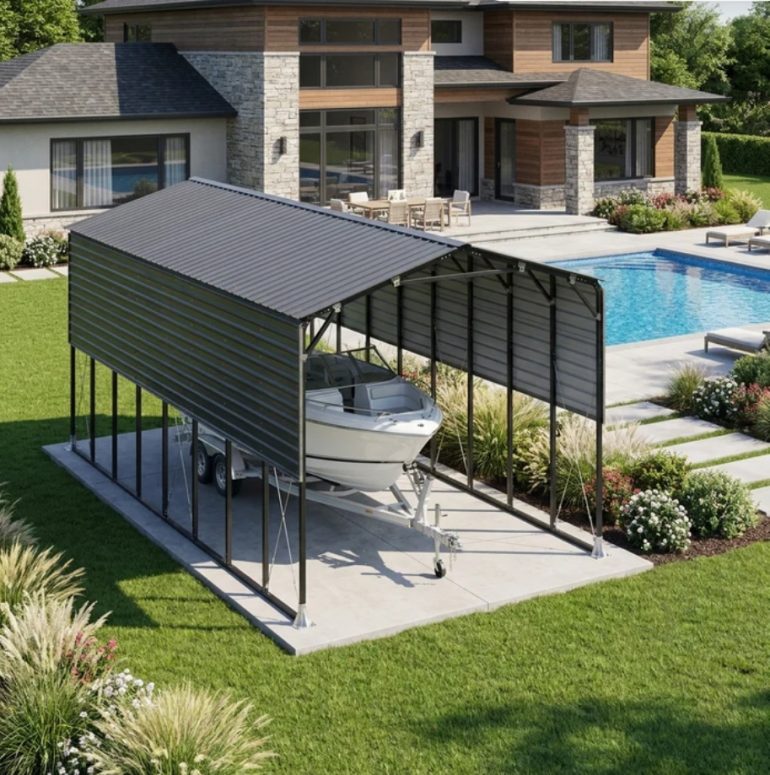
Across New Zealand coastal communities and rural properties, boats, jet skis, and recreational vehicles require protection from sun, salt air, and rain. Outdoor storage accelerates corrosion on marine equipment and fades paint on RVs. A 3.7 x 9 m metal shed boat shelter provides dedicated covered space for watercraft, trailers, and tall vehicles. New Zealand boat owners, farmers, and equipment managers use these shelters to preserve asset value and reduce maintenance costs.
Design Principles
Common applications include:
- Boat and personal watercraft storage
- Recreational vehicle and caravan protection
- Farm equipment and tractor shelter
- Trailer and utility vehicle housing
- Outdoor workshop and maintenance bay
A Marlborough boat owner used a metal shelter to store a 7 metre fishing boat during off-season, preventing salt corrosion on the outboard motor and trailer components.
Construction and Weather Resistance
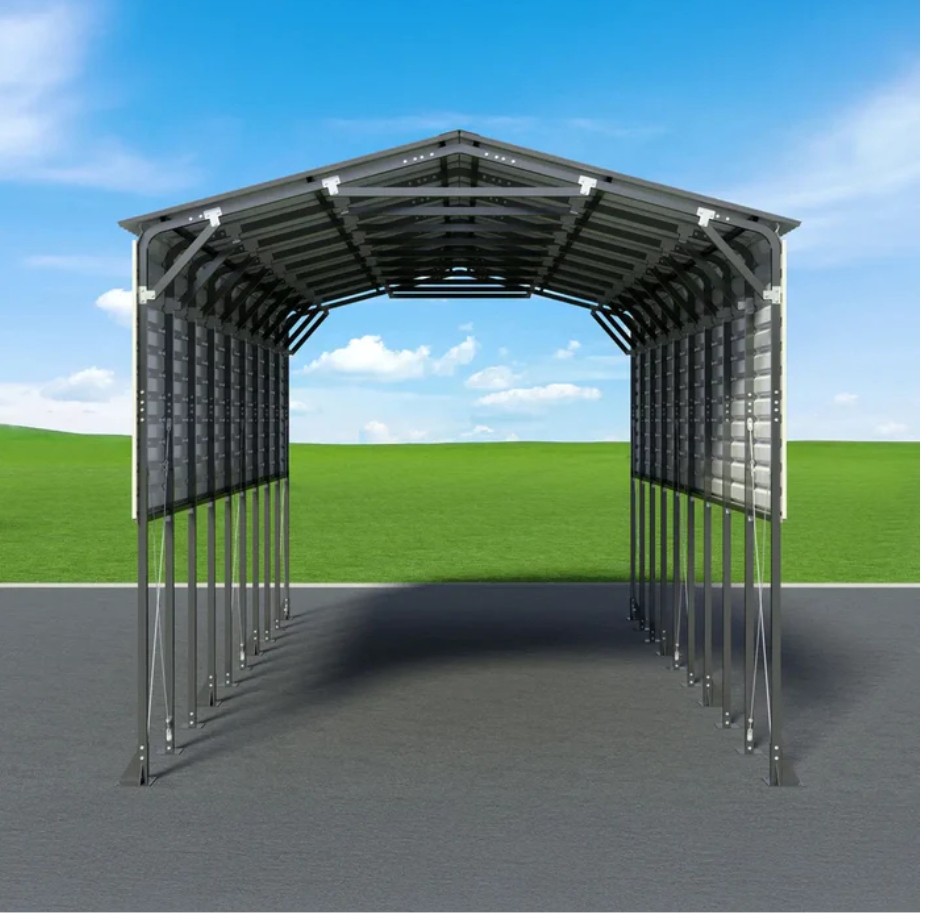
New Zealand coastal environments present unique challenges for outdoor storage. Salt-laden air accelerates metal corrosion. The galvanised steel frame and polyester-coated metal cover sheets resist rust. The 15 gauge steel frame provides structural strength for wind loads common in exposed coastal areas.
Key construction features include:
- 15 gauge galvanised steel frame for corrosion resistance
- 27 gauge metal cover sheets with polyester coating
- 3.75 metre peak height for tall watercraft
- 3.35 metre inner clearance for vehicle access
- Ten truss groups at 1 metre spacing for load distribution
Protection from UV and Moisture
Ultraviolet radiation degrades boat upholstery, vinyl wraps, and rubber seals. Rain and condensation promote mildew growth inside stored boats. The metal roof blocks UV completely, unlike fabric covers that degrade over time. The enclosed design keeps rain off while allowing ventilation through open sidewalls.
Ventilation is important for boat storage. The open sidewall design allows air circulation, reducing moisture buildup that causes mildew. For equipment that requires complete enclosure, side panels can be added. A Bay of Plenty boat owner reported that after two years of metal shed storage, the boat’s gelcoat showed no fading compared to previously stored boats under fabric covers.
Access and Workflow
The 3.35 metre inner clearance allows a boat on a trailer to be backed in without removing the tow vehicle. The 1.55 metre side openings provide access for cleaning, maintenance, and loading gear without moving the boat. The 3.7 metre width accommodates most trailerable boats with room to walk alongside.
For recreational vehicle owners, the shelter serves as covered parking between trips. RVs stored outdoors suffer from sun damage to roof seals and fading on decals. A covered shelter extends the life of these expensive components.
Installation Requirements
The shelter requires a level concrete slab or solid foundation. Eight reinforced footplates anchor the structure. A forklift is required to unload the shipping crate, which weighs 860 kilograms. Assembly requires multiple personnel for frame erection and panel installation.
Proper site preparation is essential. The foundation must be level to prevent frame twisting. Drainage around the foundation prevents water from pooling inside. In coastal areas with high winds, additional anchoring may be beneficial.
Safety Practices
Safe shelter use requires several key practices:
- Anchor securely to concrete slab with appropriate bolts
- Check frame bolts for tightness annually
- Inspect cover sheets for damage after storms
- Keep side openings clear of stored items for access
- Remove snow accumulation in colder regions
In high wind areas, adding extra anchoring points may be necessary. The metal panels should be inspected for loose fasteners after severe weather.
Advantages and Limitations
Advantages:
- 33 square metres of covered space
- 3.35 metre inner clearance for tall boats and RVs
- Galvanised steel for corrosion resistance
- Metal roof blocks UV completely
- Open sidewalls for ventilation
- Standalone footplates for concrete anchoring
Limitations:
- Requires concrete slab foundation
- No side panels for full enclosure
- Heavy shipping weight requires forklift
- Assembly requires multiple personnel
- Not insulated for temperature control
Industry Outlook
TMG Industrial Metal boat shelters address the need for durable, UV-blocking storage in New Zealand’s coastal and variable climate. As boat ownership and recreational vehicle use grow, demand for protective storage will likely increase. Future designs may include integrated side panels for full enclosure and solar-powered ventilation. Boat owners and equipment managers should evaluate metal shelters for any watercraft or RV requiring long-term outdoor protection. The 3.7 by 9 metre size makes this shelter suitable for most trailerable boats and medium-sized recreational vehicles.