



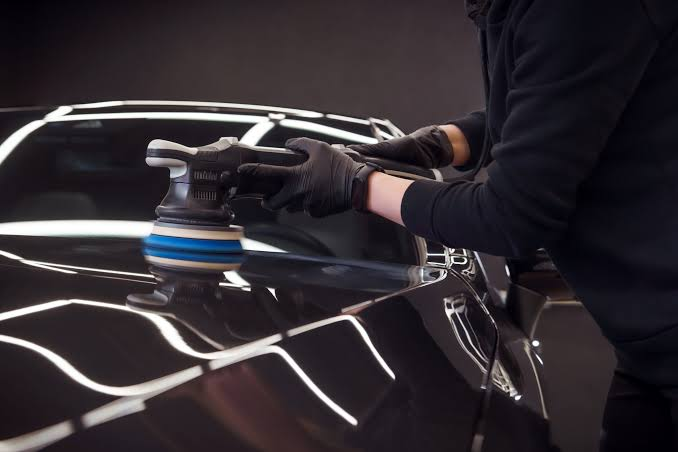
Most drivers default to whichever option is closest and fastest. A quick trip through a tunnel wash feels like the responsible choice. It’s cheap, it takes ten minutes, and the car comes out looking clean.
But “clean” and “protected” aren’t the same thing. When it comes to what actually preserves your paint over years of ownership, the two options work in genuinely different ways, and the difference matters more than most people realize.
How Drive-In Car Washes Actually Clean Your Car
Automatic car washes fall into two main categories, and they don’t work the same way.
Brush and cloth-strip washes use spinning bristles or hanging fabric strips that make direct contact with your car. The economics of these washes depend on volume. Many process dozens to over a hundred vehicles per hour, using the same equipment on every single one.
That’s the core issue. The brushes touching your paint were touching someone else’s paint minutes earlier. Whatever dirt, sand, or grit that vehicle was carrying gets picked up and dragged across yours next.
Touchless washes skip the brushes entirely. Instead, they rely on high-pressure water and stronger detergents to blast dirt loose without contact. That sounds safer, and in one sense it is.
But the chemistry has to work harder to make up for the lack of physical scrubbing. Those stronger, often alkaline detergents can strip away existing wax or sealant. Once that protective layer is gone, paint is more exposed to UV and oxidation until it’s reapplied.
The Swirl Mark Mechanism, Explained
Swirl marks are the fine, circular micro-scratches that show up as a spider-web haze under direct sunlight, especially on dark-colored paint.
They’re not dirt. They’re not something a wash can fix. They’re physical damage sitting in the clear coat itself.
The mechanism is straightforward. Contaminants picked up from previous vehicles get dragged across your paint at speed. Each pass leaves microscopic scratches. Individually, they’re invisible. Repeated over dozens of wash cycles, they accumulate into the pattern you can see in bright light.
This matters because clear coat isn’t thick. On most modern vehicles, it’s only about 40 to 60 microns, roughly the thickness of a sheet of paper. There isn’t unlimited room to polish out damage before you start cutting into the base coat underneath.
A Fair Look at the Counter-Argument
Not everyone agrees that car washes are the primary culprit here, and it’s worth addressing that directly rather than ignoring it.
Some in the car wash industry argue that automatic washes don’t actually cause swirl marks. Their reasoning: factory wax applied at the dealership wears down naturally as a car is driven, and a wash simply removes dirt that was hiding pre-existing imperfections, rather than creating new ones.
There’s some truth to this. A dirty car does hide surface flaws that become visible once it’s clean.
But that explanation doesn’t account for the cumulative pattern professional detailers see constantly: vehicles that get washed at the same tunnel wash weekly show progressively worse swirling than vehicles washed occasionally or hand-washed. If contamination and repeated contact play no role, that pattern shouldn’t exist. The honest conclusion sits in between: washes may not be the sole cause of every mark, but repeated brush contact clearly accelerates the problem.
Why San Diego Paint Has Less Margin for Error
This debate matters more in San Diego than in a lot of other markets, because local paint is already dealing with more stress before a brush or a chemical wash ever touches it.
San Diego’s UV index regularly runs 10 to 11 through summer, among the highest ratings the scale measures. That level of exposure steadily breaks down clear coat on its own, independent of anything happening at a wash.
Salt air adds another layer. Ocean-adjacent moisture carries salt inland, and that combination accelerates oxidation on any exposed surface, paint included.
Hard water is the third factor. San Diego tap water runs around 300 parts per million in dissolved minerals, which is high enough to leave etching water spots if it’s not properly dried after any wash, automatic or otherwise.
Stack those three things on top of a wash method that’s stripping wax or dragging grit across the surface, and San Diego paint simply has less buffer than paint in a milder, drier, inland climate. The margin for compounding damage is smaller here, not larger.
What Mobile Detailing Does Differently
Professional mobile detailing addresses the mechanism directly rather than working around it.
The standard method is a two-bucket hand wash. One bucket holds clean, soapy water. The other holds plain rinse water for the wash mitt. Rinsing the mitt between passes keeps grit from recirculating back onto the paint, which is the exact failure point that causes swirling at an automatic wash.
Beyond the wash itself, mobile detailing in San Diego typically includes steps a drive-in wash skips entirely. Clay bar decontamination removes bonded contaminants that washing alone can’t lift. Proper hand-drying with clean microfiber prevents the water spotting that hard water leaves behind. Sealant or wax reapplication restores the protective layer a touchless wash may have stripped away.
None of this is complicated. It’s simply slower, more deliberate, and built around one vehicle at a time instead of throughput.
Cost Comparison: Short-Term Savings vs. Long-Term Value
On a single visit, the price gap looks significant. A basic automatic wash typically runs $10 to $30. A full mobile detail generally starts somewhere between $150 and $300, depending on vehicle size and condition.
But that comparison only tells part of the story. Drivers who use a weekly automatic wash often spend more over a year than drivers on a quarterly detailing schedule, once the totals are added up.
The bigger cost difference shows up later. Correcting accumulated swirl marks through professional paint correction typically starts around $250 and climbs from there depending on severity. That’s a cost the automatic-wash routine quietly builds toward, even though no single visit felt expensive at the time.
Regular exterior car detailing San Diego residents book on a recurring schedule tends to prevent that buildup before it reaches the point of needing correction at all, which is where the real long-term value shows up.
Which One Actually Makes Sense for You
The honest answer isn’t that one option is right and the other is wrong. It depends on how the two are used.
An occasional touchless rinse between details, mainly to clear dust or light surface grime, isn’t going to ruin your paint. Used as your only form of car care, however, a weekly brush wash routine will accumulate damage over years, especially in a climate as demanding as San Diego’s.
A reasonable middle ground for most owners looks like a professional detail every one to three months, with a gentle touchless rinse in between if the car needs a quick refresh. That combination keeps the car clean without relying on the exact wash method that causes the most cumulative wear.
Frequently Asked Questions
Do touchless car washes avoid the swirl mark problem? They avoid the brush-contact scratches, but the stronger chemicals they use can strip existing wax or sealant, leaving paint less protected until it’s reapplied. It’s a different risk, not the absence of one.
How often should I get a real detail vs. just rinse at a wash? Most San Diego vehicles do well with a full detail every one to three months, with a light rinse in between if needed. Vehicles parked outdoors near the coast may benefit from more frequent attention.
Can existing swirl marks from car washes be fixed? Yes, through professional paint correction, which polishes down a thin layer of clear coat to remove the scratches. Since clear coat is only 40 to 60 microns thick, this isn’t something to repeat indefinitely, which is part of why prevention matters more than correction.
Is mobile detailing actually worth the extra cost? For most owners planning to keep their vehicle for several years, yes. The cost difference narrows significantly once you account for how much a weekly automatic wash habit adds up to annually, and it avoids the larger expense of eventual paint correction.