



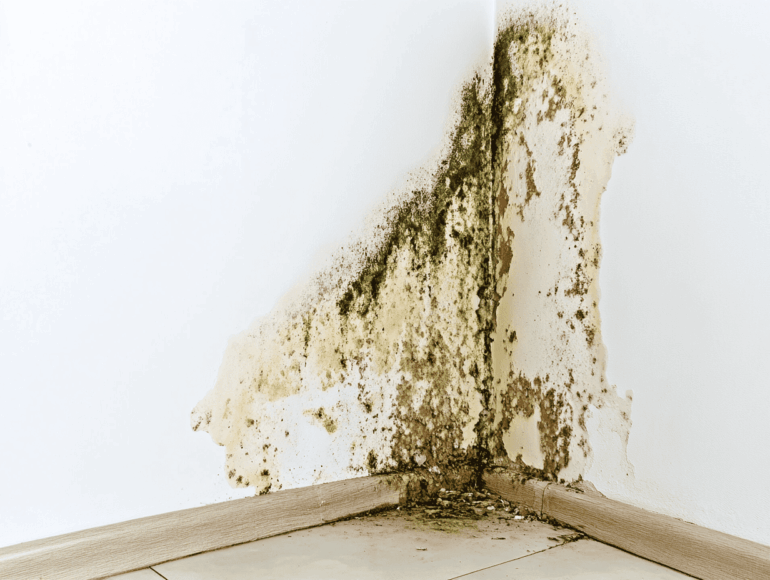
We all have seen mold growing in drywall once in our lives.
Sometimes, people try to clean those black, green, and yellow stains on the walls, and sometimes they just leave them alone and accept their presence.
But mold is far from just being an aesthetically unpleasant stain on the wall.
Mold, especially black mold on drywall, is a problem that you can’t ignore.
If you have mold growing on your drywall, it is a sign that something is wrong. Understanding why it grows is important to eliminate it because it represents a risk for you, your family, and the structure of your home.
Continue reading this post to learn why mold grows on your drywall, how to detect it even if you can’t see it, and why you should worry about it.
Why Mold Grows on Drywall
Mold loves damp places. Spaces like kitchens, bathrooms, basements, and every place that is humid are great spots for mold to grow.
If mold is growing on your drywall, there are many reasons why this occurs:
- Leaks: Leaks from the roof, broken pipes, and other sources of water accumulation prompt mold growth.
- High humidity levels: Humidity levels in certain spaces are higher, such as in bathrooms and kitchens. Humid places are perfect for mold.
- Lack of ventilation: Air flow is necessary to reduce dampness. When ventilation is not proper, humidity levels rise, and mold flourishes.
- Floodings: If floodings are frequent in your area, you might be more prone to suffer from mold issues, especially if the problem is not addressed.
Essentially, mold needs water and condensation to grow, so if you have a mold problem, you are surely having a water problem as well.
To get rid of this fungus, it is necessary to address the root cause and fix it. Otherwise, trying to clean or paint over it will not solve the problem.
Detect Signs of Hidden Mold
The most visible sign of a mold issue is (obviously) seeing the colourful spots in your walls or ceiling. But what happens when you cannot see mold?
That’s right, mold can also grow silently behind your walls, and you might not notice it. However, there are some signs that might indicate the presence of mold.
When something is invisible, smell can help you. If you sense a musty odor, like when it’s going to rain, or some strong smell as if something was rotting, it means that dampness is present, and probably mold is growing with it.
Some people are allergic to mold. Consider an inspection if you or your family are experiencing these symptoms:
- Skin rashes
- Eye irritation
- Running nose
- Breathing problems
There is strong evidence that black mold can also provoke headaches, nose bleeding, and even brain fog because it releases mycotoxins.
People reported feeling symptoms similar to those of a cold, and strange allergies that stopped when they moved out or spent some time far from home.
Immunocompromised people, individuals with asthma or allergies, and children can suffer from these symptoms due to mold exposure.
Why Is Mold A Serious Problem
As we mentioned before, long-term exposure to mold poses a health risk.
Besides health issues, consider structural damage as well. A mold invasion can quickly take over and weaken the structures in your house. Drywalls become useless, and they can quickly come down, posing a security risk.
Moreover, the value of your home goes down due to mold issues, so if you’re planning on selling your property, maybe you’d like to eliminate mold.
Mold is dangerous, it affects your home’s structural integrity, and it translates into spending money to fix the damage.
Are you sure that you want to ignore it now?
Fight Back Mold
When mold appears, it is a clear signal that something’s wrong. From a leaking pipe to poor ventilation, if there’s mold, you have a problem with humidity.
And as we said, mold is an issue for many reasons:
- It poses a health risk.
- It leads to structural damage and property devaluation.
- The cost of repairs.
Certainly, mold is more than something “unaesthetic,” and ignoring its presence is not an option.
When you detect mold in your walls, depending on how big the problem is, you can try to eliminate it on your own or call experts in mold elimination and drywall repair, to ensure safety and full elimination.