



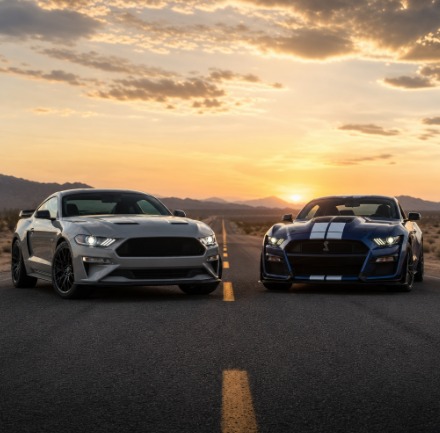
Few debates in the American automotive world carry as much passion and historical weight as the one between the standard Ford Mustang and the Shelby variants that evolved from it. On the surface, both cars share a lineage, a badge, and a silhouette that has become synonymous with raw American performance. But beneath that shared identity lies a world of difference — in engineering philosophy, driving character, and the kind of driver each car is built to satisfy. Whether you are a weekend cruiser, a track enthusiast, or simply someone who appreciates the craftsmanship behind performance vehicles, understanding what separates these two machines is essential before making any decision.
A Legacy Rooted in Speed and Ambition
The Ford Mustang was born in 1964 as a car for the masses — affordable, stylish, and versatile enough to appeal to a broad audience. It was never intended to be a pure performance machine from the outset. Instead, it offered buyers the option to configure it according to their needs, from a modest commuter to a spirited weekend driver. Over the decades, the Mustang evolved considerably, gaining power, refinement, and a more focused performance identity with each generation.
The Shelby story, however, begins with a different kind of ambition. Carroll Shelby, a former racing driver turned automotive visionary, saw the Mustang not as a finished product but as a foundation. His goal was to transform it into something that could genuinely compete on the track while remaining street-legal. The result was a series of vehicles that pushed the boundaries of what the Mustang platform could achieve — vehicles that were louder, faster, more aggressive, and far less forgiving than their donor car. To explore the full history of how the Mustang has evolved across its many generations, this detailed overview of Ford Mustang generations provides an excellent chronological breakdown of the model’s development.
Engineering Differences That Actually Matter
Power and Drivetrain Modifications
The most immediate distinction between a standard Mustang GT and a Shelby GT variant lies under the hood. While the Mustang GT is no slouch — producing competitive horsepower figures that satisfy most performance enthusiasts — the Shelby takes that output and amplifies it through supercharging, upgraded internals, and revised tuning. The Shelby GT500, for instance, produces figures that place it firmly in supercar territory, with over 700 horsepower in recent configurations. This is not simply a matter of adding a badge; the engine components, cooling systems, and exhaust configurations are fundamentally different.
Suspension, Handling, and Track Capability
Beyond raw power, the Shelby variants receive significant suspension tuning that transforms the driving dynamics. Stiffer springs, revised damper rates, upgraded braking systems, and wider track widths all contribute to a car that behaves very differently from a standard Mustang GT at speed. The Shelby is calibrated for precision and grip, often at the expense of everyday comfort. This makes it a more demanding car to drive well, but also a far more rewarding one for those who have the skill and the environment to exploit its capabilities.
The Ownership Experience: Practicality vs. Passion
Choosing between these two vehicles is not purely a performance calculation — it is also a lifestyle decision. The Mustang GT offers a genuinely usable daily driver experience. It is comfortable enough for long highway journeys, practical enough for occasional errands, and exciting enough to put a smile on your face during a spirited back-road run. It represents a balance that most drivers will find satisfying across a wide range of conditions.
The Shelby, by contrast, demands more from its owner. It is louder, stiffer, and more sensitive to driver input. Fuel consumption is higher, maintenance costs are greater, and the car’s temperament on cold mornings or in heavy traffic can test patience. But for those who prioritize the driving experience above all else, these are acceptable trade-offs. The Shelby is not a car you simply drive — it is a car you engage with.
Protecting Your Investment: Paint and Finish Considerations
Owners of both Mustang GT and Shelby variants often invest significantly in protecting their vehicle’s finish, particularly given the premium paint options and the resale value these cars command. Whether you opt for ceramic coating or paint protection film depends on how you use the vehicle and the conditions it faces. For performance car owners who want to understand the best approach to exterior protection, this comparison of ceramic coating versus paint protection film offers a thorough breakdown of the pros and cons of each method, helping owners make an informed choice that suits their specific driving habits and environment.
Revology Cars: Where Classic Meets Modern Performance
For enthusiasts who want to experience the Mustang and Shelby legacy in its most authentic form, Revology Cars offers a compelling proposition. Specializing in meticulously recreated classic Mustangs built with modern mechanical components, Revology bridges the gap between vintage aesthetics and contemporary reliability. Their vehicles capture the visual drama and emotional appeal of the original era while incorporating modern drivetrains, safety systems, and creature comforts that make them genuinely usable today.
The debate around Mustang vs Shelby takes on a particularly interesting dimension when viewed through the lens of Revology’s work. Their recreations highlight just how significant the differences between these two models were even in the original era — differences that continue to define the character of each vehicle today. For collectors and enthusiasts who want the full story behind these iconic machines, Revology’s expertise and craftsmanship represent an unmatched resource.
Which One Is Right for You?
Defining Your Priorities
The answer to this question depends entirely on what you want from a performance car. If versatility, daily usability, and a strong power-to-value ratio are your priorities, the Mustang GT delivers on all fronts without compromise. It is a car that rewards its driver without demanding perfection in return. For the majority of enthusiasts, it represents the ideal balance between performance and practicality.
If, however, you are drawn to the idea of owning something that represents the absolute pinnacle of what the Mustang platform can achieve — a car that carries Carroll Shelby’s uncompromising vision of performance — then the Shelby variants offer an experience that is genuinely difficult to replicate. The additional cost, the heightened demands, and the narrower focus are all part of what makes a Shelby ownership experience so distinctive.
Conclusion
The Mustang GT and the Shelby GT are not simply two versions of the same car. They represent two distinct philosophies about what a performance vehicle should be and who it should serve. The Mustang GT is a democratic icon — powerful, accessible, and endlessly enjoyable. The Shelby is an uncompromising statement of intent, built for those who want more of everything, even when more comes with greater demands. Understanding these differences is the first step toward making a choice that genuinely aligns with your driving life, your expectations, and the kind of relationship you want to have with your vehicle.