



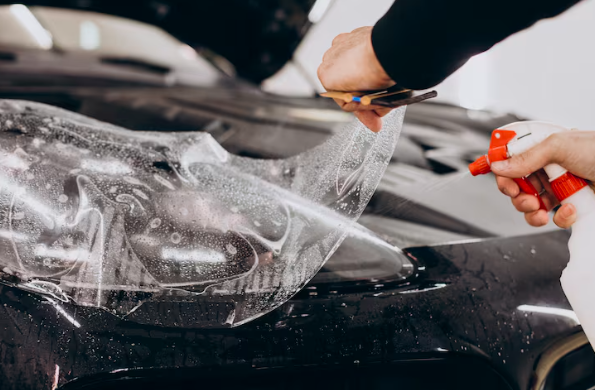
Paint protection film (PPF) is a transparent, durable polyurethane-based material applied to the exterior surfaces of vehicles to protect the paint from damage caused by environmental factors, road debris, and everyday wear. It is widely used in automotive care as a premium solution for preserving a vehicle’s original finish while maintaining its appearance and resale value. Modern paint protection film is designed to be nearly invisible once installed, offering strong protection without altering the aesthetic of the vehicle.
Originally developed for military applications to protect helicopter rotor blades from debris damage, paint protection film has evolved significantly and is now commonly used in automotive detailing. It is especially popular among car enthusiasts, luxury vehicle owners, and anyone looking to maintain a showroom-quality finish over time.
How Paint Protection Film Works
Paint protection film functions as a physical barrier between the vehicle’s paint and external hazards. The film is typically composed of multiple layers, including a clear polyurethane base, an adhesive layer, and a protective top coat. Each layer plays a specific role in ensuring durability, clarity, and self-healing properties.
When applied to a vehicle’s surface, the film absorbs impacts from small stones, road debris, and minor abrasions, preventing them from reaching the paint underneath. The outer layer is engineered with self-healing technology, which allows minor scratches and swirl marks to disappear when exposed to heat from sunlight or warm water.
Because of its elasticity and strength, paint protection film conforms tightly to curved surfaces, edges, and contours of the vehicle, providing seamless coverage without compromising appearance.
Benefits of Paint Protection Film
One of the primary benefits of paint protection film is its ability to preserve the original paint condition of a vehicle. By shielding the surface from scratches, chips, and stains, it helps maintain a fresh, new appearance for a longer period.
Another major advantage is protection against road debris. Everyday driving exposes vehicles to gravel, sand, and small stones that can chip paint over time. PPF significantly reduces this risk by acting as a sacrificial layer.UV resistance is another important benefit. The film helps protect paint from fading or oxidation caused by prolonged sun exposure, ensuring that the vehicle’s color remains vibrant.
Paint protection film also offers chemical resistance. It helps guard against damage caused by bird droppings, insect acids, tree sap, and road salts, all of which can harm automotive paint if left untreated.In addition, PPF can enhance resale value by preserving the vehicle’s exterior condition, making it more attractive to potential buyers.
Types of Paint Protection Film
There are several types of paint protection film available, each offering different levels of durability, finish, and functionality.
Gloss PPF is designed to enhance the shine of the vehicle while providing protection. It maintains a clear, glossy finish that closely matches factory paint.Matte PPF is used on vehicles with matte finishes or for owners who want to convert a glossy surface into a satin or matte appearance while still protecting the paint.
Self-healing PPF includes advanced top-layer technology that allows minor scratches to disappear when exposed to heat.Hydrophobic PPF is designed to repel water and reduce dirt accumulation, making the vehicle easier to clean and maintain.Colored PPF combines protection with customization, allowing vehicle owners to change the appearance of their car while still benefiting from protective properties.
Installation Process of Paint Protection Film
Proper installation is critical for achieving maximum performance and durability from paint protection film. The process begins with a thorough cleaning of the vehicle’s surface to remove dirt, wax, and contaminants. Any imperfections in the paint are often corrected through polishing to ensure a smooth base.
Once the surface is prepared, the film is carefully measured and cut to match the specific panels of the vehicle. Some installations use pre-cut kits designed for exact vehicle models, while others involve custom cutting for precise coverage.
A slip solution is applied to both the film and the vehicle surface to allow repositioning during application. The installer then carefully places the film onto the surface, ensuring correct alignment.
Using specialized squeegees, air bubbles and excess solution are removed to create a smooth, adhesive bond. Edges are carefully wrapped or trimmed for a seamless finish.After installation, the film requires a curing period during which it fully adheres to the paint surface. During this time, minor cloudiness or water spots may appear but typically disappear as the film settles.
Areas of Application on Vehicles
Paint protection film can be applied to various parts of a vehicle depending on the level of protection desired. The most common areas include the front bumper, hood, side mirrors, and fenders, as these areas are most exposed to road debris.
Full-body coverage is also available for maximum protection, covering all painted surfaces of the vehicle. This option is often chosen for high-value or luxury cars.Door edges, door handles, and trunk loading areas are also frequently protected since they are prone to scratches from regular use.
Maintaining paint protection film is relatively simple compared to traditional paint care. Regular washing with mild soap and water helps keep the surface clean and free of contaminants.It is important to avoid abrasive cleaning tools or harsh chemicals that could damage the film’s surface. Soft microfiber cloths are recommended for drying and cleaning.
Periodic inspection ensures that edges remain secure and that no lifting or damage has occurred.Although PPF is durable, it may require replacement after several years depending on exposure and usage conditions.
Common Issues with Paint Protection Film
One common issue is edge lifting, which can occur if the film was not properly installed or if it is exposed to excessive pressure or moisture.Yellowing or discoloration may develop over time in lower-quality films due to UV exposure, although high-quality films are designed to resist this.
Air bubbles or trapped debris during installation can also affect appearance, but these are usually preventable with professional installation.
Scratches on the film surface may occur, but self-healing properties often help minimize visible damage.Paint protection film and ceramic coating are often compared, but they serve different purposes. PPF provides physical protection against impacts and scratches, while ceramic coating offers chemical resistance and easier cleaning.
In many cases, both are used together for maximum protection. PPF acts as a barrier against physical damage, while ceramic coating enhances gloss and hydrophobic properties.Choosing between them depends on the level of protection required and budget considerations.
Factors to Consider Before Installation
Before installing paint protection film, several factors should be considered. These include vehicle type, driving conditions, budget, and desired level of coverage.
Highway driving or areas with heavy road debris may require more extensive coverage, while city driving may require only partial protection.Film quality is also important, as higher-grade materials offer better durability, clarity, and self-healing performance.
Professional installation is highly recommended to ensure proper adhesion and long-term effectiveness.Paint protection film contributes to long-term sustainability by reducing the need for frequent repainting or refinishing. By preserving the original paint, it helps extend the life of automotive finishes and reduces material waste.
Conclusion
Paint protection film is a highly effective solution for preserving and protecting vehicle paint from physical damage, environmental exposure, and everyday wear. Its advanced multi-layer construction, self-healing properties, and nearly invisible appearance make it a preferred choice for modern automotive care.It also supports vehicle resale value by maintaining exterior condition, which can be a significant financial advantage for owners planning to sell or trade in their vehicles.
While installation requires precision and professional expertise, the long-term benefits including enhanced durability, improved aesthetics, and increased resale value make it a worthwhile investment.Ultimately, paint protection film provides a reliable shield that helps maintain a vehicle’s appearance and value, ensuring it remains in excellent condition for years to come.