



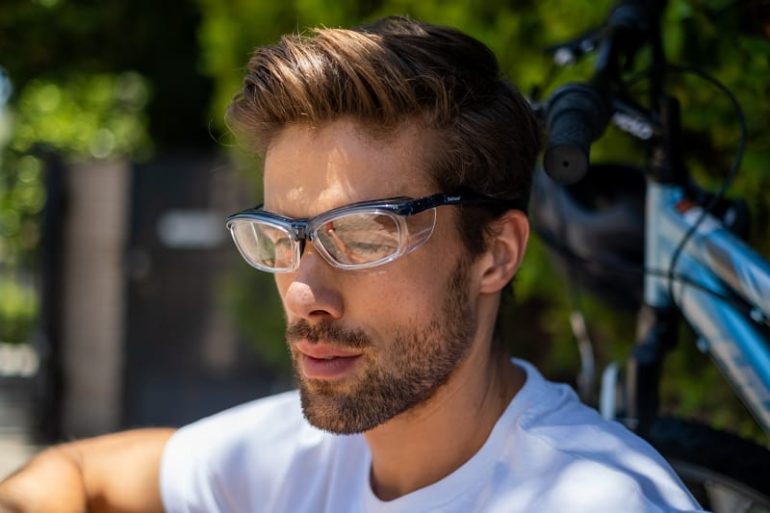
Every day, about 2,000 American workers experience work-related eye injuries requiring medical treatment. A flying piece of metal, chemical spills, or gritty sawdust can all inflict lasting vision loss within a second. If someone already needs vision correction, it can be frustrating to stay safe on the job site. When these oversized goggle covers slip over the standard streetwear frames, it can cause sore ears, frequent fogging and limited peripheral vision.
Choosing reliable safety glasses prescription builds solves these functional headaches entirely. High-performance safety eyewear integrates your exact corrective prescription directly into impact-certified protective frames. You get crisp visual acuity and full industrial defense in a single lightweight pair. In this post, we will go through the exact steps to assess hazards, identify the material, check the certification markings, and purchase customized protective eyewear online.
What Are Prescription Safety Glasses?
Prescription safety frames are made to endure much higher mechanical stress than regular eyeglasses. They combine custom optical lenses and shatterproof frame materials that meet strict occupational health standards. Standard dress frames use light metal or delicate acetate that breaks under physical impact. On the other hand, certified safety frames are made of high-tensile polymers that absorb impact without breaking into the eye socket.
The frame and lenses must be tested to meet rigorous standards for use on a job site as required by OSHA 29 CFR 1910.133. They are required to be ANSI Z87.1 compliant for high-velocity impact, coverage area, and optical clarity. If there is no permanent Z87-2 mark on the frame bridge or the temple arm, the eyewear is not legally certified to support prescription lenses.
Get Your Current Prescription Updated
Schedule an eye exam with an optometrist before ordering protective equipment. An outdated optical prescription will lead to eye strain, headaches and poor spatial perception when driving heavy vehicles.
| Optical Measurement | Why It Matters for Safety Eyewear |
| Sphere & Cylinder (SPH/CYL) | Corrects distance vision and astigmatism for sharp hazard detection |
| Pupillary Distance (PD) | Aligns optical lens centers directly over your pupils to eliminate side distortion |
| Segment Height (SEG Height) | Positions bifocal or progressive focal boundaries correctly inside wrap frames |
Please ask your eye doctor to take a Pupillary Distance (PD) measurement. Online vendors will require your precise PD to match the corrective focal point exactly in front of your eyes.
Choose the Right Lens Material
Selecting the correct lens substrate dictates both the physical strength and weight of your protective eyewear. Standard glass or basic plastic lenses are unsafe for industrial work because they shatter easily under pressure.
Polycarbonate remains the most popular choice for clear safety glasses. It is lightweight, naturally blocks harmful UV rays, and delivers extraordinary impact resistance. Trivex is another excellent alternative. It provides slightly better visual clarity and reduced chromatic aberration with high-strength impact.
Choose Key Lens Coatings and Treatments
Basic lenses rarely survive the harsh conditions of busy job sites without accumulating scratches or moisture layer build-ups. Functional lens coatings enhance visibility and prolong the life of your frames.
- Anti-Fog Coatings when transitioning from cold outdoor air to warm indoor work areas.
- Anti-Scratch Hard Coats resist scuffing from airborne gritty dust and sand on polycarbonate surfaces.
- Anti-Reflective Coatings minimize the glare of overhead LED bay lights and night driving.
- Photochromic Tints darken automatically in direct sunlight, so no need to change frames outside.
Select the Appropriate Frame Style for Your Work
The frames’ design should complement both your own preferences and the particular needs of your workstation.
Wrap-around frame designs offer close facial coverage, blocking flying debris from peripheral angles. If your job involves moving between industrial plant floors and corporate meeting rooms, executive style frames with detachable side shields provide flexible dual-use capability.
Consider Work Environment and Hazards
Every profession has a unique set of visible risks. A thorough hazard evaluation enables you to select the appropriate protection features before purchasing a pair.
| Workplace Hazard | Primary Risk Factor | Recommended Eyewear Feature |
| High-Speed Debris | Metal shavings, wood chips, masonry grit | ANSI Z87+ high-velocity rated frames with side shields |
| Chemical Splashes | Liquid acids, cleaning solvents, caustic sprays | Sealed rubber frame gaskets or indirect vent goggles |
| Fine Airborne Dust | Sandblasting grit, drywall dust, saw powder | Removable interior foam facial cavity seals |
| Optical Radiation | Welding arcs, furnace heat, bright sunlight | Shaded filter lenses or polarized UV filters |
Consider Prescription Safety Glasses With Extra Features
Modern protective eyewear has special features that enhance performance on challenging tasks. Progressive glasses allow for a seamless transition between near and far vision, which is advantageous for those who frequently use digital tablets or blueprints.
Integrated rubber nose pads and flexible wire-core temple tips allow you to customize the fit, preventing painful pressure points during long 12-hour shifts.
Prescription Safety Glasses vs. Regular Glasses With Safety Goggles
Relying on over-the-glass (OTG) goggles fitted over standard streetwear eyeglasses creates a bulkier setup that compromises visual quality.
| Feature Comparison | Prescription Safety Glasses | Regular Glasses + OTG Goggles |
| Weight & Comfort | Lightweight single-frame build | Heavy, double-frame pressure |
| Fog Resistance | High with anti-fog coatings | Poor; trapped air pockets cause fogging |
| Peripheral Field | Unrestricted edge-to-edge view | Narrowed by outer goggle frames |
| Durability Rating | Certified ANSI Z87-2 structural build | Streetwear frames lack impact ratings |
Custom prescription safety eyewear delivers superior comfort, better thermal ventilation, and wider visual clarity than dual goggle layers.
Conclusion
Although safety glasses are necessary to protect the eyes while working, they shouldn’t interfere with comfortable, clear vision. The gap between absolute visual clarity and reliable physical protection is filled by the purchase of certified safety glasses prescription options. You can choose high-impact polycarbonate materials, ANSI Z87.1-approved frames, and an updated eye exam to ensure your safety and compliance with occupational regulations. You can work safely and confidently every day with custom safety eyewear.