



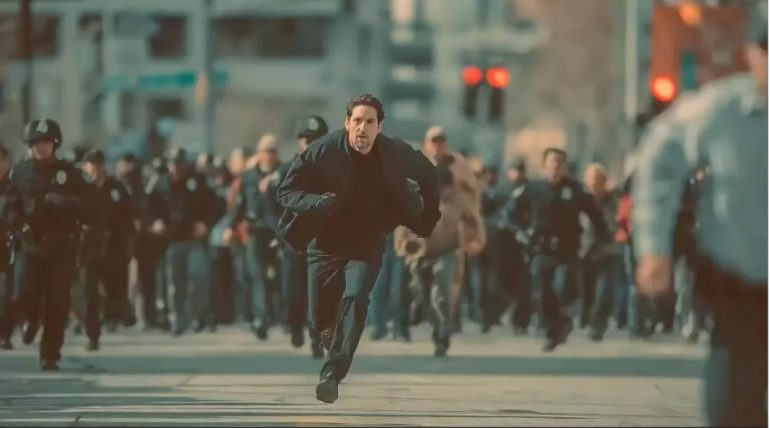
Every action fan has a oner they can quote from memory. The hammer down the corridor in Oldboy. The apartment and kitchen brawls of The Raid 2. The stairwell in Atomic Blonde, cut so cleverly it plays as one long, seven-minute beating. We love the unbroken take because it can’t lie. When the camera refuses to cut, the fight has to be real: the timing, the geography, and the exhaustion on the performers’ faces are all happening in one continuous stretch of time, and you can feel it.
So it’s worth paying attention when a piece of software claims to generate an unbroken take of its own.
Seedance 2.5, ByteDance’s latest AI video model, released in June 2026, produces a single continuous 30-second shot from one written prompt or a single reference image. Not a stitched sequence of clips. One take, rendered in native 4K, with the sound generated alongside the picture. For a genre built on the long take, that’s either a fascinating new tool or a quiet provocation, depending on how you feel about where action cinema is heading.
What it actually does
Strip away the hype and the spec sheet is simple. You type a description (a fighter turning into a knife strike as the camera whips around him, say), or you feed it a photograph, and thirty seconds later you have a 4K clip with 10-bit color and synced audio, downloadable as a plain MP4 with no watermark. Because it renders the whole thing in one pass, there are no cuts to hide, which is the entire reason a oner is hard to fake in the first place.
It will also take up to 50 reference inputs at once, from images and clips to audio and style guides, so you can hand it a character’s face and ask that it stay consistent for the full thirty seconds. Anyone who has watched a cheap AI clip morph a stunt double’s features mid-kick knows why that matters.
For scale, the previous version, Seedance 2.0, capped out at four-to-fifteen-second clips at up to 1080p and about a dozen references. Thirty seconds at real 4K, with fifty inputs, is a serious jump. ByteDance also says the model follows prompts around 20 percent more accurately than before, and in a genre where a shot lives or dies on a specific camera move, “it did what I told it to” is not a small claim.
Where it’s genuinely useful
Here’s the honest case for it, and it isn’t “replace your stunt team.” It’s previz.
Anyone who has tried to pitch an action sequence knows the pain of getting it out of your head and into someone else’s. Storyboards sit still. Stick-figure animatics take days. A director or fight coordinator can now describe a beat (“hero disarms two guards in a corridor, camera tracking backward, harsh overhead light”) and see a rough version of it in 4K within minutes. It won’t have the snap of a real 87Eleven-trained performer, but it will show the geography and the rhythm well enough to argue about. That’s exactly the stage where arguing is cheap and worth doing.
For no-budget filmmakers, the stakes are bigger. If you’re a stunt performer with a YouTube channel and no money for a crew, a tool that turns a sentence into a usable concept scene lowers the barrier to showing what you can do. The clips are cleared for commercial use, it runs in a browser at seedance 2.5 with free starter credits, and there’s no software to learn. For proof-of-concept work, that’s real leverage.
Where the nerves come in
Now the part The Action Elite readers will actually care about.
The action community has spent years fighting to get real stunt performers the recognition they’re owed: the people who break bones so a movie can feel dangerous, and who had to campaign for a long time just to get their work taken seriously as a craft of its own. There is something uncomfortable about celebrating a machine that fakes, in thirty seconds, the exact thing those performers spend careers perfecting: a real, unbroken, physically true take.
And let’s be clear about the ceiling. Seedance 2.5 generates convincing footage, but it does not understand impact. It doesn’t know what a hook feels like when it lands, why a good performer sells the recovery as much as the blow, or how weight moves through a throw. Action cinema at its best is a documentary of real bodies doing real, difficult things. An AI oner is a very good drawing of that. The two are not the same, and any action fan worth the name can feel the difference within a second or two.
That’s the tension in a sentence. The technology is impressive and the discomfort is legitimate, and waving either one away would be dishonest.
So, excited or nervous?
Both, if you’re being straight about it. Seedance 2.5 is a genuinely useful sketchpad, a way to previsualize and prototype action ideas faster and cheaper than ever. Used that way, it helps the exact people the genre needs more of: hungry creators who can’t yet afford a crew.
What it isn’t, and what it shouldn’t be sold as, is a substitute for the men and women who actually throw themselves down the stairs. The best action filmmaking has always run on trust, the sense that what you’re watching cost someone something real. No model has learned to pay that price, and until one does, the unbroken take that matters most will still be the one performed by a human being who could have gotten hurt.
Type a scene into Seedance 2.5 and you’ll get thirty impressive seconds. Just remember what the great oners were always really showing you: not the absence of a cut, but the presence of a person.