



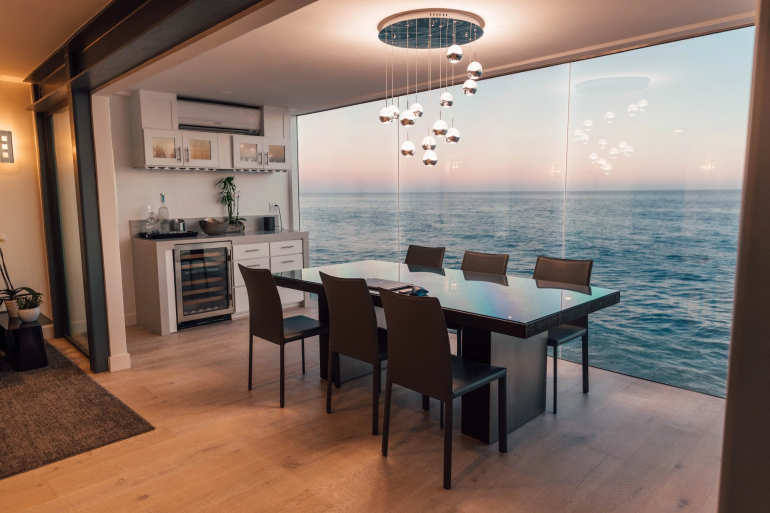
Watch any memorable dining scene in film and notice what the camera lingers on. Not the ceiling. Not the walls. The table. It’s where hands rest, where glasses catch light, where a whole mood gets built one prop at a time. A production designer knows a table isn’t background. Operators who think like set designers pick restaurant tables that carry atmosphere the way a good prop carries a scene, because the table is the stage the story plays out on.
Real dining rooms work the same way, only the audience is paying and the scene runs every night. The right surface holds the mood with texture, weight, and a finish that reads under the room’s own lighting. The difference between a space that feels staged and one that feels alive often comes down to that single surface.
The Table as the Frame
A cinematic frame leads the eye. A dining table, too. Its size dictates the proximity of guests, its finish the colour palette and its form whether a space feels personal or expansive. A dark walnut top pulls a room close in warmth and silence. It begins with a pale ash top, lightening the ambiance before a single light is adjusted.
Directors block a scene around a table because it puts bodies in space. A floor plan does the same thing. Get the table wrong and the whole composition seems wrong, no matter how delicious the meal is.
Lighting Loves the Right Surface
Cinematographers obsess over how surfaces take light, and dining rooms should borrow the instinct. A matte top absorbs a warm bulb and keeps a room cozy. A glossy top throws it back and reads sharper, cooler, more modern. The way a finish handles lighting decides whether candlelight feels romantic or clinical.
This is why the same bulb over two different tops produces two different rooms. Operators who test finishes under their actual fixtures, before the order lands, avoid the surprise of a top that looked rich in the showroom and flat under the pendants.
Texture Tells the Guest Where They Are
Touch is part of the scene too. A live-edge wood top says relaxed and rooted. A cool metal top says industrial and quick. A smooth laminate that mimics stone says polished without the stone budget. Guests read these signals before they read the menu, and they settle into the role the room hands them.
Great set dressers layer texture so a space feels lived in rather than assembled. A dining room earns the same warmth when its tabletops, chairs, and floor talk to each other instead of competing.
Continuity Keeps the Illusion Whole
Film crews will keep continuity going so the enchantment remains unbroken. Your dining room needs the same care. When one part has warm wood two-tops and another part has frigid gray four-tops and there’s no thread holding them together, guests sense the seam, even if they can’t describe it. Table finish, height and shape are consistent, keeping the whole space reading as one purposeful world.
That doesn’t imply all lines up. It means everything has a place. a private corner can deliberately alter the palette, like a scene changing place, as long as the change feels authored, not accidental.
Shape Directs the Action
A round top invites conversation and softens a room. A long communal table stages energy and movement. A tight two-top frames a quiet exchange. Each shape casts the guests in a different scene, and smart operators mix them the way a director mixes shot types.
A few pairings worth staging on purpose:
- Round two-tops near a window for the intimate, softly lit moment
- Communal runs down the room’s spine for the busy, social center
- Booths against the wall for the private conversation that lingers
- Bar-height tops near the pass for the quick, high-energy scene
Mix these and a single room delivers several different experiences without ever changing addresses.
The Prop That Survives Every Take
Sets get struck after a shoot. Dining rooms run the same scene hundreds of nights a year, so the table has to survive what a film prop never does: real use, real spills, real cleaning. A finish that looks cinematic but chips in a month betrays the illusion faster than any bad review.
Commercial-grade tops earn their keep here. They hold the look under sanitizer and daily wipe-downs, they resist the ring left by a sweating glass, and they keep photographing well long after a decorative-only piece would have gone dull. Atmosphere that can’t take a beating isn’t atmosphere. It’s a countdown.
When the Room Becomes a Set Worth Remembering
The dining rooms guests talk about tend to feel composed, as if someone thought about where the eye lands and how the light falls. And that sensation always leads back to the surfaces, and the table is at the heart of every one. Pick it up like a prop that has to sell the story, and the room starts performing the work a marketing budget usually pays for.
When you take tables this seriously, there’s a subtle payoff. People hang around and swap images, and the place gets a reputation for being somewhere, not anywhere. That reputation is the real production value, created surface by well-chosen surface, running its scenario night after night without missing a cue.