



Introduction
Dining experiences have evolved far beyond simple meals, becoming cultural journeys that bring people closer to traditions, flavors, and cooking techniques from around the world. One of the most distinctive and celebrated dining styles is the Brazilian steakhouse concept, which is deeply rooted in the traditional churrasco barbecue culture of Brazil. This style of dining is known for its continuous service of fire-roasted meats, expertly seasoned cuts, and a unique table-side serving method that creates an interactive and memorable experience for guests. A brazilian steakhouse is not just a restaurant concept; it is a full culinary experience that focuses on hospitality, abundance, and variety. Guests are treated to an unlimited selection of meats carved directly at the table by skilled servers, often called gauchos, who bring freshly grilled cuts straight from the grill. This dining style has gained international popularity because it combines high-quality meats, traditional cooking methods, and a social atmosphere that encourages long, enjoyable meals shared with family and friends. The appeal of this dining concept lies not only in its food but also in its presentation and cultural roots. It reflects a centuries-old tradition of open-fire cooking that originated in South America and continues to influence modern culinary trends around the world.
The Origins of Churrasco Culture
The foundation of the brazilian steakhouse experience comes from churrasco, a traditional barbecue style that originated in the southern regions of Brazil. Historically, gauchos, or South American cowboys, would prepare meat over open flames during long cattle drives. They used simple seasoning techniques, often relying on coarse salt and slow roasting over wood or charcoal fires. This method of cooking emphasized natural flavors and tenderness, allowing the quality of the meat to speak for itself. Over time, this traditional cooking style evolved into a cultural celebration centered around food, community, and hospitality. Families and communities would gather to share grilled meats, turning churrasco into a social tradition rather than just a cooking method. Modern restaurants have preserved this tradition while refining the experience for contemporary diners. The essence of open-fire grilling and slow-roasted meats remains at the heart of the brazilian steakhouse concept, making it a direct connection to its cultural roots.
The Unique Dining Experience
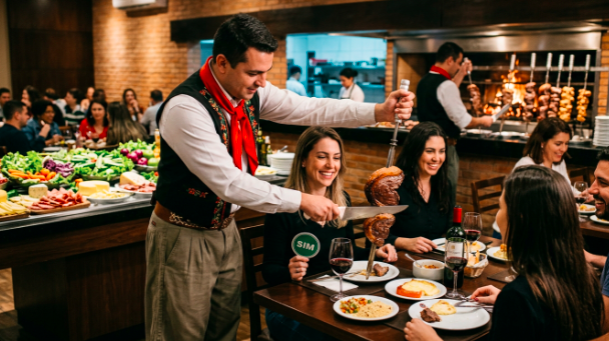
One of the most distinctive aspects of a brazilian steakhouse is the dining format itself. Instead of ordering individual dishes, guests enjoy an ongoing service of various meats brought directly to their table. Servers circulate continuously with skewers of freshly grilled meats, offering slices to diners who indicate their preference. This system allows guests to try a wide variety of cuts without having to place multiple orders. It also creates a dynamic and interactive dining experience where the meal evolves over time. The flow of food, combined with attentive service, ensures that guests remain engaged throughout their visit. In addition to meats, most establishments also offer extensive salad bars and side dishes. These include fresh vegetables, rice, beans, cheeses, and traditional accompaniments that complement the richness of the grilled meats. The combination of unlimited meat service and diverse side options makes the experience both satisfying and balanced.
The Role of Fire and Cooking Techniques
Fire is at the center of the brazilian steakhouse cooking philosophy. Traditional open-flame grilling methods are used to enhance the natural flavors of the meat while preserving tenderness and juiciness. The meats are typically seasoned simply with salt, allowing the quality of the cut to remain the focal point. Different cuts of meat are cooked at varying distances from the flame to achieve specific textures and flavors. Some cuts are slow-roasted for tenderness, while others are seared to create a flavorful crust. This careful control of heat and timing is essential to delivering the signature taste associated with this dining style. Skilled grill masters play a crucial role in maintaining consistency and quality. Their expertise ensures that each cut is cooked to perfection before being served to guests. This attention to detail is one of the defining characteristics of the brazilian steakhouse experience.
Variety of Meats and Flavor Profiles
A major attraction of this dining style is the wide variety of meats offered. Guests are typically served beef, lamb, pork, and chicken, each prepared using traditional grilling techniques. Popular cuts include sirloin, ribeye, picanha, and lamb chops, all known for their rich flavor and tenderness. Each type of meat offers a unique taste experience, allowing diners to explore different textures and flavors throughout their meal. The continuous service ensures that guests can enjoy multiple servings of their favorite cuts or try new options as they are presented. This variety is one of the reasons why the brazilian steakhouse concept has become so popular globally. It caters to meat lovers who appreciate quality, diversity, and abundance in a single dining experience.
Salad Bars and Complementary Dishes
Although meat is the centerpiece of the experience, side dishes and salad bars play an important supporting role. Most establishments offer a wide selection of fresh salads, vegetables, cheeses, and hot dishes that balance the richness of the grilled meats. These accompaniments provide diners with options to customize their meal according to their preferences. Lighter dishes help balance the heavy protein intake, while traditional sides such as rice, beans, and roasted vegetables add depth to the overall dining experience. The inclusion of these options ensures that the meal is not only indulgent but also well-rounded and satisfying for a variety of dietary preferences.
The Social Aspect of Dining
One of the most important elements of a brazilian steakhouse experience is its social nature. The dining style encourages long meals shared with family, friends, or colleagues. Because food is served continuously, guests are not rushed and can enjoy extended conversations while dining. The atmosphere is typically lively and welcoming, with an emphasis on hospitality and shared enjoyment. This makes it a popular choice for celebrations, gatherings, and special occasions. The interactive nature of the service also adds an element of excitement, as guests never know which cut of meat will be served next.
Service Style and Guest Interaction
The service style in a brazilian steakhouse is highly distinctive. Servers move continuously through the dining area carrying skewers of freshly grilled meats. Guests use a simple system, often involving colored tokens or cards, to indicate whether they wish to receive more food or take a break. This system allows for personalized pacing, giving diners full control over their meal. It also ensures that food is served at the optimal temperature and freshness. The interaction between servers and guests creates a dynamic and engaging environment that enhances the overall experience. The attentiveness of the staff plays a major role in maintaining the quality and flow of service, ensuring that every guest feels well cared for throughout their meal.
Global Popularity and Modern Adaptations
Over time, the brazilian steakhouse concept has expanded globally, becoming popular in many countries around the world. While the core principles remain the same, some modern adaptations have been introduced to suit local tastes and dining preferences. In some locations, additional menu items or variations in seasoning may be offered, but the essential elements of continuous meat service and open-fire grilling remain unchanged. This balance between tradition and adaptation has helped the concept maintain its authenticity while appealing to a wider audience. The global popularity of this dining style reflects its universal appeal, combining quality food, interactive service, and a unique cultural experience.
Cultural Significance and Tradition
Beyond its culinary appeal, this dining style carries deep cultural significance. It represents a long-standing tradition of communal eating, hospitality, and respect for food preparation. The techniques used in churrasco cooking have been passed down through generations, preserving a connection to cultural heritage. The brazilian steakhouse experience allows modern diners to engage with this tradition in a contemporary setting. It serves as a bridge between historical cooking methods and modern dining expectations, keeping cultural practices alive while adapting them for today’s audiences.
Conclusion
The brazilian steakhouse dining experience is a unique combination of tradition, flavor, and hospitality that has captivated food lovers around the world. Its foundation in churrasco culture, emphasis on open-fire grilling, and interactive service style make it one of the most distinctive dining concepts available today. From the variety of meats and side dishes to the social and cultural aspects of the experience, every element contributes to a memorable and engaging meal. The continued global popularity of this concept highlights its ability to blend tradition with modern dining expectations. As culinary trends continue to evolve, the brazilian steakhouse remains a symbol of quality, abundance, and shared enjoyment, offering diners a truly immersive and flavorful experience that goes beyond ordinary dining.