



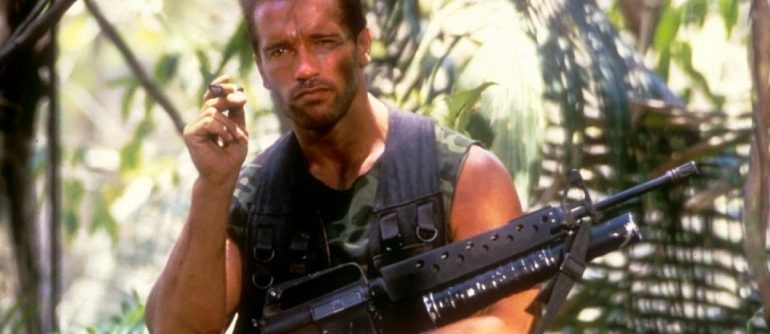
Action cinema has always been a moving target. It has been kinetic, noisy, a little vain, and absolutely magnetic. It is defined less by strict rules and more by the aggressive pulse in its bones. Essentially, the genre relies on spectacle, like chases, fights, explosions, near-misses, and last-second saves.
In this case, the DNA is simple. Let’s say, when a character faces danger, stakes escalate, and physicality gives way to speech. Then, cameras get close, cuts get faster, sound gets louder, and the audience leans forward, almost involuntarily, as if gravity has shifted toward the screen and we are just following orders.
So, read on to get a better idea of how action cinema has evolved from the classics of the ‘80s to modern blockbusters.
Major Reasons Why Audiences Like Action Cinema
Audiences keep coming back because adrenaline is a language we understand without a dictionary. The genre is a shorthand for urgency, courage, and controlled chaos.
We chase a feeling that sits somewhere between risk and release. Essentially, it is the catharsis of watching a protagonist take a punch and keep moving. Also, it is a delight to see impossible math add up in real time. People want to feel it in their chest. The best action films deliver that thump.
Moreover, there is the vibe factor. This includes the popcorn crunch, the lights dimming, and the first thud of the score. It is a ritual we keep, even when streaming tries to shrink everything.
Action cinema is a test track for our appetite for spectacle, for our tolerance for implausibility, for our hope that heroes can still outrun the odds. Retro Bet, a nostalgia-themed slot, sits underneath it, too. The genre keeps trying to recapture that memory.
The Golden Era of Action Films: The 1980s and 1990s
It was about Muscle, Mayhem, and Machismo! The eighties and nineties turned action into an export commodity.
There were big shoulders and bigger one-liners. In fact, Schwarzenegger, Stallone, and Van Damme built films around presence, around physical charisma, around bodies that look like they can carry a third act on their backs.
Also, practical stunts were the spine, real cars crashing into real barriers, and pyrotechnics you could feel from row seven.
Moreover, directors and stunt coordinators designed set pieces like clockwork with heavy hands and perfect timing. Also, sweat was a special effect you believed.
The same era refined the grammar of contact. Punches were wide and readable, guns barked, and locations mattered. A skyscraper becomes a character, a jungle becomes a mind game.
Also, the framing taught us to trust the geography, to see the threat, to track the movement. If you wanted a calculator for pacing, you counted breaths between impacts, and you adjusted.
That is where an odd phrase fits as a metaphor for how fans rewatch these old sequences. An aviator round history calculator, in spirit, marks the beats, times the runs, and logs the cooldowns. It is nostalgic science masked as a good time.
The Shift in the 2000s: Technology and the Rise of CGI
By the 2000s, action films embraced digital effects not as a garnish, but as a second engine. CGI let cameras dream bigger. It unlocked scale and speed that human bodies and practical rigs could not safely mimic. We flew through cities, bent physics, and made fights feel like ideas colliding as much as fists.
But that freedom needed discipline. Without grounded frames, the spectacle becomes soup. The smarter films mixed the digital with tactile anchors, dirt on boots, real glass in the background, digital assists that feel invisible, not loud.
This period recalibrated realism versus spectacle. The thoughtful projects treated CGI like a magician’s misdirection. You look at the hand with the trick while the other hand adjusts the emotional stakes.
Even then, the audience’s tolerance for tangibility stayed high. We still wanted bruises to mean something. This way, filmmakers learned to cheat honestly, hide wires, augment falls, extend environments, and always give the eye a landmark.
Essentially, the balance became the art. You push until you reach the edge of disbelief, then you walk it back half a step, and the scene sings.
Modern Action Cinema: Diversity and Global Influence
Modern action feels less centralized and far more porous. The influence flows from everywhere:
- Hong Kong precision
- Indonesian ferocity
- Korean mood and menace
- Indian maximalism
- European cool
- American scale.
Directors and stars move across borders. Also, fight choreographers cross-pollinate styles. The camera language updates to respect physical skill and cultural rhythm. Long takes gain trust because they display difficulty without bragging too loudly. Wide shots return because clarity beats confusion.
Streaming platforms press the accelerator on accessibility. For instance, a Friday drop features a Thai action film, a Canadian thriller, and an Indian heist caper. Audiences sample more flavors, expectations shift, and the global conversation gets bolder.
In fact, you can watch a hallway fight that feels like a dance, then a desert chase that feels like opera, and then a kitchen brawl that feels deeply personal. The algorithm does not understand sweat, but it understands engagement.
So the new metric nudges filmmakers to make the first minutes count, to design hooks you can feel immediately, even on a six-inch screen.
The Future of Action Films
Predictions are a moving target, but a few lines feel firm. AI-based filmmaking will likely accelerate previsualization and stunt planning, lead to safer sets, deliver sharper previs, and enable smarter rehearsal loops.
Virtual production will craft worlds that are convincing enough to give actors anchors, not just green monotony. Immersive experiences will creep from niche to mainstream, haptic theaters, enhanced spatial audio, and more weight on the seat when the car flips.
Yet the heart remains old school. Practical stunts may swing back because authenticity reads in a scene’s muscles. Audiences can tell when gravity is pretend.
The future will also split paths. One road is mega-scale, stadium-size action with lore and loops and franchises that feel inevitable. The other road is precise minimalism, tight stories, singular locations, brutal choreography that turns a staircase into a thesis.
Both roads can thrive because the genre is elastic. If the craft stays respectful of physics and the characters keep their stakes honest, we are in good hands. The next decade could be a handshake between craft and computation, a quiet pact to keep the visceral intact.
Conclusion
Action films remain timeless because they trade in body language and decisive intent. Those currencies do not expire. When a character runs toward danger, we understand them without speech. When a stunt lands with honest weight, we feel the courage behind the curtain.
The genre keeps teaching filmmakers how to cut, frame, and move. This way, it teaches audiences how to breathe through chaos.