



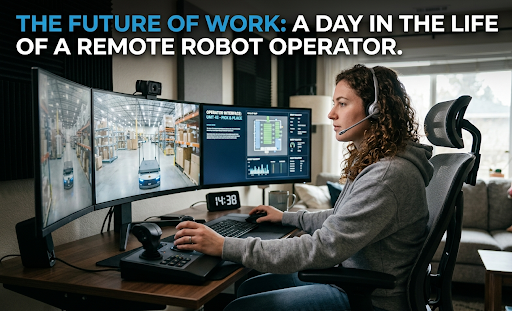
The future of work is no longer something we imagine; it’s already here. Across industries like logistics, healthcare, retail, and security, robots are becoming part of daily operations. But behind many of these machines is a growing workforce that most people rarely see: remote robot operators.
These professionals work from control centers or even home offices, managing robots in real time. Their role blends technology, problem-solving, and decision-making, creating a new kind of digital career in the age of automation.
Morning: Logging Into a Connected World
A typical day for a remote robot operator begins like any modern remote job—logging into a system from a computer workstation. But instead of checking emails or dashboards, operators connect to live feeds from robots working in different environments.
This could include:
Delivery robots navigating city streets
Warehouse robots sorting packages
Security robots patrolling large facilities
Operators monitor multiple systems simultaneously, ensuring everything runs smoothly.
Midday: Managing Real-Time Challenges
As operations continue, the role becomes more dynamic. Robots may encounter unexpected situations that require human input.
Examples include:
Navigating obstacles in crowded areas
Adjusting routes due to environmental changes
Responding to system alerts or errors
At this stage, operators step in to guide the robot or make decisions that automation alone cannot handle. This real-time support ensures operations remain efficient and safe.
Afternoon: Optimizing Performance and Workflows
Beyond solving immediate issues, remote robot operators also focus on improving overall system performance.
They may:
Analyze data from robot activities
Identify patterns or recurring issues
Suggest improvements to workflows
This makes the role not just reactive, but also strategic. Operators contribute to making robotic systems smarter and more efficient over time.
Collaboration with Technology and Teams
Remote robot operators don’t work alone. They collaborate with engineers, developers, and operations teams to improve systems.
Communication tools allow them to:
Report technical issues
Share performance insights
Coordinate with on-site staff
This collaboration helps bridge the gap between human expertise and robotic capabilities.
Why This Role Is Growing
As more businesses adopt automation, the demand for remote robot operators continues to increase. Companies need skilled professionals who can manage systems, reduce risks, and ensure smooth operations.
This role is expanding because it offers:
Flexibility through remote work
Opportunities in multiple industries
A balance between technology and human decision-making
It represents a new category of jobs created by automation rather than replaced by it.
The Human Side of Automation
Despite advances in artificial intelligence, robots still depend on human judgment. Remote robot operators provide the adaptability and critical thinking that machines lack.
Their involvement helps:
Improve safety in real-world environments
Handle complex or unpredictable situations
Maintain consistent performance
This shows that the future of work is not about replacing humans, but about working alongside technology.
The Role of Remote Robot Operator Services
Many businesses rely on professional remote robot operator services to manage their systems efficiently. These services provide trained operators who support robotic operations in real time, ensuring reliability and scalability.
With expert support, companies can:
Improve system performance
Reduce downtime
Enhance safety
Scale operations more effectively
Looking Ahead: The Future of Work
The role of remote robot operators is just the beginning. As robotics and automation continue to evolve, new careers will emerge that combine human intelligence with advanced technology.
Future developments may include:
AI-assisted decision-making tools
More immersive control systems using virtual reality
Expanded use of robotics in everyday industries
Final Thoughts
A day in the life of a remote robot operator reflects a broader shift in how we work. Jobs are becoming more digital, more flexible, and more technology-driven.
Rather than replacing human workers, automation is creating new opportunities for roles that require creativity, adaptability, and problem-solving. Remote robot operators are at the center of this transformation, shaping the future of work one task at a time.