



Relative humidity along the Connecticut shoreline routinely sits between 65 and 80 percent through July and August, a byproduct of warm air moving across Long Island Sound and settling over towns like Milford, New Haven, Stamford, and Bridgeport. Ask anyone who has lived through a summer here and they will tell you it is rarely the thermometer alone that makes a house miserable. It is the moisture riding along with it.
Why 76 Degrees Can Feel Worse Than a Dry 80
The body’s main cooling mechanism is evaporation: sweat pulls heat off the skin as it turns to vapor. That process depends entirely on how much moisture the surrounding air can still absorb. In a dry climate, a room at 80 degrees can feel almost comfortable because sweat evaporates quickly and carries heat away with it. Along the Connecticut coast, where relative humidity often climbs past 70 percent in mid-summer, the air is already saturated enough that evaporation slows to a crawl. A room reading 76 degrees on the thermostat can feel sticky, close, and warmer than the number suggests, because the air simply is not accepting moisture off the skin the way it would somewhere drier. This is the gap between air temperature and how a room actually feels, and it is the reason so many coastal homeowners keep their thermostats several degrees lower than friends inland just to feel the same level of comfort.
Where the Moisture Actually Comes From
Geography explains most of it. Prevailing summer winds carry marine air off the Sound inland through Stratford, Shelton, and the surrounding towns, and that air arrives already loaded with water vapor picked up over open water. Combine that with humidity rising off lawns, wetlands, and soil as the day warms, and coastal Connecticut ends up with outdoor air that stays damp practically around the clock in July and August, not just during rain. A house does not have to be near a marsh or a beach to feel this. Ten or fifteen miles inland from the Sound is close enough for that marine humidity to still shape the outdoor air quality most days.
When the Air Conditioner Starts Working as a Dehumidifier
None of that outdoor moisture stays outdoors. Gaps around window and door frames, rim joists, attic hatches, and electrical and plumbing penetrations all give humid air a path into the house, a process known as air infiltration. Every bit of humid air that leaks in has to be dealt with by the cooling system, and central air conditioners lower humidity as a side effect of cooling the air below its dew point, wringing moisture out as condensation before the air can actually drop in temperature. In a home with a leaky building envelope, the air conditioner spends a disproportionate share of its runtime just processing incoming moisture rather than lowering the temperature, which is why a tightly sealed house with the same square footage and the same size system will often feel cooler and less humid on the same afternoon than a drafty one next door.
The Basement Is Usually Where It Starts
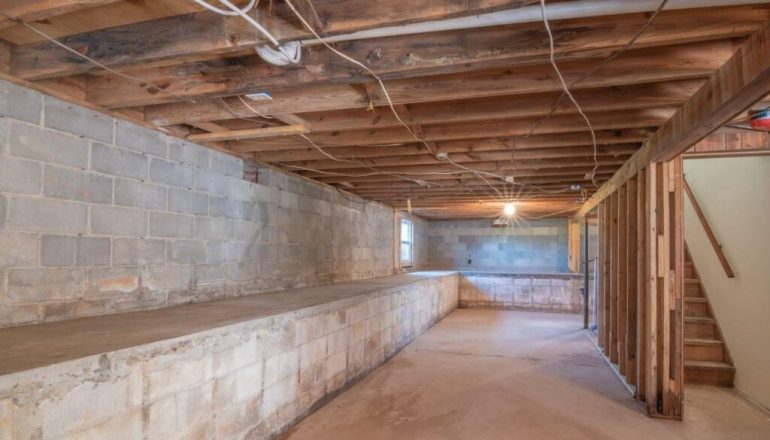
Basements and crawl spaces are the most overlooked part of a summer humidity problem, largely because nobody spends much time down there to notice. These spaces stay naturally cool through the summer since they sit below grade, and a cool surface meeting warm, humid air is the exact recipe for condensation. Concrete foundation walls sweat, floor joists pick up dampness, and in a vented crawl space, humid outdoor air moving across cool soil condenses directly on framing members. That moisture is what produces the musty smell so many older Connecticut homes develop by mid-summer, and it is the reason a Connecticut insulation company will often begin a summer comfort assessment in the basement or crawl space rather than the living room, since that is usually where the moisture load originates before it ever reaches the rooms people actually spend time in.
How That Musty Air Reaches the Upstairs
Warm air rises, and as it does, it pulls replacement air up from wherever it can find it, including from the basement through stairwells, gaps around plumbing chases, and cracks in framing. This natural movement, known as the stack effect, is how basement moisture and odor migrate into living space two or three floors above their source, even in a house that seems dry and comfortable on the main level. Sealing rim joists, foundation penetrations, and the gaps where a basement stairwell meets the rest of the house cuts off that pathway, which is often why addressing a musty smell upstairs starts with air sealing work in a space the homeowner rarely visits.
Why Damp Insulation Makes the Whole Problem Worse
Insulation that absorbs and holds onto moisture stops doing its job. Fiberglass batts in a damp basement or crawl space lose a meaningful share of their insulating value once they take on water, and wet cellulose can compact and settle, opening gaps it was meant to fill. Worse, damp insulation becomes an ideal surface for mold and mildew to establish themselves, since organic material, trapped moisture, and dark, still air are exactly the conditions mold needs to grow. Once that happens, the problem stops being just a comfort issue and becomes an air quality one, with spores capable of traveling upward through the same stack effect that carries musty odors into bedrooms and living rooms. Sealing a space against humid air and insulating it with a moisture-resistant material are really two halves of the same job. Doing one without the other tends to leave the underlying problem in place, just in a slightly different form.