



It’s 3:00 AM on a Wednesday. The weekly care package reset just hit. You’re staring at the main menu, the new Source 2 lighting reflecting off the AK-47 in your hands. You claim the items. A P250 | Cyber Shell (Factory New) and a random graffiti. You look at the P250. It’s worth maybe a few cents on the market. You don’t sell it. You just leave it in the inventory, joining a graveyard of 40 other identical, low-tier drops.
Why do we do this? The transition to Counter-Strike 2 was supposed to be a clean break. A technical leap forward. Yet, our relationship with the game’s virtual economy remains stubbornly tethered to the ghosts of the past.
The Sub-Tick Reality Check
We spend an ungodly amount of time debating the nuances of sub-tick architecture. We analyze how the new networking model affects the timing of a peek on Mirage, or how the volumetric smokes fundamentally alter the geometry of holding an angle on Inferno. These are valid, crucial discussions. They define the competitive integrity of the modern game.
But there is a massive blind spot in how we perceive CS2’s evolution. We treat the gameplay as a cutting-edge simulation, while completely ignoring that the meta-layer of the game—the economy, the drops, the items—operates on a psychological loop that hasn’t fundamentally changed in a decade. The graphics are beautifully rendered, but the dopamine triggers are purely retro. We demand pixel-perfect precision from the engine, yet we blindly accept the archaic randomness of the drop system.
Muscle Memory and the Market
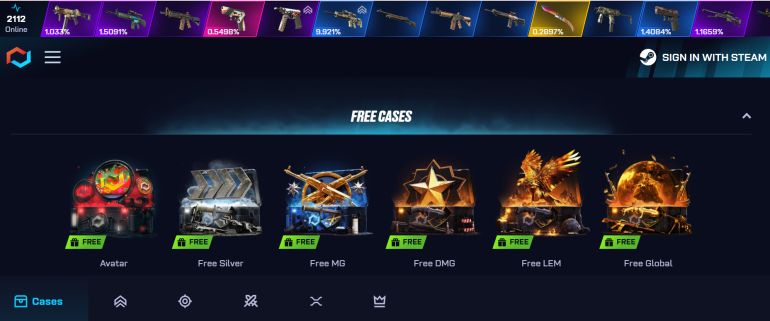
This disconnect becomes painfully obvious when you listen to the community. We’ve adopted new terminology for gameplay mechanics, but our economic vocabulary is a museum of legacy habits. It’s funny how technical upgrades fade into the background when the real focus shifts to the market. You can praise the volumetric smokes all you want, but when Wednesday rolls around, the community’s collective muscle memory is still firmly stuck on opening a cs go case.
The naming conventions might have shifted in the official storefront, and the UI might have a fresh coat of paint, but the psychological anchor remains. Players still talk about the old containers, still reference the legacy drop pools, and still evaluate new items based on standards set years ago. The market doesn’t just react to supply and demand; it reacts to nostalgia.
The Weight of the Digital Junk
Let’s talk about the actual inventory. In the early days of the franchise, getting a drop felt like a minor lottery win. A rare blue or a purple skin actually meant something. You could trade it for a knife, or at least fund your next tournament ticket. Today, the economy is hyper-inflated. The vast majority of drops are essentially digital confetti.
Yet, the psychological attachment remains. We don’t hold on to these things for their monetary worth, but because they are a constant thread of our gaming history. Deleting a 3-cent item feels like deleting a saved game file. It’s an irrational attachment to a string of code, but it’s deeply human. We are hoarding digital ghosts because they prove we were there, playing through every iteration of the game.
The Illusion of the Clean Slate
Valve tried to rebrand. They changed the name, they overhauled the engine, they updated the UI. But they couldn’t overwrite fifteen years of player behavior. The market still dictates the meta in ways that have nothing to do with hitboxes. When a new operation drops, the community doesn’t just evaluate the missions; they immediately calculate the ROI of the stars. We are playing a highly complex, tactical shooter, but a significant portion of the player base is simultaneously playing a stock market simulator.
There is a strange comfort in this hoarding behavior. In a game where you can lose a 1v5 clutch because of a stray pixel or a weird sub-tick registration, the inventory is the one place where you have absolute, unchallengeable control. You own that P250. It’s sitting right there in your stash. It doesn’t miss shots. It doesn’t get flanked. It just exists, quietly accumulating digital dust.
So the next time you log in and claim your weekly reward, take a good look at that cheap, mass-produced skin. Don’t sell it on the market for the price of a virtual cup of coffee. Keep it. Let it sit in the dark corners of your inventory, a tiny, worthless monument to the fact that no matter how many times the engine gets rebuilt, we are all just here for the drop.