


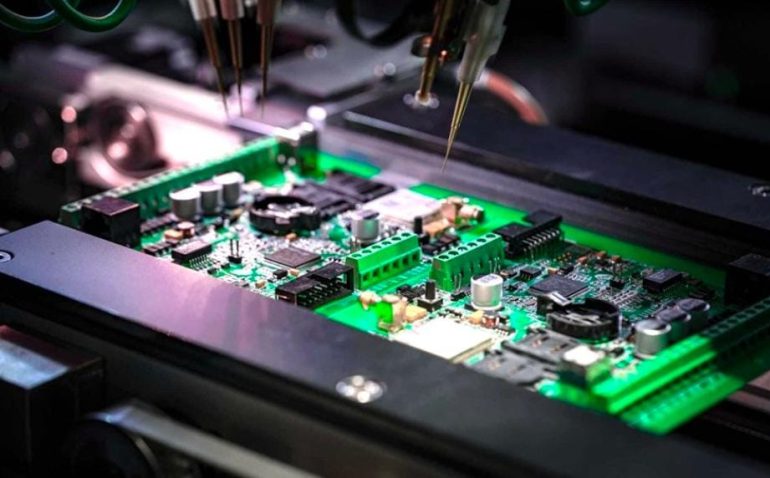
Managing electronics manufacturing across multiple suppliers can quickly become a project-management challenge. One company may fabricate the bare PCB, another may source components, a third may handle SMT assembly, and a separate provider may perform testing and inspection.
Each supplier introduces another schedule to track, another communication channel to manage, and another point where information or materials can become disconnected.
A more integrated approach is turnkey PCB assembly, where PCB fabrication, component sourcing, assembly, inspection, and testing can be coordinated through one manufacturing workflow. Instead of managing every production stage separately, companies can work with one partner responsible for coordinating the process from materials to finished electronics.
The Challenge of Managing Multiple Suppliers
Traditional PCB production can involve several independent vendors. A purchasing team may need to order bare PCBs from one manufacturer while sourcing components from different distributors and then sending everything to an assembly house.
This arrangement can create several common problems.
A PCB shipment may arrive later than expected. Components may be delayed or delivered separately. Assembly cannot begin until all required materials are available. If an issue is discovered during inspection, determining which supplier is responsible can also take additional time.
The result is often a chain of dependencies where a small delay at one stage affects the entire project.
For engineering and purchasing teams, managing these dependencies can become just as difficult as managing the manufacturing itself.
How Reducing Suppliers Simplifies Coordination
Using fewer suppliers can significantly simplify project coordination.
Instead of separately managing PCB fabrication, component procurement, SMT assembly, inspection, and testing, companies can consolidate these activities with an integrated manufacturing partner.
This is where turnkey PCB assembly can provide a practical advantage.
A single supplier can coordinate the major production stages while giving the customer one primary communication channel.
This can help reduce:
- Scheduling conflicts
- Repeated supplier communication
- Material handoff delays
- Responsibility gaps
- Quality-control confusion
- Production-status uncertainty
For purchasing teams, fewer suppliers can make procurement easier to organize. For engineers, it can simplify communication when technical or manufacturing questions arise.
One Workflow From PCB to Finished Assembly
An integrated manufacturing process can connect several stages into one coordinated workflow.
A typical turnkey process may include:
PCB fabrication → Component sourcing → Incoming inspection → SMT assembly → Automated inspection → Testing → Final delivery
The advantage is not simply that all these services are available from one company. The more important benefit is that the stages can be planned together.
For example, component availability can be considered when the assembly schedule is created. PCB fabrication can be coordinated with component arrival, while inspection and testing can be planned around the expected assembly completion date.
This reduces the number of manual handoffs between independent suppliers.
Material Management Is a Critical Part of the Process
Components represent a major part of an electronics manufacturing project. A PCB cannot be assembled until the required components are available, correctly identified, and ready for production.
Poor material management can therefore create delays even when the PCB itself has already been manufactured.
An integrated supplier should have a structured system for receiving, identifying, storing, and tracking components.
FastTurnPCB uses smart material racks and MES to support material management. These systems can help organize production materials and provide better visibility throughout the manufacturing workflow.
Effective material control can reduce the risk of misplaced components, incorrect material handling, and unnecessary production interruptions.
Incoming Component Inspection
Material management should begin as soon as components arrive.
If incorrect, damaged, or unsuitable components enter the production process, problems may not become obvious until assembly or testing.
FastTurnPCB provides 100% incoming component inspection, creating an early quality checkpoint before components move into production.
This approach can help verify incoming materials against project requirements and reduce the possibility of assembly problems caused by unsuitable components.
For projects with large bills of materials, early component verification can be especially valuable.
MES Helps Connect Production Information
Manufacturing Execution Systems, or MES, can provide another layer of production control.
Instead of relying entirely on manual records, an MES can help connect manufacturing activities and production information. This can improve visibility into material status, production progress, and workflow coordination.
For customers, better production visibility can make it easier to understand where an order stands and whether any material or manufacturing issue could affect the schedule.
Combined with smart material racks, MES can support a more organized approach to component handling and production management.
Assembly Is Only One Part of Turnkey Manufacturing
Although SMT assembly is an important stage, turnkey manufacturing should not be viewed as simply an assembly service.
The quality of the final assembly depends on the stages that come before it.
The PCB needs to be manufactured correctly. Components need to be available and verified. Assembly parameters need to be controlled. Finished boards need appropriate inspection and testing.
Connecting these stages allows the manufacturer to manage the entire production flow instead of treating each activity as an isolated task.
Inspection at Multiple Production Stages
Quality control should also be integrated into the workflow.
Different inspection methods can provide different types of information during production.
SPI can evaluate solder paste application before components are fully assembled.
3D AOI can inspect component placement and visible soldering conditions after assembly.
X-Ray inspection can examine hidden solder joints and other areas that cannot be evaluated through standard visual inspection.
FastTurnPCB provides 100% SPI, 100% 3D AOI, and X-Ray inspection for applicable assemblies.
Integrating inspection into the manufacturing workflow can help identify problems earlier and reduce the likelihood of defective assemblies continuing to the next stage.
Testing Completes the Manufacturing Workflow
Inspection is not necessarily the final step.
Depending on the product, functional or electrical testing may also be required to verify that the completed assembly operates according to its intended requirements.
Testing can help identify issues that may not be visible through standard inspection. By combining fabrication, assembly, inspection, and testing within one workflow, manufacturers can provide a more complete production solution.
For customers, this means fewer handoffs and less need to coordinate testing with another external supplier.
Managing Schedules More Effectively
Production scheduling becomes easier when manufacturing activities are coordinated under one supplier.
With multiple vendors, purchasing teams may need to track separate PCB delivery dates, component shipments, assembly slots, inspection schedules, and testing arrangements.
An integrated supplier can coordinate these stages around a common production plan.
If a component is delayed, the manufacturer can identify the potential impact on assembly. If PCB fabrication takes longer than expected, downstream production can be adjusted accordingly.
This centralized approach gives project managers a clearer view of the overall manufacturing schedule.
Clearer Responsibility When Problems Occur
Another advantage of supplier integration is clearer responsibility.
When several independent companies are involved, a manufacturing problem can lead to questions about which supplier is responsible. A missing component, PCB defect, assembly issue, or inspection failure may require communication between multiple organizations.
With a turnkey manufacturing partner, there is one primary supplier responsible for coordinating the connected production process.
This does not eliminate every manufacturing problem, but it can make investigation and communication much more straightforward.
Supporting Prototype and Production Requirements
Turnkey manufacturing can be useful throughout the product lifecycle.
During prototyping, engineering teams may need a small number of assembled boards for testing and design validation. After the design is finalized, the same manufacturing partner can support pilot production and larger manufacturing quantities.
Continuing with one supplier can preserve knowledge about the PCB, components, assembly requirements, and testing procedures.
This continuity can reduce the need to repeatedly explain the project to new suppliers as production requirements change.
PCB + PCBA Under One Partner
For companies looking to simplify procurement, having both PCB fabrication and PCBA available from one supplier can be particularly useful.
The manufacturer can coordinate the bare-board manufacturing process with component sourcing and assembly rather than requiring the customer to move boards between different companies.
This integrated model can help reduce transportation between suppliers, simplify scheduling, and create a clearer chain of responsibility.
It also provides purchasing teams with a more straightforward way to manage manufacturing costs and production timelines.
Choosing a Turnkey Manufacturing Partner
When evaluating a turnkey PCB assembly provider, companies should look beyond the assembly equipment alone.
Important questions include:
- Can the supplier manufacture the PCB and perform PCBA?
- Does it manage component sourcing and material control?
- Is incoming component inspection performed?
- Does it use smart material-management systems?
- Does it have MES or another production-tracking system?
- Are SPI and 3D AOI available?
- Can applicable assemblies receive X-Ray inspection?
- Is functional or electrical testing available?
- Can the supplier support both prototypes and production?
- Is there one team responsible for overall project coordination?
The answers can reveal whether a supplier genuinely provides an integrated manufacturing workflow or simply offers several unrelated services.
A More Connected Approach to Electronics Manufacturing
The primary value of turnkey manufacturing is coordination.
By connecting PCB fabrication, component management, assembly, inspection, and testing through one workflow, companies can reduce the number of supplier relationships they need to manage.
That can lead to simpler communication, better material visibility, more coordinated scheduling, and clearer responsibility when issues arise.
For purchasing teams, this means less time spent managing separate suppliers. For engineering teams, it means a more direct communication path when manufacturing questions need to be resolved.
FastTurnPCB combines PCB + PCBA, 100% incoming component inspection, smart material racks, MES, SPI, 3D AOI, X-Ray inspection, and testing within its manufacturing capabilities.
For companies seeking a more organized way to move from PCB fabrication to assembled and tested electronics, an integrated manufacturing partner can provide a practical supply-chain solution. Fast Turn PCB can support this connected approach by bringing key manufacturing stages together under one workflow.