



Most people treat their commute as dead time — a gap between where they are and where they need to be. But consider this: the average driver spends somewhere between 250 and 300 hours per year behind the wheel. That’s more than six full work weeks. If even a fraction of that time could be used intentionally — for learning, planning, or simply arriving less stressed — the cumulative effect on your life would be significant.
The good news is that you don’t need a new car to make this happen. A handful of smart, affordable tech upgrades can transform even an older vehicle into a connected, capable workspace on wheels. One of the most established sources for this kind of upgrade is the Carlinkit wireless adapter store, which covers a wide range of solutions compatible with hundreds of vehicle makes and model years. In 2026, the tools exist. The question is whether you’re using them.
Why Your Car’s Factory System Is Already Behind
Here’s a reality most car owners don’t think about: by the time a new vehicle reaches the dealership floor, its infotainment system is already two to three years out of date. Auto manufacturers design their software years before production, and once it ships, updates are minimal. You end up with a touchscreen that can’t run your apps, requires a cable to connect your phone, and offers a navigation system worse than the free one in your pocket.
This isn’t a minor inconvenience — it’s a real friction point that affects your focus and your time every single day. The fix, thankfully, is relatively simple and doesn’t require touching your dashboard wiring.
Wireless CarPlay and Android Auto Adapter
If your car supports wired Apple CarPlay or Android Auto, the single fastest upgrade you can make is going wireless.
A wireless adapter plugs into your car’s USB port, connects to your phone via Bluetooth once, and from that point on, your phone’s interface launches automatically every time you start the car. No cable. No fumbling. No delay.
The practical impact is bigger than it sounds. When your phone connects instantly, you’re more likely to actually use navigation, actually queue up your podcast or audiobook, and actually stay hands-free on calls. Remove enough small frictions from a daily habit, and behavior genuinely changes. These adapters are compact, require zero installation, and work with both iPhones and Android devices.
Best for: Drivers whose cars already have wired CarPlay or Android Auto built in.
Android Auto AI Box for Your Car Display
Not every car comes with a smart display. In fact, the majority of vehicles on the road today have a screen that does little more than show the radio or a basic camera feed. For these drivers, a wireless adapter won’t help — but a multimedia AI box will.
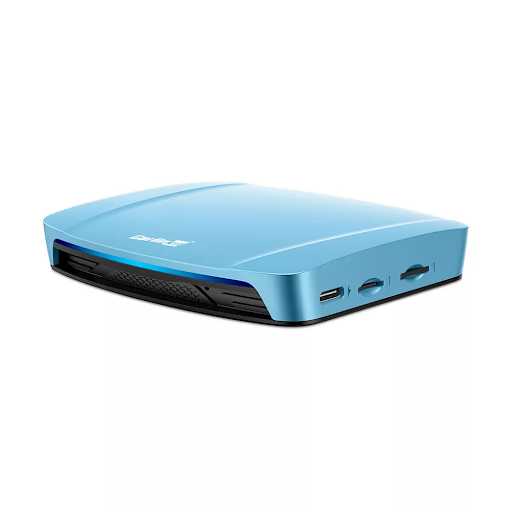
An Android Auto AI Box for car display is a compact Android-powered unit that connects to your car’s existing screen through an input and gives it a fully functional operating system. We’re talking real Android, with app support, built-in Wi-Fi, Bluetooth, GPS, and the ability to stream content, run navigation offline, and operate completely independently of your phone.
This is the closer-to-a-full-upgrade option. Instead of simply mirroring your smartphone, the AI box acts as its own brain. You can use Google Maps without draining your phone battery. You can have Spotify running through your speakers without keeping your phone screen on. On longer trips, you can stream video while parked or pull up reference content without touching your phone at all.
The setup is slightly more involved than a plug-in adapter but well within reach for anyone comfortable with basic electronics. The payoff is a dramatically more capable system — one that makes your existing screen feel like it was built five years in the future instead of five years in the past.
Best for: Drivers whose vehicles are already equipped with CarPlay or Android Auto functionality, and who wish to have a completely independent smart system within their vehicle.
A Dash Cam with Cloud Connectivity
This one isn’t about productivity — it’s about protection. A modern dash cam records continuously while you drive, saves footage automatically in the event of an incident, and in many cloud-connected models, can send clips to your phone in real time.
Beyond the obvious insurance and liability benefits, knowing your drive is recorded tends to make you a more deliberate driver. Some models also offer parking mode surveillance, which adds another layer of security when your car is unattended. You don’t need to spend a lot here — mid-range cameras offer 1080p or 4K recording, wide-angle lenses, and decent night vision for under $100.
Choosing the Right Upgrade for Your Car
If you’re not sure where to start, here’s a simple decision framework:
Does your car already have wired CarPlay or Android Auto? → Yes → A wireless adapter is your fastest, cheapest win. Start there. → No → Look at a multimedia AI box to give your car’s screen real functionality.
Do you want a system that works without your phone? → If yes, the AI box is the move — it runs independently. → If no, an adapter or standard CarPlay setup is sufficient.
Budget consideration:
- Wireless adapters typically run $50–$150
- Multimedia AI boxes range from $100–$300 depending on specs and capabilities
Neither requires professional installation. Both are reversible. And both deliver noticeable improvements from the very first drive.
The Bigger Opportunity: Reclaiming Your Commute
The real reason to care about in-car tech upgrades isn’t the gadgets — it’s what they make possible. When your car connects seamlessly, when navigation launches before you’ve buckled your seatbelt, when your audio is already queued up and your hands stay on the wheel, you stop managing technology and start actually using your drive.
People who learn languages in their cars, who finish audiobooks on the way to work, who think through their day during a thirty-minute commute and arrive already focused — they’re not special. They’ve just removed the friction that everyone else leaves in place.
The right in-car tech setup doesn’t add complexity to your drive. It removes it. And over months and years, that removal compounds into something that looks a lot like an edge.
Final Thoughts
You don’t need to buy a new car to have a smarter one. The aftermarket has caught up — and in some ways, surpassed — what manufacturers offer from the factory. Whether you start with a simple wireless adapter or go all in on a full multimedia AI box, the upgrade pays for itself quickly in time saved, frustration avoided, and drive time actually used.
Pick one. Install it this week. The commute you’ve been tolerating can become one of the more productive hours of your day.