


On the first of June 2025, the shelves changed. Single-use disposable vapes — the format that had dominated UK vaping for half a decade — became illegal to sell, and millions of adult vapers were pushed to find a replacement for a habit that had, for better or worse, kept many of them off cigarettes. More than a year on, the dust has settled and a clear successor format has emerged: the rechargeable prefilled pod system, with IVG’s Pro range among the most widely adopted. This guide is written for the vaper still navigating the transition — or coming back to vaping after the ban disrupted their routine — and covers what the law now allows, what makes a kit compliant, how the IVG Pro system works, and how to buy wisely in the post-ban market, where legitimate innovation and dodgy grey-market stock sit closer together than they should.
What the Ban Actually Changed
The legislation was aimed squarely at single-use products: devices that could be neither recharged nor refilled, destined for the bin — lithium battery and all — after roughly 600 puffs. The environmental case had become unanswerable, with millions of units discarded weekly, and concerns about youth appeal supplied the political momentum. Crucially, the ban did not touch vaping itself. Rechargeable devices, refillable tanks and replaceable pods all remain fully legal, as does nicotine e-liquid up to the long-standing 20mg limit within 2ml tanks. The law, in effect, banned a business model rather than a technology — and the industry’s response was to rebuild disposable convenience on legal foundations.
What Makes a Kit Compliant Now
A quick literacy check for the modern shelf, because knowing the rules protects you as a buyer. A legal kit must be rechargeable, with a replaceable or refillable liquid component — a device you keep, feeding on consumables you replace. The tank you actually inhale from is capped at 2ml, nicotine at 20mg per millilitre (2%), and single liquid containers at 10ml. Packaging must carry the nicotine health warning, ingredient information and UK responsible-party details. Anything sold as a sealed all-in-one you throw away whole, anything claiming strengths above 20mg, and anything with cartoonish, warning-free packaging is either non-compliant old stock or counterfeit — and none of it should get your money.
How the Refill Format Rebuilt Disposable Convenience
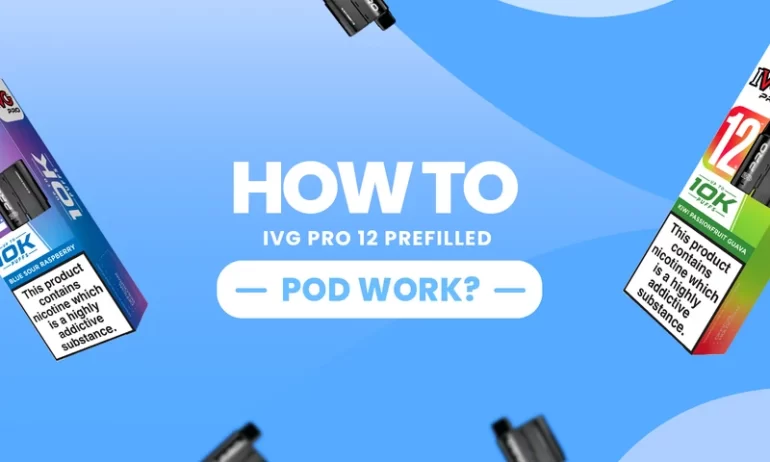
The engineering answer to the ban is the dual-chamber pod, and IVG’s implementation is a clean example. Each refill pack combines a 2ml pod — mouthpiece, built-in mesh coil, the legal vaping chamber — with a 10ml sealed container that clicks onto it and automatically feeds liquid across as you vape. That is 12ml of nicotine salt e-liquid per pack, rated at approximately ten thousand puffs, with the coil kept saturated from first draw to last. You never open a bottle, prime a coil or touch e-liquid; when the pack runs dry, you swap the whole two-part unit for a fresh one. The rechargeable device underneath — sold originally as the Pro 10K, now as the Pro 12, alongside the newer Pro 2, all pod-compatible — carries a 1000mAh battery, USB-C charging and an on-body display. The daily experience is, by design, indistinguishable from a disposable except that it lasts sixteen times longer and the battery goes back in your pocket instead of the bin.
Liquid capacity per purchase: the old single-use format versus the modern dual-chamber refill pack.
The Buyer’s Checklist
Shopping for a post-ban system, run any candidate through five questions. Capacity and honesty: does the puff claim match the liquid carried? IVG’s ten-thousand rating rests on a full 12ml, which is at the generous end of mainstream packs. Strengths: is there a range, or 20mg only? The Pro line’s 20mg, 10mg and 0mg ladder is the widest among the big brands and matters enormously if you ever plan to cut down. Flavour depth: will the catalogue still interest you in a year? Around 39 options says yes. Brand durability: will pods still be on shelves in eighteen months? IVG’s position as one of the UK’s largest, longest-established vape companies is about as safe as the category offers. And retail support: are multi-buy deals and reliable stock available from reputable UK sellers? For ivg pro 10k refills, comfortably so.
Spotting Grey-Market and Counterfeit Stock
The ban’s unhappy side-effect has been a thriving under-the-counter trade in banned disposables and fake refills, and popular lines are the forgers’ favourite targets. Protect yourself with a few habits. Buy from established UK retailers with real business addresses and reviews, not marketplace sellers at suspiciously low prices. Check the box: UK nicotine warning covering the pack face, strength printed clearly at or below 20mg, ingredient leaflet, UK address. Be suspicious of any ‘refill’ sold as a sealed device with no separate battery, and of any strength or capacity claim that would be illegal — a genuine product cannot exceed the rules, so a listing that does is announcing itself. If a deal looks impossible, it is dodging either tax, compliance or authenticity, and often all three.
Disposing of the Old and the New
Two housekeeping notes complete the transition. If you still hold a drawer of pre-ban disposables, using them is not illegal — selling them is — but dispose of dead ones properly: vape-shop take-back bins or small-electricals recycling, never household waste, where crushed lithium cells start bin-lorry fires. The refill era shrinks this problem dramatically but does not erase it: spent pod packs still contain plastic and residue and belong in the same recycling streams. One rechargeable battery and a couple of pods a month is a footprint a fraction of the old habit’s, which is rather the point of the whole legislative exercise.
A Realistic First Fortnight on the New Format
For readers braced for an adjustment period, here is what the first two weeks actually hold — which is to say, very little. Day one contains the format’s entire learning curve: click the 2ml pod and 10ml container together, seat them, wait the two to three minutes the mesh coil needs, and vape exactly as you always did. The novelties register within days, all of them pleasant: the battery display replacing disposable guesswork, flavour that holds steady instead of fading through the pack’s final third, and the odd sensation of a device still going strong a week after purchase. The only new habits worth deliberately forming are charging opportunistically — a top-up while cooking covers a heavy day — and keeping a sealed spare pack at home, since a sealed system has no bottle-of-liquid fallback. By the end of week two, most converts report the strongest verdict a product can earn: they have stopped thinking about it entirely, apart from a lingering disbelief at how rarely their wallet is involved.
Making Your First Post-Ban Purchase
For a former disposable user moving to the IVG Pro, the sensible first basket looks like this: one device, and two or three refill packs in different flavours at the strength you actually used — which, for nearly everyone coming from disposables, means 20mg nicotine salt. Resist the cautious urge to start lower; under-strength vaping is the classic cause of a failed transition, and the 10mg tier exists for a deliberate step-down later, not day one. When the kit arrives, the only technique that matters is patience at setup: click pod and container together, seat them in the device, and give the mesh coil two to three minutes to saturate before the first puff. That single habit prevents virtually every burnt-pod complaint in existence.
On where to buy: online specialists beat convenience stores on both price and range in the refill era, because pods are a planned repeat purchase rather than an impulse grab. Pink Vape stocks the full flavour wall of IVG Pro 10k refill pods with multi-buy bundles and fast UK delivery, and carrying the 10mg and 0mg tiers online matters more than it sounds — physical shops frequently shelve only the 20mg flagship strength, which strands anyone mid-step-down.
Questions Returning Vapers Keep Asking
A round-up of the queries that dominate post-ban forums. Is my old rechargeable kit from years ago still legal? Yes — the ban targeted single-use products only; if your old device charges and takes refills or liquid, nothing changed for it, though the modern prefilled format will likely outclass it on convenience. Are the new refill kits just disposables in disguise? Legally and practically no: the battery is genuinely reusable across months of charging, and the replaceable element is a fraction of the old waste — the format exists precisely because regulators drew that distinction. Did nicotine strengths change? No; 20mg remains the ceiling it has been for years, and the familiar salt formulations carried straight over. Why do the new pods taste better than my old disposables did? Two honest reasons: mesh coils have improved, and the auto-feed reservoir keeps the coil properly saturated, eliminating the fade that defined a disposable’s final third. And the most common question of all — is this actually cheaper, or is that marketing? Run your own numbers; at roughly 12ml per pack against 2ml per disposable at similar prices, the arithmetic is not subtle.
One further reassurance for the hesitant: nothing about the transition requires re-learning how to vape. The draw, the strengths, the flavour profiles and the ritual are continuous with what you knew; the changes are all upstream, in what you buy and what you throw away. Most returning vapers report the adjustment period as a single afternoon.
What Might Change Next
Buying future-proof means glancing at the road ahead. A vaping duty on e-liquid is arriving, which will nudge prices up across every format — and makes wasted liquid literally taxed waste, further rewarding systems that use every drop. Flavour descriptions, packaging and display rules remain under government review, with the likely direction being plainer presentation rather than fewer products. None of the anticipated measures threatens the refill format itself; it was designed for this rulebook. The practical advice: standardise on a compliant system from a major manufacturer with the scale to adapt, keep a modest rather than hoarded stock of pods, and let the brand carry the regulatory risk. That calculus is a large part of why this guide lands where it does.
The Bottom Line
The disposable ban felt disruptive at the time, but for the adult vaper it has turned out to be a straightforward upgrade wearing the costume of an inconvenience. The successor format keeps everything disposables did well — instant, maintenance-free, flavour-forward vaping — while cutting running costs by an order of magnitude, shrinking the waste stream to a sliver, and adding the battery displays, fast charging and strength choices the old format never offered. The IVG Pro 10000 puffs system is among the most complete expressions of that formula: compliant by design, backed by one of the UK’s most established brands, and cheap enough to run that the switch pays for itself within the first pack or two. A final word of principle: these products exist for adults aged 18 and over who already smoke or vape. If that is not you, no format — old or new — has anything to offer you, and the best purchase is none at all.