



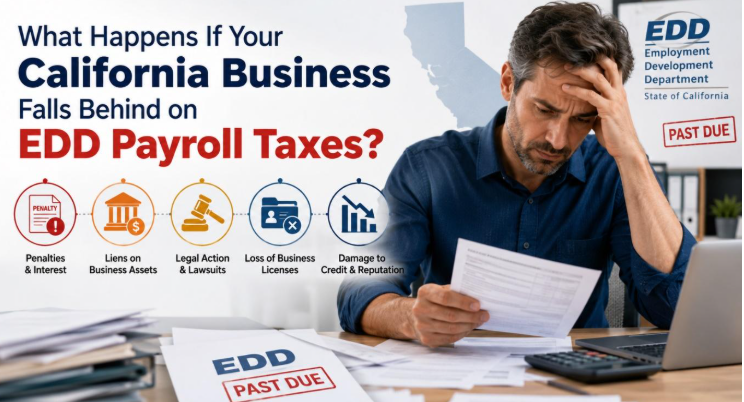
One of the most serious financial crises that can befall a California business is failure to pay payroll taxes. The Employment Development Department (EDD) oversees state payroll taxes—including Unemployment Insurance (UI), Employment Training Tax (ETT), State Disability Insurance (SDI), and California Personal Income Tax (PIT) withholding. The EDD is much more aggressive in collecting these taxes than most commercial creditors since a portion of these taxes (SDI and PIT) are trust fund taxes held in trust for employees.
When your business faces EDD challenges, it’s essential to grasp the implications, along with your alternatives, if you wish to shield your enterprise and your assets.
What Immediate Penalties and Interest Does the EDD Impose?
Failure to pay or late payment of payroll taxes quickly turns into a financial burden. In addition to the daily accrual of statutory interest on the unpaid balance, the EDD will impose automatic penalties, ranging from the default rate of 15% on late deposits.
In addition, there are additional non-filing penalties that apply to those who fail to file required quarterly reports (Form DE 9, for example). These cumulative assessments can cost you tens of thousands of dollars in overall taxes and have the potential to become a significant debt trap over time. The use of a tax resolution law firm is essential to handle the penalties sometimes imposed by the EDD.
Can Business Owners Be Held Personally Liable for EDD Delinquencies?
Yes. Section 1735 of the California Unemployment Insurance Code (CUIC) allows the EDD to “pierce the corporate veil. The accounts of any officer, director, or “responsible persons” who knowingly also fail to withhold or remit the payroll taxes withheld may be liable for the unwithheld trust fund taxes. That’s because the state can reach your personal assets, home, and other personal assets even if your business is organized as a corporation or LLC.
What Aggressive Enforcement Actions Can the EDD Take?
Without any court judgment, the EDD has a wide range of statutory remedies to enforce delinquent tax collection.
- State Tax Liens: EDD issues a notice of state tax lien, which eliminates your credit ratings and prevents financing.
- Bank Levies: Funds in your business or personal bank accounts can be directly frozen and seized by the state.
- Refund Offsets: The EDD will intercept state- and federal-issued tax refunds and/or lottery winnings.
- Seizure of Assets: An agent may take assets such as business equipment, receipts, or property in cases of extreme liability.
How Can California Businesses Manage and Resolve EDD Tax Debt?
It is not that if a business falls behind, it will close. There are a number of options for business owners to take control back:
- Installment Agreements: EDD may agree to a short- or long-term payment schedule, which will allow the business to continue operating without paying off the debt.
- Offer in Compromise (OIC): If you are in severe financial hardship, you may be able to settle the tax amounts for less than what is owed by qualified businesses or individuals.
- Penalty Abatement: If the failure to file is due to reasonable cause (e.g., a natural disaster, severe illness, or outside interference), penalties can be waived for specific late filings.
In case of sales tax audit penalties, a business can hire lawyers or contact a firm that can provide the right consultation and the necessary steps the business can follow to save the maximum.
Conclusion
EDD payroll tax delinquencies can ramp up rapidly, but proactively taking early steps can help avoid personal liability, bank levies, and business closure. Contacting tax experts or making a direct agreement with the EDD can lead to better payment plans and safeguard the financial well-being of California business owners.