

Not long ago, turning a two-hour interview into a usable document meant hunching over a keyboard with a foot pedal, rewinding the same muffled sentence five times, and losing an entire afternoon to it. Today, the same job takes a few minutes in a browser tab — and the result is often more accurate than what a tired human typist would produce. That shift didn’t happen overnight, and it’s quietly reshaping how creators, journalists, researchers, and marketers work. In this article, we’ll break down what AI transcription actually means, how it got here, and why it has become the invisible first step behind so much of the content you consume every day.
Understanding AI Transcription: Definition and Scope
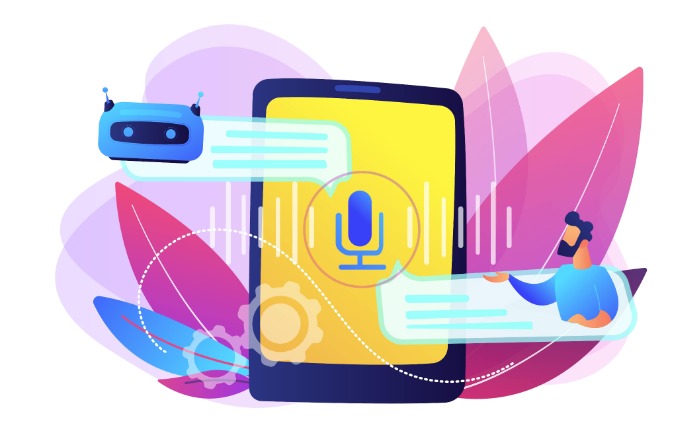
At its simplest, AI transcription is the process of using machine-learning models to convert spoken audio — and the audio track inside video — into written text, automatically. But the modern version of it is far more than a typewriter that listens. Today’s systems don’t just guess at words; they identify who is speaking, separate overlapping voices, add timestamps, recognize dozens of languages, and format the output for whatever you need next, whether that’s subtitles, a blog draft, or a searchable archive.
Think about it this way: any moment where information is trapped inside sound is a candidate for transcription. A recorded board meeting, a podcast episode, a courtroom session, a lecture, a customer call, a viral TikTok — all of it is data locked in a format you can’t search, quote, skim, or repurpose. AI transcription is the key that unlocks it, and the scope keeps widening as the models get better and cheaper to run.
What makes the current generation genuinely useful, though, is reliability. An early system that got one word in five wrong created more work than it saved, because you had to re-listen to the original recording to fix every mistake anyway. Once accuracy crosses the threshold where the transcript is trustworthy on its own — roughly the high nineties — your entire relationship with a recording changes. You stop treating the audio as something you’ll have to revisit and start treating the text as the source of truth. That single shift, more than any individual feature, is what turned transcription from a chore into a genuine starting point.
A Brief History of Transcription’s Evolution
To appreciate how far this has come, it helps to look back. For most of the twentieth century, transcription was a purely human craft. Court stenographers trained for years to keep up with live speech, and office typists worked through dictation tapes one sentence at a time. It was slow, expensive, and impossible to scale.
The first wave of automation arrived in the 1990s with desktop speech-recognition software. Anyone who used those early programs remembers the routine: you had to “train” the software to your voice, speak in an unnaturally slow and deliberate cadence, and still spend just as long correcting mistakes as you saved. The technology was a novelty more than a tool.
The real turning point came with two developments stacked on top of each other — cloud computing and deep learning. Instead of a single program running on your laptop, transcription moved to powerful servers trained on enormous libraries of human speech across accents, languages, and noisy real-world conditions. Accuracy climbed past 95%, then past 99%, and the systems learned to handle multiple speakers, background noise, and casual conversational speech that the old software never could. What once required a trained professional and a full day now happens in the time it takes to pour a coffee.
Modern Features and Where It Fits Today
The interesting part of the current era isn’t just speed — it’s specialization. Transcription has split into tools built for very different kinds of audio, and knowing which to reach for is what separates a smooth workflow from a frustrating one.
On one end sits long-form audio: the meetings, interviews, podcasts, and lectures that can run for hours. Here the priorities are handling big files, sorting out who said what, and exporting cleanly into a dozen formats. A browser-based service like MP3 to Text is built exactly for this. It accepts files up to several gigabytes and ten hours long, supports more than ninety languages, labels each speaker automatically, and lets you export to formats like DOCX, SRT, PDF, or plain text with optional timestamps. For a journalist working through a recorded interview or a podcaster repurposing an episode into an article, that turns a dreaded chore into a thirty-second task.
On the other end is short-form social video, where the goal isn’t archiving — it’s research. Creators and marketers don’t just want to know what a viral clip said; they want to understand why it worked. That’s a different job, and tools like TikoTranscript are designed around it. Beyond pulling an accurate transcript from any public TikTok in seconds, it adds layers of analysis: detecting the scroll-stopping hook in the opening line, breaking down the structural formula behind a successful video, and even generating fresh scripts based on the patterns it finds. With the ability to process dozens of videos at once, a marketer can reverse-engineer an entire competitor’s content strategy in a single sitting.
Just as important as the features is how accessible all of this has become. Where professional transcription once cost a dollar or more for every minute of audio, the same work now runs on affordable monthly plans — or even free tiers — and it happens in your browser without installing software or handing your files to a stranger. For a small team or a solo creator, that change in economics is the whole story: tasks that used to be outsourced or skipped entirely are now something you simply do yourself, in the background, as a normal part of the workflow.
What ties both ends together is a single habit that didn’t exist a decade ago: before you write, edit, research, or publish anything built on audio or video, you transcribe it first. The recording you produce becomes raw material; the recordings everyone else produces become research. Transcription has quietly become the connective tissue between consuming media and creating it.
Final Thoughts
AI transcription is no longer a niche utility for stenographers and secretaries — it’s an ecosystem of specialized tools sitting at the very start of how modern content gets made. From hour-long podcasts to fifteen-second clips, the act of turning sound into searchable text has become the default first move for anyone who works with media, and the barrier to entry has all but disappeared. Most of these tools now offer free credits to start, so there’s nothing stopping you from testing them on your own backlog of recordings.
Stop letting your best ideas stay trapped in audio. Pick the tool that matches your content, transcribe your first file today, and turn hours of recordings into something you can actually use.