


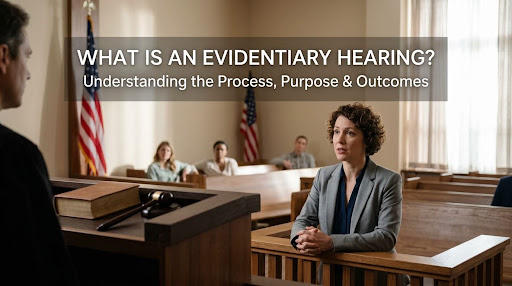
An evidentiary hearing is a legal proceeding in court where the judge reviews evidence, hears testimony, and identifies the factual issues before a ruling. These hearings are held in legal matters where additional evidence is required before deciding an issue in a case.
If your lawyer has told you that an evidentiary hearing is coming up, it’s natural to have lots of questions in your mind. You must be wondering whether this hearing is the same as a trial, whether you have to testify, or which evidence you should bring.
It is normal for you to have these concerns if you have never been involved in any judicial affairs. This is why this article takes a simple approach to explain to you what an evidentiary court hearing is, its process, purpose, and possible outcomes.
So, let’s take a closer look!
What is The Purpose of an Evidentiary Hearing?
The main purpose of an evidentiary legal hearing in Utah is to let the judge take an in-depth look at the facts and evidence about the case before making a decision on a disputed issue.
Evidentiary hearings normally take place before an actual trial begins, but they may also be held during or after trial. These hearings are held to address potential roadblocks in a case to help the court resolve factual disputes.
You can simply think of it as a mini-trial, as both parties share their side of the story with evidence. Then the judge uses these details to know what exactly happened and then gives their decision.
Why is an Evidentiary Hearing Held?
This hearing is held when a legal dispute has conflicting facts or unresolved issues. Both parties (plaintiff and defendant) present documents, witnesses, call recordings, and other related evidence to strengthen their point via their attorneys.
Here are the main reasons why these hearings are held in Utah:
- To Check Facts: When written documents are conflicting, the judge calls this hearing to hear witnesses’ testimonies to check facts and make a ruling. So you should double-check your paperwork and witnesses’ availability.
- Review Evidence Validity: Lawyers may debate whether submitted evidence was obtained unlawfully and whether it should not be used. Therefore, you should prepare your defense accordingly and prove your evidence was lawfully obtained.
- Check For Errors: Courts also hold evidentiary hearings to check if there were past mistakes in earlier proceedings, so now the court needs new evidence to resolve the issue.
- Make Temporary Decisions: Courts also use these hearings to make temporary decisions related to family and business areas while the case continues. These decisions also shape future trials.
When is an Evidentiary Hearing Required?
This hearing is required when there are inconsistencies in both sides of the story and the judge isn’t able to resolve the disputes on the basis of submitted documents.
Criminal Cases
In criminal cases, these hearings usually occur during the pretrial stage or during post-conviction appeals. These hearings focus on constitutional rights and procedural fairness rather than finding who is guilty.
The evidence presented at these hearings can affect important legal rights. So, you should understand what evidence may be considered with your attorney before the hearing.
Civil Cases
In civil cases, the standard of proof is more flexible than in criminal cases. But still, evidentiary hearings focus on analyzing assets, the defendant’s rights, and the fairness of the lawsuit.
Personal injury cases also fall under civil matters in Utah, and evidence such as medical records, accident reports, photographs, and witness statements can play an important role in establishing what happened.
Family Law Matters
In family matters, judges mainly focus on witness credibility and the specific living situations of both parties. For example, if a case is related to alimony, the court will hold a hearing to go through bank statements and tax audits.
If the case is divorce-related with child custody involved, the judge holds an evidentiary court hearing to hear from guardians, teachers, and both parents to find the best interests of the child.
Probate and Estate Disputes
Probate courts normally handle wills, trusts, and real estate disputes after someone passes away, and then evidentiary hearings are held to determine the true intent of the deceased.
For example, let’s suppose an heir challenges the will and claims that the deceased was suffering from dementia. Then this hearing will be held to listen to medical professionals and family members to evaluate the mental state of the deceased person.
What Happens During an Evidentiary Hearing?
In civil cases, an experienced car accident attorney can help you to understand your legal options and collect the evidence needed to support your case. Evidentiary court trials in Utah follow a step-by-step process.
- Both parties give brief opening statements and a summary of what they plan to prove.
- Witnesses are called to testify, and the lawyer asks questions in court to keep it on record.
- The opposing lawyer then questions you or other witnesses to challenge your testimony and prove their truthfulness.
- Then attorneys for both sides present documents, photos, and other related evidence to support their claims.
- Both parties then give closing statements about their facts and how the law applies to them.
- The judge goes through all the evidence and then may give a ruling that may resolve the dispute, dismiss charges, or the case goes into further trial.
Common Mistakes To Avoid in Evidentiary Hearings
These are the most common mistakes that people make in Utah evidentiary court hearings.
- If you don’t remember the exact dates, times, or distance, simply say you don’t remember rather than guessing in court.
- Only answer the specific question that is asked by the lawyer. Don’t give any information voluntarily, nor overexplain yourself in front of the judge.
- Avoid using words like “always” or “never” because if the opposing lawyer finds even one exception, it will impact your credibility.
- When you are talking in front of a judge, try to be neutral and keep your answers calm. If you get frustrated or react angrily, the judge may think you are acting on purpose.
- Never interrupt the judge, lawyers, or witnesses when they are talking.
- If you are in any legal dispute, start collecting emails, relevant files, or objects. Deleting or losing them may not go in your favor.
- If the prosecution submits any bad evidence, ask your lawyer to object on the record. Otherwise, the judge may keep the evidence as a fact.
Final Words
Hearing the words “evidentiary hearing” may worry many people, as not everyone in Utah is familiar with this legal terminology. The judge considers the physical evidence and witness testimony to resolve disputes in these hearings.
This guide thoroughly covered the purpose, process, and outcome of the evidentiary hearings in Utah. However, having an experienced attorney on your side is the key to navigating the process smoothly and avoiding unnecessary stress.
So, if you have also received any legal notice about a scheduled evidentiary hearing in your case, the first thing you should do is hire a lawyer.
Cockayne Law can help you protect your rights and get you compensation if your case is related to a personal injury claim. This Utah law firm works on a contingency fee basis, which means you don’t need to pay any fee unless you receive compensation.
Frequently Asked Questions
How long does an evidentiary hearing take?
The exact time depends on your case complexity, but typically a Utah evidentiary hearing may take a few hours.
What happens if I miss the hearing?
Missing an evidentiary hearing can usually have serious consequences. Mostly, the judge will move forward in making a decision just by seeing the evidence list of the opposite party.
Can the judge make a decision immediately?
Yes, it is very common for judges to make a decision immediately. But they may take more time to further review evidence and give a ruling against you, especially if it’s a criminal case. But it mostly happens when you miss the hearing; then the judge is more likely to give a decision in the opposite party’s favor.
Do all cases require an evidentiary hearing?
No, not all cases require an evidentiary hearing. These hearings are held in Utah when there’s a factual dispute in a case, and it needs to be double-checked with physical evidence or witness statements.