


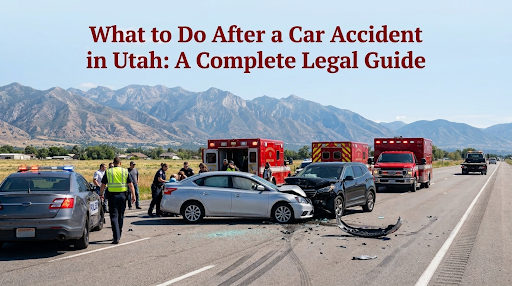
A car accident happens in seconds, but the decisions you make afterward can affect your health, finances, and legal rights for months or even years. What you say at the scene, when you seek medical care, and how you handle the insurance process can all affect your ability to recover compensation.
Unlike other states, Utah has its own traffic laws, insurance rules, and legal deadlines. Whether it’s a fender-bender collision in Murray or a high-speed collision in Salt Lake City, Provo, Ogden, or anywhere else in Utah, following the right steps makes a significant difference.
This guide explains everything you should do after a car accident in Utah to protect your future. Continue reading to learn more.
What Should You Do After a Car Accident in Utah?
Follow these 10 important steps after a car accident in Utah to protect yourself and your legal rights:
1. Prioritize Safety
Your top priority after a car crash should be safety. Check yourself, your passengers, and anyone else who may be injured. Not all injuries appear at the scene. Some injuries, such as whiplash or internal injuries, may not be immediately noticeable because adrenaline can mask pain. If it’s safe to do so, move your vehicle out of traffic to help prevent additional collisions. Stay away from traffic and turn on your hazard lights. Call 911 immediately and report the incident.
Utah Law:
Utah law requires certain accidents involving injuries, fatalities, or significant property damage to be reported. The police report can be the most important piece of evidence in any insurance claim or lawsuit.
2. Get an Accident Report
Police officers will document the whole accident scene and collect information from drivers and eyewitnesses. After that, they create an official accident report.
The report may include:
- Date, time, and location of the crash
- Driver and insurance information
- Vehicle details
- Statements from involved parties
- Officer observations and citations
Before the officers leave the scene, ask them for the report number. Do not make private settlements with another driver. An official accident report often becomes one of the strongest pieces of evidence during an insurance claim or personal injury case.
3. Document the Accident Scene
To support your claim, every piece of evidence matters. So, before the vehicles are moved, if possible, you should take clear pictures and videos of:
- Vehicle damage
- Road conditions
- Traffic signs and signals
- Skid marks or debris
- License plates
- Visible injuries
You should also collect the names and contact information of eyewitnesses and write down your own memory of the crash as soon as possible. This may help prove how the accident happened if fault is disputed.
4. Exchange Information Carefully
Legally, Utah drivers involved in an accident need to exchange basic information. Collect:
- Name and contact information
- Driver’s license details
- License plate number
- Vehicle information
- Insurance company and policy details
However, avoid discussing fault at the scene. Keep conversations brief and focus only on exchanging necessary information.
5. Get Medical Treatment Quickly
Quick medical treatment is very important after a car accident. Many accident injuries, including soft tissue injuries, whiplash, and spinal cord injuries, may not show symptoms immediately. If you wait too long to seek medical help, insurance companies may get an opportunity to argue about your injuries.
Therefore, after an accident:
- Visit a doctor or care clinic if needed
- Describe all of your symptoms
- Follow the treatment plan prescribed by the doctor
- Keep records of medical bills and receipts
6. Notify Your Insurance Company
Inform your insurance company about the incident as quickly as possible and provide accurate information. However, when you speak with insurance adjusters, avoid:
- Admitting fault
- Guessing about accident details
- Giving a recorded statement before understanding your rights
- Accepting a settlement before knowing the full extent of your injuries
Insurance companies may try to minimize claim payouts. So, if another driver’s insurance company approaches you, do not provide any details unless you speak with a car accident lawyer in Utah.
7. Understand Utah’s No-Fault Insurance Rules
Utah follows a no-fault system, which means your own Personal Injury Protection (PIP) pays for initial medical expenses, no matter who was at fault. Utah requires minimum PIP coverage that helps pay for:
- Medical expenses
- A portion of lost wages
- Certain necessary services
However, PIP does not cover pain and suffering. If your injuries meet Utah’s serious injury threshold, you may seek additional compensation from the at-fault driver.
8. Understand Fault and Compensation Rules
In Utah, a modified comparative negligence system is used, which means fault can be shared among multiple parties. Based on your percentage of fault, your compensation is reduced. However, if you are found 50% or more at fault, you generally cannot recover compensation under Utah law.
Insurance companies may argue that you share more responsibility for the accident to reduce the value of your claim. So, do not make any statement that can increase your share of responsibility before your claim has been fully evaluated.
9. Be Aware of Legal Deadlines
There are certain deadlines to file an accident claim in Utah. If you wait too long, your important evidence and records may be lost, you may not get access to witnesses, and as a result, you will have a weak claim. In many personal injury cases,
- The statute of limitations is four years from the accident date.
- Different deadlines and legal rules may apply to wrongful death claims and claims involving government entities.
What Mistakes Should You Avoid After a Car Accident in Utah?
Many car accident victims in Utah make mistakes that harm their claim. Avoiding these mistakes can protect your ability to recover fair compensation. These include:
- Delay in medical treatment
- Giving recorded statements without legal advice
- Accepting the first insurance settlement offer
- Posting accident details or injury updates on social media
- Handling the accident privately without documentation
- Failing to preserve evidence
When Should You Contact a Car Accident Lawyer in Utah?
You should contact a Utah car accident lawyer when:
- Your injuries are serious
- You have high medical bills
- You missed work because of the accident
- Fault is disputed
- Your insurance claim has been denied or disputed
- Uninsured or underinsured driver
- Fatal accident involving a loved one
A car accident attorney can investigate the crash, preserve evidence, negotiate with insurance companies, and help protect your right to fair compensation. He knows how to communicate with insurers, evaluate your damages, and protect your legal rights.
Hernandez Injury Law represents personal injury victims across Utah. The firm works on a contingency fee basis, which means you pay fees only when compensation is recovered.
Conclusion
Understanding what to do after a car accident, which is a stressful event, can help protect your legal claim. But there are some legal deadlines and Utah rules like no-fault insurance and comparative negligence that make the compensation process difficult.
Follow the steps we have discussed to help preserve evidence, protect your health, and strengthen your claim. Still unsure of your rights or have questions? An experienced car accident lawyer in Utah, like Hernandez Injury Law, can help you understand your options and pursue the compensation you may deserve.