



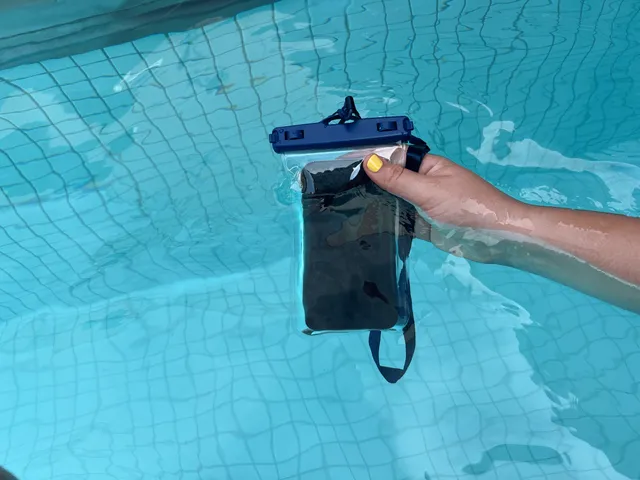
Bringing a phone within splashing distance of water used to mean leaving it in the car or wrapping it in a plastic sandwich bag and hoping for the best. Waterproof phone cases have gotten good enough that many people now trust them at the pool, on a kayak, or walking the dock at a lake house. That trust is only as good as the case, though, and the market is full of options that look similar in a product photo but behave very differently the first time they get dunked.
Pouch-Style vs. Full-Body Cases
Waterproof phone protection generally comes in two forms. A pouch is a soft, flexible sleeve that seals with a clip or a fold-over latch and works with almost any phone size, since it is not molded to a specific model. A full-body case is a rigid or semi-rigid shell built for one phone model, with cutouts and seals fitted precisely around the ports, buttons, and camera lenses.
Pouches are inexpensive and versatile, which makes them a reasonable choice for a single beach day or for borrowing a case for a trip. Their weak point is the seal itself: a fold-over latch depends on the user closing it correctly every time, and a worn or dirty gasket can let water in without any obvious sign of failure. A full-body case, by contrast, uses fixed seals around the same points every time, which tends to be more consistent, but it only fits the exact model it was designed for and offers less flexibility if a phone gets upgraded.
What IP Ratings Actually Tell You
Many waterproof cases list an IP rating, such as IP67 or IP68, and it helps to know what those numbers mean before assuming a rating guarantees anything. The first digit describes protection against dust, on a scale where a 6 means the enclosure is dust-tight. The second digit describes protection against water, and the scale increases with the degree of immersion resistance being claimed.
An IP67 rating generally means dust-tight and protected against temporary immersion under specific, limited conditions. An IP68 rating goes further and generally describes stronger immersion protection than IP67, with the exact depth and duration set by the manufacturer rather than fixed by a single universal standard. That last point matters: two products can both carry an IP68 rating and still tolerate meaningfully different depths or durations, because the manufacturer sets and tests those limits itself. A rating is also usually tested on a new, undamaged unit under controlled conditions, not on a case that has already been dropped, scratched, or used hard for a season.
Testing a Case Before You Trust It
Because a rating describes a new product under lab conditions, it is worth checking any case personally before relying on it with an actual phone inside. A simple method many retailers and reviewers suggest is sealing a dry tissue or a folded paper towel inside the case, submerging it in a sink or bucket for a few minutes, and checking whether the tissue stays completely dry afterward. This catches a bad seal, a missing gasket, or a case that was not closed correctly, without risking a phone to find out.
It is worth repeating this test occasionally, especially after the case has been dropped or after months of regular use, since gaskets wear down, grit can lodge in a seal, and latches can loosen over time. A case that passed the tissue test when new is not guaranteed to pass it forever, and a quick recheck before a big trip costs nothing.
Usability in the Water and Staying Charged Afterward
A case that keeps water out is only half the job if it makes the phone difficult to use once it is sealed. Touchscreens generally respond less reliably underwater or when wet, since capacitive screens are built around a dry fingertip’s electrical signal, so even a fully sealed case may feel laggy or unresponsive for underwater photos. Camera cutouts and lens covers can also distort images if the case uses a thick or curved window, so it helps to check sample photos or reviews from people who have actually used the case for pictures, not only for protection.
Sand and salt water both create problems that a rating does not address at all. Sand can work into a latch or a port cover and prevent a full seal on the next use, and salt water left to dry on a case can leave residue that interferes with buttons or seals over time. Rinsing a case in fresh water after ocean or lake use, then drying it fully before storing it, helps it perform consistently on the next outing.
None of this protection matters much if the phone runs out of battery before the trip is over, which is a common problem on long beach days spent away from an outlet. A compact power bank and a spare cable are worth packing alongside a waterproof case, especially for a full day out. Retailers that focus on mobile gear, including outlets like SimplyTechWhiz that carry phone cases, chargers and mobile accessories alongside gaming and office gear, tend to stock waterproof cases right next to everyday charging accessories, which makes it simple to put together a complete kit for a trip instead of ordering protection and power from two different places.
For an occasional trip to the pool or a lake, a well-reviewed pouch is usually enough, and there is no need to buy protection rated far beyond what the outing calls for. For regular use on a boat, at the beach every weekend, or around young kids near water, a fitted full-body case with a specific, verified rating is the steadier investment, and it is worth checking that the manufacturer stands behind its water-resistance claim rather than treating it as a marketing bullet point. Either way, a waterproof case is a supplement to caution, not a replacement for it; it lowers the risk, but it does not make a phone indestructible near water.