



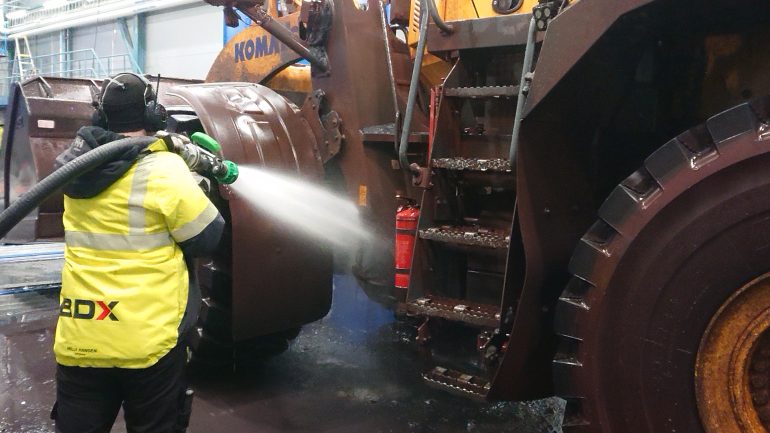
Construction projects often create temporary problems that need practical solutions. One common challenge is keeping mud, soil, and debris from being carried onto public roads by trucks and heavy equipment.
This can become especially difficult during excavation, earthmoving, road construction, demolition, and other projects where vehicles regularly travel over unpaved ground.
For a project that does not require permanent equipment, wheel wash rental can provide a flexible way to manage vehicle cleaning without making a long-term investment in a fixed installation.
What Is a Wheel Wash Rental?
A rented wheel washing system provides construction and industrial companies with access to vehicle cleaning equipment for a specific period.
Instead of purchasing and permanently installing a system, a business can arrange equipment for the duration of a project or for a particular period when vehicle traffic and mud levels are highest.
This can be useful for temporary construction sites, infrastructure projects, roadworks, demolition sites, and other operations where the need for wheel washing may change over time.
The system is typically positioned along the vehicle exit route so trucks can pass through the washing area before entering public roads.
Why Rent a Wheel Washing System?
Not every construction site operates permanently. Many projects have a defined start and completion date, meaning that purchasing permanent equipment may not always fit the project’s requirements.
Rental can offer greater flexibility.
For example, a construction company working on a six-month project may need an effective vehicle cleaning solution throughout the project but have little use for the equipment once the site is completed.
Renting allows the company to use the equipment when it is needed without committing to long-term ownership.
Temporary Construction Projects
Temporary sites are one of the most obvious applications for rental wheel washing equipment.
A construction project may involve heavy vehicle traffic for several months or even several years. During this period, trucks can repeatedly travel between excavation areas, material storage areas, and the site entrance.
When ground conditions are wet, the amount of mud carried by vehicle tires can increase significantly.
A temporary washing system can be installed as part of the site’s traffic management plan and removed when the project is finished.
Road and Infrastructure Projects
Road construction projects can present a unique challenge because work is often taking place directly alongside existing public roads.
Vehicles may move between construction areas and temporary access routes throughout the day. Soil, gravel, and other materials can easily become attached to tires.
Because these projects are generally temporary, rental equipment can provide a flexible solution that can be used for the duration of the works.
Once the project moves to another location, the equipment can be relocated or returned.
Demolition Projects
Demolition sites can also generate large amounts of dust, soil, rubble, and debris.
Heavy vehicles may repeatedly enter and leave the site while transporting waste materials.
A wheel washing system positioned near the exit can help remove accumulated material from vehicle tires before trucks return to public roads.
For demolition contractors who move between different projects, renting equipment can be particularly useful because the need for vehicle washing can change from one site to another.
How Does a Rental Wheel Wash Work?
The basic process is similar to other wheel washing systems.
Vehicles approach the designated washing area after completing their work on the site. They then drive through the system, where water is used to clean the wheels and tires.
Depending on the equipment, the cleaning process may use spray nozzles, high-pressure water, mechanical cleaning components, or a combination of technologies.
After cleaning, the vehicle continues toward the site exit.
The washing area should be positioned so that vehicles cannot easily bypass it. This makes it easier to incorporate wheel cleaning into the normal traffic flow.
Benefits of Renting
Flexible Project Duration
Rental equipment can be used for the period required by the project.
This is particularly useful when the duration of a project is known or when the need for wheel washing is temporary.
Lower Initial Commitment
Purchasing industrial equipment requires an upfront investment.
Rental provides another option for businesses that prefer to avoid purchasing equipment for a single project.
Suitable for Different Sites
Construction companies may work on several projects with very different site conditions.
A rental approach can make it easier to arrange equipment when a particular project requires it.
Easy to Plan Around Project Requirements
The equipment can be considered as part of the initial site setup.
Before construction begins, project managers can determine where vehicles will enter and leave the site and where the washing system should be positioned.
Useful During Muddy Periods
Some sites may only experience significant mud problems during certain phases of construction or during periods of wet weather.
Temporary access to washing equipment can provide an additional level of control when conditions become more challenging.
What Should You Consider When Renting?
Before arranging rental equipment, it is important to understand the site’s specific requirements.
The first consideration is vehicle size. A system needs to be suitable for the trucks and machinery operating on the site.
Vehicle traffic is another important factor. A busy project with continuous truck movements will have different requirements from a small site with only a few vehicles per day.
The type of material being removed also matters. Wet clay, loose soil, gravel, and dust can require different cleaning approaches.
Other factors to consider include:
- Project duration
- Number of vehicles per day
- Vehicle dimensions
- Available installation space
- Site entrance and exit layout
- Water supply
- Wastewater management
- Cleaning requirements
- Maintenance
- Relocation requirements
Planning the Location
Where the washing system is installed can have a major impact on how effectively it works.
Ideally, the system should be located close to the site exit, after vehicles have completed their work but before they reach the public road.
The internal traffic route should allow trucks to approach and leave the washing area without unnecessary reversing or complicated movements.
It is also important to consider the surrounding ground conditions. The washing area needs to be designed so that water and removed sediment can be controlled rather than simply creating another muddy area.
Water Management
Wheel washing requires water, which means water management should be considered before installation.
The washing process removes mud and debris from vehicle tires, resulting in wastewater that may contain soil and other materials.
Depending on the system, water can potentially be collected, filtered, and reused. Recycling water can help reduce fresh water requirements and make the overall washing process more efficient.
The collection and disposal of sediment should also be included in the site’s maintenance plan.
Rental vs. Purchasing
The choice between renting and purchasing depends largely on how the equipment will be used.
Rental can make sense when:
- The project is temporary
- Equipment is needed for a specific period
- The company works across multiple sites
- Vehicle washing requirements vary between projects
- The business wants to avoid a large initial equipment purchase
Purchasing may be considered when a company operates permanent facilities with continuous vehicle washing requirements.
There is no single solution for every business. Project duration, usage levels, budget, and operational requirements should all be considered.
Making Wheel Washing Part of the Project Plan
Wheel washing should ideally be considered before heavy vehicle traffic begins.
During the planning stage, project managers can identify the site entrance, vehicle routes, washing location, drainage, water supply, and exit point.
This helps prevent the washing system from becoming an afterthought once mud has already become a problem.
For temporary projects, rental equipment can be incorporated into the initial site setup and used throughout the phases where heavy vehicle traffic creates the greatest risk of mud being carried onto public roads.
Conclusion
Keeping construction and industrial sites clean can be challenging when heavy vehicles regularly travel across muddy or unpaved surfaces.
For temporary projects, wheel wash rental provides a flexible option for accessing vehicle cleaning equipment without necessarily making a permanent investment.
Whether the project involves construction, roadworks, demolition, infrastructure, or another temporary operation, the right washing solution can help reduce mud leaving the site, limit manual cleaning, and create a more controlled vehicle exit process.
Before choosing rental equipment, businesses should consider vehicle size, traffic volume, project duration, site layout, water requirements, and wastewater management. With proper planning, a temporary wheel washing system can become a practical part of site operations from the beginning of the project through to completion.