



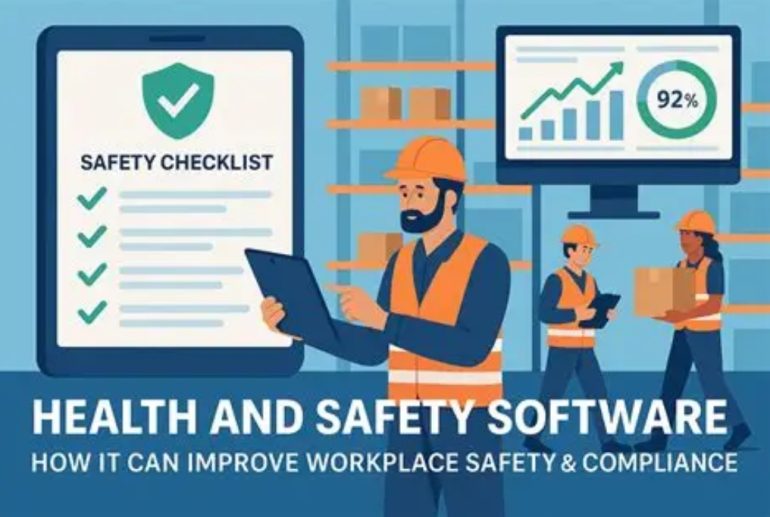
For many years, the spreadsheet became the natural habitat for all workplace safety information. Incidents, training, checks, risk assessments. All this information resided in the cells, was attached to emails and edited by whoever accessed it last. It worked because it did not collapse immediately. However, ‘did not collapse immediately’ is an extremely low standard for a solution which is supposed to save lives and keep companies safe from lawsuits. Today, more and more companies move away from spreadsheets and opt for specialized software for health and safety. It is not a fad dictated by software vendors who need to hit their sales targets. It is a necessity that comes from the fact that spreadsheets simply are not designed to do the task of safety management. Here is why it happens and where it leads us.
What’s Wrong With Using Spreadsheets for Safety Management?
A spreadsheet initially seems like a sensible choice. It is flexible, user-friendly, and even free for companies that have access to Excel or Google Sheets. However, managing safety involves action, accuracy, and compliance, none of which can be achieved through spreadsheets and can only be possible through HSMS. They lack dynamism. If a certificate is expiring, an inspection is due, or a hazardous trend is developing across multiple facilities, a spreadsheet won’t notify you of any of that. It’s just another tool for tracking information, and if no one uses it on time, nothing will happen, which means that the problem will develop even further.
Spreadsheets are extremely fragile. If someone deletes a single cell from a range, formulas will stop working, and the data will become unusable. Moreover, the information may get duplicated, overridden, or lost, and this is unacceptable for such important data as the list of employees who were trained on something and equipment that was inspected.
How Does a Health and Safety Management System Solve These Problems?
A Health and Safety Management System (HSMS) is purpose-built software that automates and streamlines all the tasks that spreadsheets simply can’t handle. Unlike using spreadsheets that are scattered throughout a company and often not accessible, the safety information will be centralized within one structured and search engine-friendly system that can be accessed by anyone based on their permissions.
The first thing that distinguishes these two systems is automation. For example, a health and safety management software won’t require you to check for yourself if there’s something that needs to be done; this will be handled for you automatically. In addition, incident reports will become part of a guided workflow and root cause analyses, corrective actions, and follow-ups will be tracked automatically.
There is also the issue of visibility. While a spreadsheet-based system won’t allow you to be aware of any near-misses reported at your remote site without emailing you a spreadsheet, health and safety software will enable you to receive such data right away via your phone or PC.
Why Does Compliance Become More Difficult to Manage With Spreadsheets Over Time?
Regulations, industry guidelines and audit demands change constantly. A system that is suitable for a ten-person office won’t work when the company grows into several departments, locations, shifts or contractors. The biggest problem with compliance is traceability. Whenever the auditor requests evidence that all employees in a certain location received a certain training module on a certain date, the user is forced to manually find all pieces of information, cross-referencing different sheets, assuming there was no tampering with information and recreating history by hand. This process takes a lot of time, is error-prone and doesn’t instil much confidence in regulatory body.
With health and safety software such information is automatically kept in an audit trail. All entries, edits and approvals have timestamps and names attached, so any change of information would be automatically logged and would be impossible to conceal from the regulator. Reporting on request becomes instantaneous instead of taking days and is generated right from the source that has all information available all the time. In regulated industries (construction, manufacturing, oil and gas, healthcare, etc. This feature alone is enough to justify the change.
Can Health and Safety Software Really Streamline Paperwork and Administration Efforts?
Yes, and it often is precisely why people make the move, even if they don’t yet recognize the compliance aspect of it. Spreadsheets need regular manual updating. Someone needs to input data, format data, verify data and manually create reports each time there’s a need from management or a client to do so. Hours of administrative work per week are done by safety managers who could better be serving as actual eyes and ears in the workplace rather than being tied up with spreadsheets.
This is what an HSMS does for you. Forms are electronic and standardized, so they are automatically entered correctly into the software. Reports which used to take a full day to compile are created simply through a few mouse clicks. Mobile capability allows employees to report hazardous conditions or complete checklist tasks on the spot and without writing anything down. Not only is this decrease in administrative burden time-saving; it transforms the nature of the safety department. The safety officers no longer have to be information inputters, but they can be more active in the prevention of incidents instead of having to record them afterwards.
Are There Costs Involved With Changing Over To HSMS?
This is often what stops companies from making the switch. The spreadsheet is ‘free’ whereas the HSMS is going to have a monthly subscription fee associated with it. However, this ignores the true cost of using spreadsheets. The cost of missing an inspection, failing to spot the lapse in certifications, and not documenting incidents is costly in terms of the fines, the legal issues, higher insurance costs, or, in some of the worst cases, injuries in the workplace that should not have happened at all. The cost of one significant problem in health and safety can be well over what several years of subscription costs will be for HSMS.
Then there’s the silent cost of inefficiency. The work that goes into reconciling spreadsheets, tracking down missing signatures, and manually creating leadership-level reports is a labor cost that doesn’t often factor into the equation when weighing the cost-effectiveness of free versus expensive spreadsheet software. Once a business takes all of these factors into consideration, health and safety software becomes self-funding in less than a year’s time.
What does this transition mean for the future of workplace safety?
The abandonment of spreadsheets indicates a growing change in perspective about safety in business. It’s no longer a task that is simply to be done as an afterthought because you have to keep track of paperwork; it’s an operational function that should receive the same level of technological attention as sales, HR, and finance. Spreadsheets simply were never meant for such functions.
With more stringent regulations and increasingly distributed workforces, the discrepancy between spreadsheet capabilities and business requirements will increase even further. Businesses that leap from using spreadsheets to using specialized health and safety software today are not only updating their practices; they are also creating a culture of safety that is pro-active, responsible, and not easily lost in the formula’s shortcomings.
Conclusion
Spreadsheets can store data, but cannot manipulate data, secure data, or substantiate it when it matters the most. Health and safety software solves this problem by providing automation for notifications, storage for documents, and the audit trail that was never provided by spreadsheets. It is no secret that for firms using spreadsheets as their safety management platform, the only remaining question isn’t if they should use an HSMS, but how long they can continue not using it.