



Smart homes have quietly rewired the way we live. Thermostats learn our schedules, doorbells recognize our faces, and lights dim themselves at sunset. Yet one of the most important devices in any home- the humble smoke alarm- has, for decades, remained stubbornly analog. It beeps when there’s smoke, and that’s about it. No notifications, no history, no way to check on it when you’re not home.
That’s changing fast. As more households adopt connected ecosystems, fire and carbon monoxide safety are finally catching up with the rest of the smart home. Connected smoke alarms aren’t just a novelty; they represent a genuine leap forward in how families protect the people and property they care about most.
Why Traditional Smoke Alarms Fall Short
Standard smoke alarms do one job well: they make noise when they detect smoke. But that single function comes with real limitations.
- No remote awareness. If an alarm goes off while you’re at work, on vacation, or simply in another part of a large house, you may never hear it.
- Silent battery failures. Many house fires involve alarms with dead or missing batteries. A device that can’t tell you it’s failing isn’t protecting anyone.
- No coordination between rooms. In a multi-story home, an alarm in the basement might not be audible from an upstairs bedroom, delaying the moment someone realizes there’s danger.
- Difficult to test consistently. Manually testing every alarm in a home, every month, is a chore most people quietly skip.
These gaps matter. Fire spreads fast- often in under three minutes, a small flame can become a life-threatening blaze- so every extra second of warning counts.
What Makes a Smoke Alarm “Connected”
A connected, or smart, smoke alarm links to your home Wi-Fi or a wireless mesh network and pairs with a smartphone app. Instead of relying solely on a loud siren, it pushes real-time alerts to your phone the moment it detects smoke, heat, or elevated carbon monoxide levels- whether you’re upstairs asleep or hundreds of miles away.
Most systems also allow multiple units throughout a home to talk to each other. If a fire is detected in the garage, alarms in the bedrooms can sound simultaneously, giving occupants more time to react. Some models track battery health, send low-battery notifications before a chirp becomes an issue, and log test history automatically, removing the guesswork from home fire safety maintenance.
Top Reasons Homeowners Are Making the Switch
For anyone weighing whether the upgrade is worth it, a few advantages tend to stand out as the top drivers behind adoption.
- Remote monitoring, anywhere. Real-time push notifications mean you’re never truly “away” from your home’s safety status.
- Faster whole-home alerts. Interconnected units mean a single trigger can alert every room, not just the one nearest the danger.
- Reduced false-alarm frustration. Many smart models use improved sensors that better distinguish between cooking smoke and an actual fire, cutting down on nuisance alerts.
- Maintenance reminders built in. Automatic battery and sensor-life tracking means fewer surprises and less manual upkeep.
- Peace of mind for caregivers. Adult children monitoring aging parents, or parents checking on kids home alone, gain a layer of reassurance that a traditional alarm simply can’t offer.
Best Practices for Choosing and Installing a Smart Smoke Alarm
Not all connected alarms are built the same, so it helps to know what to look for before buying. A few of the best practices worth following:
- Check the sensor type. Photoelectric sensors are generally quicker to pick up on smoldering, slow-building fires, while ionization sensors tend to respond faster to flaming fires. Some households choose one type, others opt for combination units- either way, it’s worth knowing which technology is inside the alarm you’re buying.
- Match the battery to your maintenance style. Some connected alarms use sealed batteries rated for up to 10 years, while others use replaceable batteries (often lasting around 5 years) paired with app-based low-battery alerts. Both approaches work well; the right choice depends on whether you’d rather swap a battery occasionally or avoid it altogether.
- Look for interconnectivity. Alarms that communicate wirelessly with each other, rather than requiring hardwiring, are far easier to retrofit into an existing home.
- Confirm app reliability. A smart alarm is only as good as its notification system, so read reviews focused on alert speed and consistency, not just design.
- Don’t forget carbon monoxide. CO is odorless and colorless, and pairing smoke detection with CO monitoring in a single unit covers two of the most common home hazards at once. If you’d rather keep smoke and CO detection separate, that’s a reasonable approach too- just make sure both hazards are covered somewhere in your home.
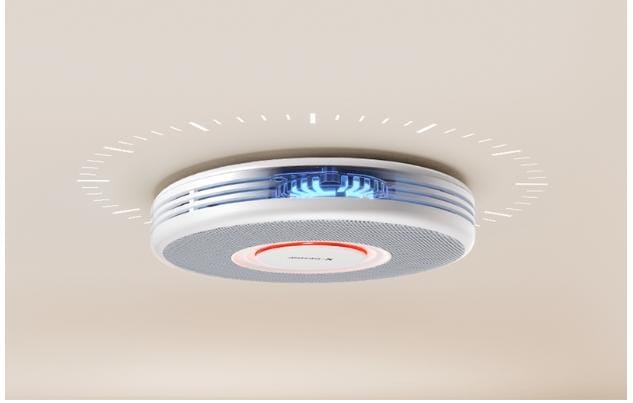
One example worth looking at is the X-SENSE XS0B-MR smart smoke detector, a wireless interconnected alarm built around this kind of whole-home coordination. It uses a photoelectric sensor and a replaceable CR123A battery rated for roughly 5 years, and it pairs with X-Sense’s SBS50 base station to link up to 50 alarms across a property, with a transmission range of over 1,700 feet in open air.
When one unit detects smoke, connected alarms sound together and issue a voice alert announcing the affected room (for example, “Smoke detected in the living room”), while the companion app sends push notifications so occupants know what’s happening even if they’re out of earshot. It’s worth noting this particular model is smoke-only, so homes that also want carbon monoxide coverage would need a separate CO alarm or a combination unit. For households retrofitting an older property, this kind of wireless system offers a practical middle ground between a basic standalone alarm and a full professional monitoring contract.
Integrating Smoke Alarms Into a Broader Smart Home Setup
The real value of a connected smoke alarm often shows up when it’s part of a larger ecosystem. Many smart alarms can trigger other devices automatically: smart lights flashing to guide occupants toward an exit, smart locks unlocking doors for emergency responders, or HVAC systems shutting down to stop smoke from circulating through ductwork. Some platforms also support integration with voice assistants, letting you check alarm status with a simple spoken command.
This kind of automation doesn’t just add convenience. In an emergency, seconds matter, and a coordinated response- alarms, lighting, and locks all reacting together- can meaningfully improve outcomes compared to a single, isolated siren.
FAQs
Do connected smoke alarms still work if the internet or Wi-Fi goes down?
Yes, in most cases. The core smoke and heat sensors operate independently of any network connection, so the alarm will still sound locally if it detects danger. What’s typically lost during an outage is the remote notification feature- you simply won’t get a push alert on your phone until the connection is restored.
Can I mix a smart smoke alarm with my existing traditional alarms?
It depends on the system. Some smart alarms are designed to interconnect only with other units from the same product line, while others offer adapters or hybrid modes that let them coexist with older hardwired alarms. It’s worth checking compatibility before assuming a new unit will “talk” to alarms you already have installed.
How long do the batteries in a smart smoke alarm typically last?
Many modern units use sealed, long-life batteries rated for around 10 years, which removes the need for regular battery swaps. Some models still use replaceable batteries but send a low-battery notification to your phone well before the alarm actually fails, so maintenance becomes far less of a guessing game.
Are smart smoke alarms harder to install than standard ones?
Not usually. Most wireless, interconnected models are designed for straightforward DIY installation- mounting to a ceiling or wall and pairing with an app- without the need to run new wiring. This makes them a practical option for retrofitting older homes.
Do these alarms also detect carbon monoxide, or just smoke?
It varies by model. Some units are smoke-only, others are CO-only, and a growing number combine both types of detection in a single device. If your home doesn’t already have separate CO monitoring, a combination alarm is often the more efficient choice.
Will false alarms from cooking or steam still be a problem?
Some nuisance alerts are inevitable with any smoke detection technology, but many smart alarms use improved sensing to better differentiate cooking smoke or bathroom steam from an actual fire hazard, which can meaningfully cut down on false triggers compared to older models.
Conclusion
Fire and carbon monoxide safety has lagged behind the rest of the smart home for too long, largely because traditional alarms were never designed to communicate. Connected smoke alarms close that gap by pairing reliable detection with real-time alerts, whole-home interconnectivity, and maintenance tracking that takes the guesswork out of staying safe.
For homeowners already living with smart thermostats, cameras, and lighting, adding a connected alarm is a natural next step rather than an extravagance. And for anyone still relying on a decades-old hardwired unit, it may be one of the most cost-effective safety upgrades available. A device that can notify you the moment something goes wrong- no matter where you are- isn’t just a smart home feature. It’s a safeguard for the people who matter most.