



If you have ever opened a bag of coffee, protein powder, or dried fruit only to find the product stale, clumped, or damaged, the problem almost certainly started with the packaging. Not the formula. Not the shipping carrier. The bag itself failed to do its job.
For food and supplement brands, this is not a minor inconvenience. It is a business problem. A single batch of products that arrives in compromised condition generates refund requests, negative reviews, and the kind of customer trust damage that takes months to rebuild. Understanding why packaging material selection matters so much — and what makes certain flexible packaging formats consistently outperform others — is one of the most valuable decisions a product brand can make.
What Makes Mylar Different From Standard Flexible Packaging
Not all flexible packaging is built from the same materials, and the differences are significant in real-world performance.
Standard polyethylene bags, the kind you might find at a basic packaging supplier, offer minimal barrier protection. They allow small amounts of oxygen and moisture to pass through the film over time, which accelerates product degradation. For products with long shelf lives or sensitivity to environmental exposure — protein powders, herbal supplements, freeze-dried foods, specialty teas — this slow permeation causes measurable quality loss well before the printed expiry date.
Mylar is a brand name for a specific type of biaxially-oriented polyethylene terephthalate film, commonly known as BoPET. Its molecular structure creates an exceptionally dense barrier that blocks oxygen, moisture, UV light, and odor with a reliability that standard films cannot match. This is not a marginal improvement. Independent shelf-life testing consistently shows that products stored in properly sealed Mylar packaging last significantly longer than the same products in conventional flexible packaging.
The Three Barrier Properties That Matter Most
Oxygen Transmission Rate (OTR): Oxygen is the primary driver of oxidative degradation in food and supplement products. Mylar film has one of the lowest OTR values available in flexible packaging materials, meaning virtually no oxygen passes through the bag wall during the product’s shelf life.
Moisture Vapor Transmission Rate (MVTR): Moisture causes clumping in powders, softening in dried foods, and accelerated microbial activity across most food categories. Mylar’s low MVTR keeps the product environment stable from the moment of sealing to the moment of opening.
UV Light Barrier: Many bioactive compounds in supplements and specialty foods degrade when exposed to light. Opaque Mylar packaging blocks UV transmission entirely, protecting product potency in retail environments where fluorescent lighting exposure is prolonged.
Why Food Brands Specifically Benefit From Custom Mylar Packaging
The food industry operates under regulatory and consumer expectations that create specific packaging requirements beyond basic containment. Food-safe materials, tamper-evident seals, and clear labeling surfaces are all baseline requirements. Beyond compliance, competitive food brands need packaging that communicates quality, freshness, and brand identity simultaneously.
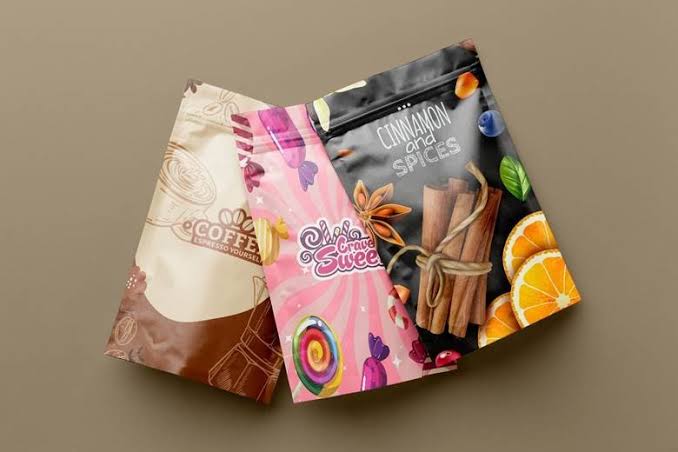
Custom printed mylar bags wholesale produced to food-grade specifications address all of these requirements within a single packaging format. The film accepts high-quality printing across its entire surface, allowing brands to apply full-color graphics, ingredient panels, nutrition facts, and brand identity elements with the same visual clarity available on rigid packaging formats.
Urgent Custom Boxes produces food-grade Mylar packaging with water-based inks and heat-seal construction that meets food safety standards while delivering the print quality that competitive retail placement demands. For brands selling through grocery chains, specialty food retailers, or direct-to-consumer channels, this combination of compliance and visual quality is essential.
Format Options That Serve Different Product Types
Custom Mylar packaging is not a single format. Several structural configurations serve different product categories and retail contexts.
Stand-Up Pouches: The most common format for retail food products. The bottom gusset allows the bag to stand independently on shelf, maximizing display presence and label visibility. Resealable zip-lock closures are standard for products used in multiple servings.
Flat Pouches: Ideal for single-serve products, sample packs, or items sold in secondary retail packaging. Flat pouches are cost-efficient to produce and easy to stack for fulfillment.
Side-Gusset Bags: Preferred for coffee and tea products where the bag needs to accommodate varying fill volumes and maintain an upright display position with a larger base.
Kraft Mylar Combinations: For brands with natural, organic, or artisan positioning, kraft-exterior Mylar combines the aesthetic of natural materials with the barrier performance of Mylar film. This format has grown significantly in the specialty food market over the past several years.
The Supplement Industry’s Specific Packaging Demands
Supplement brands face a packaging challenge that food brands share but in amplified form. Active ingredients, bioavailability, and potency are the core product promises that supplement brands make to their customers. Packaging that allows even minor degradation over the product’s shelf life undermines those promises in ways that may not be immediately visible but are measurable in product efficacy.
Protein powders, pre-workout formulas, collagen peptides, and adaptogen blends all contain ingredients with specific sensitivity profiles. Moisture exposure causes protein powders to clump and degrade. Oxygen exposure reduces the potency of certain vitamins and botanical extracts. Heat and UV exposure accelerate the breakdown of enzymes and probiotics.
Mylar packaging addresses each of these sensitivities with barrier properties that standard flexible packaging cannot consistently provide. For supplement brands investing in premium formulations, the packaging investment is a direct extension of the product quality investment.
Urgent Custom Boxes works with supplement brands to select the appropriate Mylar film specification, seal configuration, and format for their specific product requirements, ensuring that the packaging performance matches the product’s quality positioning.
Custom Printing and Brand Identity on Mylar Packaging
One of the most significant advantages of modern custom Mylar packaging over earlier generations of flexible packaging is print quality. Early Mylar bags were primarily functional — protective but visually limited. Current printing technology allows for photographic-quality graphics, Pantone color matching, and complex design layouts that rival what rigid packaging formats deliver.
For supplement brands particularly, where visual differentiation on a crowded retail shelf directly affects purchase decisions, this print capability is commercially significant. A supplement product in a well-designed Mylar pouch with clear branding, ingredient callouts, and a finish that communicates premium quality will consistently outperform the same product in generic or poorly printed flexible packaging.
Finish options including matte lamination, gloss lamination, and soft-touch coatings add tactile dimension to the packaging that reinforces the premium brand message at the point of customer contact. These finishes are applied over the printed surface and are compatible with the food-safe construction requirements that food and supplement packaging demands.
Minimum Order Quantities and Practical Considerations
For growing brands considering an upgrade to custom Mylar packaging, practical questions around minimum order quantities, lead times, and sampling are often the first barriers to address.
Urgent Custom Boxes offers flexible order configurations that accommodate both established brands ordering at scale and growing brands making their first investment in custom flexible packaging. Physical samples are available before full production runs, allowing brands to evaluate seal integrity, print quality, and barrier performance before committing to a complete order.
Lead times for custom Mylar packaging are typically seven to fifteen business days for production, with delivery timelines dependent on destination. For brands planning seasonal product launches, promotional packaging updates, or new product introductions, building packaging lead time into the product launch schedule is essential.
Common Questions About Custom Mylar Bag Packaging
Can Mylar bags be resealable?
Yes. Zip-lock resealable closures are one of the most commonly specified features for food and supplement Mylar packaging. The closure mechanism is heat-sealed into the bag construction and maintains its integrity through the product’s full usage cycle.
Are Mylar bags recyclable?
Standard multi-layer Mylar film is not recyclable through conventional consumer recycling streams due to its composite construction. However, recyclable mono-material flexible packaging options with improved barrier properties are increasingly available for brands with active sustainability commitments.
What is the maximum shelf life extension that Mylar packaging provides?
Shelf life extension depends on the specific product, its moisture and oxygen sensitivity, and the fill and seal conditions. For many food and supplement products, properly sealed Mylar packaging extends shelf life by a factor of two to five compared with standard flexible packaging under equivalent storage conditions.
Final Thoughts
For food and supplement brands, packaging is not a commodity decision. The material you choose directly affects product quality, customer satisfaction, and brand reputation across the full product lifecycle. Mylar packaging provides a combination of barrier performance, print quality, and format flexibility that makes it the most consistently reliable choice for products where freshness, potency, and brand presentation all matter.
Working with a packaging partner like Urgent Custom Boxes that understands both the technical requirements and the brand communication objectives of food and supplement packaging ensures that every bag that leaves your facility represents your product and your brand at the highest level.