



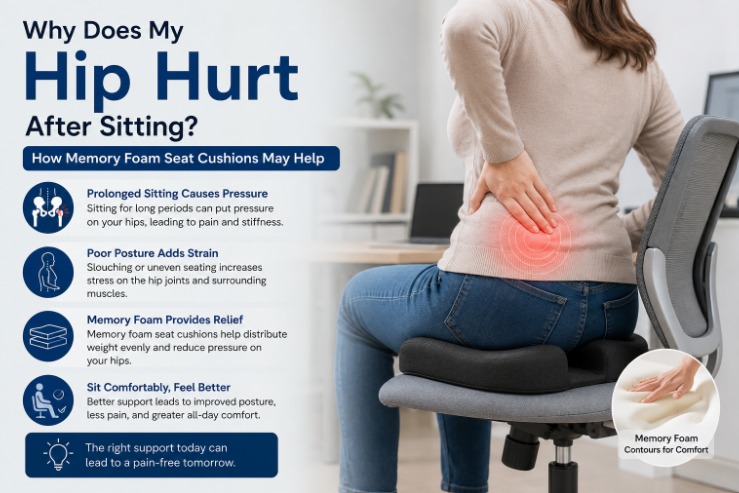
You stand up after a few hours at your desk and your hips protest immediately.
Maybe it’s a dull ache. Maybe it’s stiffness that fades after a few steps. For some people, it feels as though their hips have aged ten years during a single workday.
If that sounds familiar, you’re certainly not alone.
Many Australians spend a significant portion of their day sitting, whether at a desk, behind the wheel, working from home, or relaxing in front of a screen. While sitting itself isn’t inherently harmful, remaining in the same position for extended periods can place stress on the hips, lower back, and surrounding muscles.
The good news is that a few simple changes, including the use of seat cushions memory foam products, may help improve comfort, reduce pressure, and make long hours of sitting easier on your body.
Why Do My Hips Hurt After Sitting for Long Periods?
The hip is one of the body’s largest weight-bearing joints. It’s designed to support movement throughout the day, including walking, climbing stairs, bending, and changing positions.
When you remain seated for long periods, several physical changes occur:
- Hip flexor muscles stay in a shortened position
- Glute muscles become less active
- Pressure builds beneath the pelvis and sit bones
- Joint movement is reduced
- Muscle stiffness can gradually develop
This combination can leave your hips feeling tight or uncomfortable when you finally stand up.
Many people describe the sensation as needing a few moments to “get moving again”. That’s because joints, muscles, and connective tissues generally function best when they’re regularly moving through their natural range of motion.
Occupational health research has found associations between prolonged sitting and increased reports of musculoskeletal discomfort, particularly in the lower back, neck, shoulders, and hip region. For people who spend most of their workday seated, these effects can gradually become more noticeable over time.
The Hidden Pressure Your Hips Experience While Sitting
Most people blame their office chair when their hips start hurting.
Sometimes they’re absolutely right.
When you’re seated, a large portion of your body weight is transferred through the ischial tuberosities, commonly known as the “sit bones”. If a chair surface is too firm, pressure becomes concentrated in these small areas rather than being distributed evenly.
Over time, this may contribute to:
- Hip discomfort
- Tailbone soreness
- Lower back tension
- Numbness in the buttocks or upper thighs
- Frequent shifting and fidgeting
Ever noticed yourself constantly changing position during a long meeting or work session? That’s often your body’s natural response to pressure build-up.
Poor pressure distribution can also affect comfort by increasing stress on soft tissues surrounding the pelvis and hips. While this doesn’t necessarily cause injury, it can make prolonged sitting feel increasingly uncomfortable.
Why Office Chairs Don’t Always Solve the Problem
Many modern office chairs include adjustable features, lumbar support, and ergonomic designs. Yet people still experience hip and lower back discomfort.
Why?
Because even a well-designed chair cannot completely eliminate the effects of prolonged sitting.
A supportive chair may improve posture, but if pressure continues to build beneath the pelvis for hours at a time, discomfort can still occur. This is one reason many office workers, drivers, and remote employees look for additional seating support.
Think of it like wearing supportive shoes. Good shoes matter, but adding the right insole can sometimes make an already decent setup much more comfortable.
What Is the Best Cushion for Office Chair Pain?
A quality ergonomic cushion by Squatty Potty Australia can make a meaningful difference, particularly if you spend several hours a day sitting.
The best cushion isn’t necessarily the softest one.
A cushion that’s too soft may allow the pelvis to sink excessively, potentially affecting posture. One that’s too firm may do little to relieve pressure points.
This is where seat cushions memory foam options have become increasingly popular.
Features Worth Looking For
| Feature | Why It Matters |
| High-density memory foam | Provides support while resisting flattening over time |
| Ergonomic contouring | Helps distribute body weight more evenly |
| Pressure-relief design | Reduces concentrated pressure beneath the hips |
| Breathable cover | Improves comfort during long sitting sessions |
| Non-slip base | Helps keep the cushion securely in place |
A well-designed cushion should support your body, not simply add extra softness.
Can Memory Foam Cushions Help Lower Back Pain?
They may help some people, particularly when lower back discomfort is linked to prolonged sitting, poor posture, or pressure-related discomfort.
Memory foam was originally developed to improve pressure distribution and cushioning in specialised seating applications. The material responds to body weight and temperature, allowing it to contour to the user’s shape.
This increases the contact area between the body and the seating surface.
Why does that matter?
Because pressure is spread across a larger area rather than being concentrated beneath a few points.
Potential benefits include:
Improved Pressure Distribution
Reducing concentrated pressure beneath the pelvis can improve comfort during extended sitting.
Better Pelvic Support
A supportive cushion may encourage a more neutral pelvic position, which can help support healthy spinal alignment while sitting.
Reduced Need for Constant Repositioning
When sitting becomes more comfortable, many people find they shift positions less frequently.
Enhanced Everyday Comfort
Whether you’re working at a desk, driving long distances, studying, or travelling, improved seating support can make prolonged sitting more manageable.
It’s important to keep expectations realistic. Memory foam cushions are not medical treatments and won’t cure underlying health conditions. Their primary role is to improve comfort and support while sitting.
How Do I Sit Comfortably When Working All Day?
Even the best cushion works best when combined with healthy sitting habits.
Set Up Your Workspace Properly
Your feet should rest flat on the floor, with your knees roughly level with your hips.
Take Regular Movement Breaks
Many workplace health experts recommend standing, stretching, or walking briefly every 30 to 60 minutes.
Support Your Lower Back
Proper lumbar support helps maintain the spine’s natural curve.
Avoid Staying in One Position
Changing positions throughout the day helps reduce stress on the same muscles and joints.
Consider an Ergonomic Seat Cushion
Supportive seating can help reduce pressure on the hips, pelvis, and lower back during long periods of sitting.
When Hip Pain Might Need Medical Attention
Not all hip pain is caused by sitting.
Persistent or worsening symptoms may sometimes be associated with conditions such as:
- Hip osteoarthritis
- Trochanteric bursitis
- Tendon irritation
- Sciatica
- Lower back conditions that refer pain into the hip area
If pain affects sleep, limits daily activities, becomes severe, or continues despite ergonomic adjustments and regular movement, it’s worth seeking advice from a qualified healthcare professional.
Final Thoughts
Hip pain after sitting is often linked to prolonged pressure, reduced movement, muscle stiffness, and insufficient support. While no cushion can replace regular exercise, movement breaks, and good posture, quality seat cushions memory foam products can help improve pressure distribution and sitting comfort during long hours at work or home.
If you spend six, eight, or even ten hours sitting each day, small ergonomic improvements can make a noticeable difference to your comfort over time.
Many people focus on posture while working but overlook posture in the bathroom. Pairing supportive seating with a quality toilet stool can help create a more comfort-focused approach to everyday wellbeing. Just as ergonomic seating encourages better sitting posture, a toilet stool supports a more natural toilet posture during daily bathroom routines.
Sometimes, it’s the small changes you make every day that deliver the biggest improvements in comfort.
FAQs
Why do my hips hurt after sitting for long periods?
Ans. Prolonged sitting can shorten hip flexor muscles, reduce movement around the hip joint, and increase pressure on the pelvis and surrounding tissues, which may lead to stiffness and discomfort.
What is the best cushion for office chair pain?
Ans. A high-density memory foam cushion with ergonomic contouring, pressure-relief features, and durable support is often a good choice for improving sitting comfort.
Can memory foam cushions help lower back pain?
Ans. Memory foam cushions may improve sitting comfort and support better posture, which can help reduce lower back discomfort associated with prolonged sitting.
How do I sit comfortably when working all day?
Ans. Use a properly adjusted chair, support your lower back, keep your feet flat on the floor, take regular movement breaks, and consider using an ergonomic seat cushion.
Are memory foam seat cushions worth buying?
Ans. For people who spend long periods sitting, a quality memory foam cushion can improve comfort by helping distribute pressure more evenly. While it is not a treatment for medical conditions, it can be a useful ergonomic addition to a home office, workplace, or vehicle.