




Infopark Kochi has grown into one of Kerala’s most significant technology campuses. Today, Infopark spans 323 acres, hosts more than 582 companies, and supports more than 70,000 IT professionals. Alongside it, the Kerala Startup Mission has continued to build out the state’s founder ecosystem — Startup Genome’s 2025 report recorded a 147% surge in Kerala’s startup ecosystem value.
For the companies building here, one operational decision comes up repeatedly: which CRM do we commit to? The shortlist usually narrows to Salesforce, HubSpot, and Zoho CRM.
There is no universally correct answer. But the cost gap between these three in 2026 is wide enough that it deserves a careful look before signing anything. Here is that comparison, with current list pricing.
A note on currency: all figures below are US list prices in USD, billed annually, checked against 2026 sources. Indian pricing is set regionally rather than converted — Zoho CRM Professional lists at ₹1,400 per user per month in India and Enterprise at ₹2,400, which are separate list prices, not currency conversions of the USD figures. Confirm regional pricing directly with each vendor before budgeting.
These Three Platforms Solve Different Problems
Before comparing prices, it is worth being clear about what each is designed for.
Salesforce targets large, complex sales organizations needing deep customization, extensive compliance certifications, and a mature partner ecosystem. It is genuinely powerful, and priced accordingly.
HubSpot is built around ease of use and an integrated growth stack. Its CRM is free and well-regarded, with paid tiers adding sales automation and — separately — marketing automation. HubSpot consistently earns strong marks for adoption, largely because teams find it intuitive.
Zoho CRM offers broad functionality at a significantly lower price point, with the option to expand into a wider suite of connected business applications through Zoho One as a company grows.
Salesforce: 2026 Pricing
Salesforce Sales Cloud runs across five tiers in 2026, all billed annually except Starter:
- Starter Suite — $25 per user per month
- Pro Suite — $100 per user per month
- Enterprise — $175 per user per month
- Unlimited — $350 per user per month
- Agentforce 1 Sales — $550 per user per month
Enterprise at $175 is where most mid-market sales organizations land, unlocking advanced automation, deeper customization, territory management, and the API access needed for wider stack integration.
One caution when researching this yourself: Salesforce raised list prices by an average of 6% from August 1, 2025, and a number of third-party comparison pages still list the older $165 and $330 figures. Salesforce’s own pricing page shows $175 and $350. Verify against the vendor’s own page rather than aggregator sites.
For a 15-person team on Enterprise: $175 × 15 × 12 = $31,500 per year in licensing alone.
Implementation is quoted separately and varies substantially by scope, so it should be scoped as its own line item rather than estimated as a fixed multiple of licensing.
HubSpot: 2026 Pricing
HubSpot prices per seat, with meaningful differences between its Sales Hub and Marketing Hub product lines — a distinction that trips up a lot of comparisons.
Sales Hub, the direct CRM comparison:
- Starter — from $20 per seat per month, with lower rates on annual billing
- Professional — $90 per seat per month billed annually ($100 monthly), plus a one-time $1,500 onboarding fee
- Enterprise — from $150 per seat per month, with a $3,500 onboarding fee
Marketing Hub is priced differently and is often quoted mistakenly in CRM comparisons. Marketing Hub Professional starts at $800 per month on annual billing ($890 monthly), includes 3 core seats, and carries a mandatory $3,000 first-year onboarding fee.
HubSpot’s core CRM remains free, which makes it a genuinely low-friction starting point. The cost question arrives at the Starter-to-Professional step, where sequences, automation, and reporting sit behind the Professional tier.
For a 15-person team on Sales Hub Professional: $90 × 15 × 12 = $16,200, plus $1,500 onboarding = roughly $17,700 in year one, then $16,200 annually.
Zoho: 2026 Pricing
Zoho CRM standalone tiers:
- Free — up to 3 users, including workflow automation and standard reports
- Professional — $23 per user per month billed annually (₹1,400 in India), including workflow automation, inventory management, and scoring rules
- Enterprise — $40 per user per month billed annually (₹2,400 in India)
Zoho One, the full suite, uses two main models — and the difference matters more than most guides suggest:
- All-Employee — $37 per employee per month billed annually ($45 monthly). Requires licensing every employee on payroll, not just software users.
- Flexible User — $90 per user per month billed annually ($105 monthly). Licenses only the people who actually use the suite.
Both plans include all 50+ apps with no feature tiers between them. The right choice depends on the ratio of active users to total headcount, not on billing cycle. Zoho also offers additional licensing mechanisms beyond these two headline models, so treat this as a high-level comparison rather than a complete description of every option.
The all-employee requirement is a real constraint worth understanding upfront. A 40-person company wanting Zoho One for a 15-person operations team still pays for all 40 seats on the All-Employee plan — $1,480 per month annually. On Flexible, the same 15 users cost $1,350 per month. For a company where most staff genuinely use business software, All-Employee wins clearly. For one with substantial non-desk headcount, it may not.
For a 15-person team on Zoho CRM Enterprise: $40 × 15 × 12 = $7,200 per year.
For a 15-employee company on Zoho One All-Employee: $37 × 15 × 12 = $6,660 per year — for the full 50+ app suite, not just CRM.
The Comparison, Side by Side
Same 15-person team, annual billing, licensing only:
PlatformTierAnnual costSalesforceSales Cloud Enterprise$31,500HubSpotSales Hub Professional$16,200 (+$1,500 year-one onboarding)ZohoCRM Enterprise$7,200ZohoOne, All-Employee (full suite)$6,660
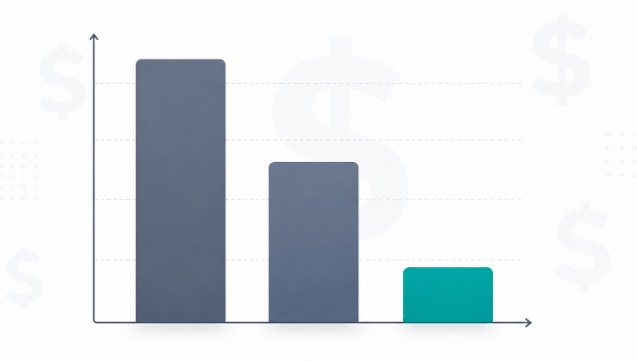
On list-price licensing alone, the difference between Salesforce Enterprise and Zoho CRM Enterprise for a 15-user team is $24,300 per year. That is a licensing comparison, not a like-for-like capability comparison — the products differ meaningfully in what they include, as the tradeoffs below set out.
What the table does not capture is fit. Salesforce’s certifications and customization depth genuinely matter for companies selling into large enterprises with strict vendor requirements. HubSpot’s usability advantage is real and drives adoption, which is worth something given how many CRM deployments fail on adoption rather than features. Price is one input, not the decision.
The Honest Case Against Zoho
A comparison that only lists savings is not useful. Three real tradeoffs:
Interface complexity. Zoho’s navigation carries more tabs and settings than either competitor, and some advanced configuration takes digging or expert help. HubSpot in particular is easier to get a team using on day one.
Thinner enterprise integrations. For deep connections into NetSuite, SAP, or complex middleware, Salesforce’s ecosystem is more mature. Companies with heavy legacy enterprise dependencies may find Zoho’s options limited.
The all-employee constraint. As above, Zoho One’s cheapest model requires licensing everyone on payroll. For companies with large non-software-using headcount, the Flexible plan’s higher per-seat price may erode the apparent advantage.
As a rough rule of thumb rather than an established benchmark, larger sales organizations with complex multi-region processes or strict customer-mandated compliance requirements tend to find Salesforce’s additional depth easier to justify.
AI Pricing Is Where Budgets Get Unpredictable
Worth budgeting carefully across all three platforms, because none of them price AI the way they price seats.
Zoho’s Zia capabilities — including lead scoring and email analysis — are included within the higher CRM tiers rather than metered separately.
Salesforce prices Agentforce on consumption rather than seats, and currently runs more than one model simultaneously. Flex Credits, introduced in May 2025, charge per action — 20 credits per standard action, working out to roughly $0.10, sold in packs of 100,000 credits for $500. The original Conversations model, at $2 per conversation, remains available. The two cannot run in the same Salesforce org at once, so it is a choice made upfront. Per-user Agentforce licensing exists as a third route, and the Agentforce 1 Sales edition at $550 per user per month bundles agent usage into the seat price.
The practical implication is that a cost projection built only on base Enterprise licensing will understate an AI-heavy deployment, and which model is cheaper depends on how many actions a typical interaction actually triggers — something most teams cannot know until agents are live on their own data.
HubSpot layers usage-metered credits over its seat pricing for AI features, which similarly means the seat price is not the full figure.
If You Run an E-Commerce or D2C Arm
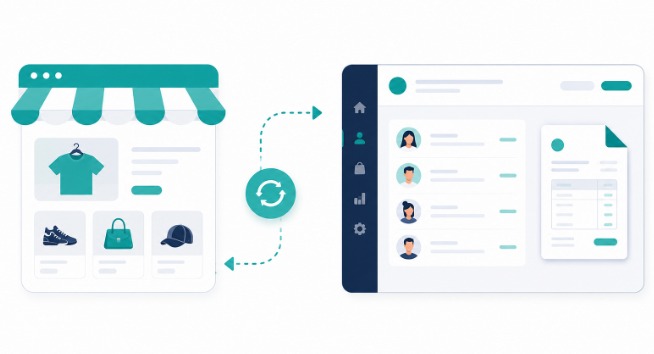
Worth flagging as a practical setup rather than a claim about what everyone is doing: for companies running a Shopify storefront, Zoho CRM and Zoho Books can serve as the operational layer behind it — syncing orders into CRM as contacts, triggering post-purchase follow-up sequences, and handling GST-compliant invoicing on the finance side.
This is an implementation possibility, not an automatic outcome. The order sync, automation triggers, and inventory reconciliation between storefront and CRM all need deliberate configuration, and getting it wrong tends to surface as duplicate customer records or mismatched stock counts weeks later. Teams building this usually get better results when the storefront work and the CRM logic are scoped together rather than sequentially — which is why it is often handled alongside the CRM build by a Shopify development company in Ernakulam working on both sides of the integration.
The Regional Factor
Zoho Corporation is headquartered in Chennai and announced a new R&D campus in Kottarakkara in July 2025, giving it a growing physical presence in Kerala. For some Kochi founders this matters practically — INR-denominated list pricing removes currency exposure on renewals, and GST and Indian compliance requirements are handled as core functionality rather than localization.
How much weight to give this is a judgement call. It is not a feature comparison, and it should not override fit. But for a finance-conscious team, currency stability on a multi-year software commitment is a legitimate consideration.
Frequently Asked Questions
Q: Is Zoho CRM’s free tier usable for an early-stage team?
For up to three users, yes. The Free edition includes workflow automation and standard reports, which HubSpot’s equivalent entry tier gates behind paid plans. Most teams outgrow it once they need more seats or multi-step automation.
Q: How long does migrating from Salesforce or HubSpot to Zoho take?
It depends heavily on data volume, how customized the existing instance is, how many integrations are attached, and how much historical activity data needs preserving. A lightly-customized instance with clean data is a very different project from a heavily customized one with years of history and third-party integrations. Scope it properly rather than assuming a timeline.
Q: Does Zoho handle marketing automation as well as HubSpot?
Zoho Marketing Automation and Zoho Campaigns integrate natively with Zoho CRM and cover the core needs of most growing teams. HubSpot’s marketing tooling is more polished out of the box. If marketing automation is the primary need rather than CRM, that difference deserves weight.
Q: Which figure should I actually budget against?
Licensing is the floor, not the total. Add implementation, any mandatory onboarding fees, AI or usage-based charges, and add-ons. Get implementation quoted separately by the vendor or partner rather than estimating it.
Final Thoughts
For a 15-person team, the list-price licensing difference between Salesforce Enterprise and Zoho CRM Enterprise is $24,300 a year. That is a large enough number to deserve a deliberate decision rather than a default one — in either direction.
The right answer depends on what a company is actually selling, who it is selling to, and what its customers require of its vendors. A company selling into regulated enterprise buyers may find Salesforce’s compliance depth worth every rupee. A marketing-led team may get more from HubSpot’s usability than from Zoho’s lower price. And a team that needs broad functionality across sales, finance, and support without a large software budget may find Zoho’s suite economics difficult to beat.
If your Infopark or Kochi team is working through this evaluation and wants an assessment grounded in your actual sales process rather than a feature list, it is worth speaking to a Zoho partner in Kochi who can map the licensing question against your real headcount and app requirements — including whether Zoho One’s All-Employee model actually works out cheaper for your specific ratio of active users to total staff.
Guest post prepared by the team at Techgeum — Certified Zoho Partner serving Ernakulam, Kochi, and Kerala.