



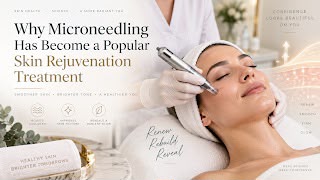
Why Microneedling Has Become a Popular Skin Rejuvenation Treatment is easier to understand when you look at what people increasingly want from aesthetic care. Many patients are looking for treatments that address visible skin concerns without surgery and without the recovery associated with more invasive procedures.
Microneedling has gained attention because it works by creating controlled microscopic punctures in the skin. These small injuries trigger a wound healing response that can support remodeling of collagen and other structural components of the skin.
The treatment is now used for concerns such as facial acne scars, wrinkles, uneven texture, and certain types of scarring. The United States Food and Drug Administration has legally authorized specific microneedling devices for improving the appearance of facial acne scars, facial wrinkles, and abdominal scars in adults aged 22 and older.
What Is Microneedling?
Microneedling is a minimally invasive procedure performed with a device containing multiple very small needles. Depending on the device, those needles may move vertically into the skin or enter the skin as a roller or stamp passes over the treatment area.
The FDA explains that motorized devices can allow trained practitioners to control both the depth and speed of needle penetration. Treatment depth and technique can therefore be adjusted according to the treatment area and clinical goal.
People considering professional treatment can learn more about the process through this overview of microneedling treatment.
Why Has Microneedling Become So Popular?
Several factors help explain the growing interest in microneedling. It can address multiple cosmetic concerns, does not require surgery, and is supported by a growing body of clinical research.
A 2025 systematic review of microneedling for facial rejuvenation examined 21 studies involving 723 patients. Wrinkles were evaluated in 71 percent of the included studies, skin texture in 33 percent, photoaging in 29 percent, and skin laxity in 14 percent.
| Research Area | Finding |
| Studies reviewed | 21 studies |
| Total patients included | 723 patients |
| Studies that evaluated wrinkles | 71% |
| Studies that evaluated skin texture | 33% |
| Studies that evaluated photoaging | 29% |
| Studies that evaluated skin laxity | 14% |
These figures do not mean that every patient will experience the same degree of improvement. They do show that microneedling has been studied across several important areas of facial rejuvenation.
1. It Works With the Skin’s Natural Repair Process
One reason microneedling appeals to patients is that it relies on a controlled wound healing response rather than removing large areas of skin.
The small punctures created during treatment stimulate repair activity in the treated tissue. Research describes microneedling as a minimally invasive treatment associated with collagen and elastin proliferation.
This remodeling process does not happen immediately. Improvements often develop progressively as the skin goes through healing and structural remodeling.
That gradual process is one reason patients should approach microneedling with realistic expectations rather than expecting an instant transformation after one appointment.
2. Research Supports Its Use for Acne Scars
Acne scarring is one of the most studied uses of microneedling.
A 2022 systematic review and meta analysis examined 12 randomized controlled trials involving 414 participants. Researchers concluded that microneedling was an effective option for acne scar treatment, while also noting differences among treatment protocols and comparison groups.
Another systematic review evaluated nine randomized controlled trials involving atrophic acne scars. The authors reported consistent improvement across included microneedling approaches and found no serious adverse effects in those studies.
An earlier review examined 33 published articles on microneedling for acne scarring. Every article included in that review reported improvement in acne scar appearance, although the authors noted that more research was needed to compare microneedling with other minimally invasive treatments.
| Acne Scar Evidence | Research Summary |
| 2022 meta-analysis | 12 randomized controlled trials involving 414 participants |
| 2021 systematic review | 9 randomized controlled trials |
| 2019 systematic review | 33 published studies reviewed |
| Overall conclusion | Evidence supports improvement in the appearance of atrophic acne scars |
3. Microneedling Can Be Used for More Than One Skin Concern
Patients rarely have only one cosmetic concern.
Someone seeking acne scar treatment may also have uneven texture, visible fine lines, or areas of skin that look less smooth than they would like.
The FDA has specifically authorized certain devices for facial acne scars and facial wrinkles. Dermatology sources also recognize microneedling as one of the treatment options used for acne scarring.
This ability to address several visible skin concerns within one treatment category has helped microneedling become an important part of modern skin rejuvenation.
However, not every device has been evaluated for every possible use. The FDA notes that only a limited number of devices have been legally authorized for specific treatment areas and indications.
4. It Is Minimally Invasive
Microneedling creates controlled skin punctures, but it does not require surgical incisions.
That distinction is important for people who want improvement in texture or scars without undergoing an operation.
Most expected reactions are temporary. A systematic review examining 85 articles found that commonly reported events included redness, swelling, discomfort, dryness, exfoliation, and other short term reactions.
The FDA similarly lists redness, dryness, tightness, itching, peeling, discomfort, bruising, bleeding, and crusting among common risks associated with authorized uses of microneedling devices.
| Possible Reaction | General Character |
| Redness | A common temporary reaction |
| Skin tightness | Can occur after treatment |
| Dryness or peeling | May occur during the recovery period |
| Mild discomfort | Commonly reported after treatment |
| Bruising or bleeding | Possible, especially with deeper treatment |
| Pigmentation changes | Less common, but an important potential risk |
5. Recovery Is Usually Manageable
People often choose aesthetic treatments partly according to how much disruption they create in everyday life.
Microneedling commonly causes temporary redness and sensitivity rather than the prolonged recovery associated with many surgical procedures.
However, recovery should not be treated casually. The skin has been intentionally punctured, so cleanliness, sun protection, appropriate products, and provider instructions matter.
Readers preparing for treatment can review detailed microneedling aftercare guidance before planning their recovery period.
The FDA also recommends asking whether a new microneedle cartridge is used for every treatment session. Reusing a cartridge is unsafe because it can create infection risks.
6. It Can Fit Different Skin Rejuvenation Goals
Microneedling is not a single purpose procedure.
For one person, the primary concern may be acne scarring. For another, it may be facial wrinkles or uneven texture.
A consultation allows the treatment plan to focus on the specific condition being addressed rather than treating every patient in exactly the same way.
This matters because needle depth, treatment area, session frequency, and recovery expectations can vary.
The FDA also notes that some people may need more than one procedure to achieve the desired aesthetic improvement.
7. Clinical Evidence Has Expanded
Popularity alone does not prove that a cosmetic treatment works.
Microneedling has attracted continuing research interest because multiple clinical studies and systematic reviews have evaluated its use in acne scarring and facial rejuvenation.
The 2025 facial rejuvenation review included 723 patients across 21 studies, while systematic reviews focused on acne scars have evaluated randomized controlled trials and larger groups of published studies.
At the same time, researchers continue to emphasize that protocols differ between studies and that additional high quality research can help define the best treatment schedules for different concerns.
That balance is important. Microneedling has meaningful evidence behind several uses, but results should still be discussed realistically.
Microneedling Versus Chemical Peels
Microneedling and chemical peels are both used in skin rejuvenation, but they work differently.
Microneedling creates controlled mechanical punctures in the skin. Chemical peels use chemical agents to produce controlled exfoliation at selected skin depths.
| Feature | Microneedling | Chemical Peel |
| Main mechanism | Controlled needle penetration that stimulates tissue remodeling | Controlled chemical exfoliation of the skin |
| Common goals | Acne scars, wrinkles, and skin texture improvement | Pigmentation, acne, texture improvement, and surface renewal |
| Treatment depth | Varies depending on device settings and needle depth | Varies depending on the type and concentration of the peel |
| Recovery | Depends on the intensity and depth of treatment | Depends on the depth and strength of the peel |
Neither treatment is automatically better for everyone.
Someone comparing these options can explore this guide on microneedling versus chemical peels for acne scars before discussing treatment selection with a qualified professional.
Who May Not Be a Good Candidate?
Microneedling is not appropriate for every person or every skin condition.
The FDA advises that treatment may not be suitable for people with certain bleeding disorders, immune suppression, uncontrolled diabetes, active skin infection, active facial rashes, current cold sores, or some other medical conditions.
The FDA also advises caution for people with a history of keloid scars, certain autoimmune conditions, known allergies to stainless steel or local anesthetics, and people who are pregnant or breastfeeding.
People taking medications that affect bleeding or skin healing should discuss them with their health care provider before treatment.
This is one reason a consultation is more important than simply choosing a treatment based on photographs or social media results.
What About Darker Skin Tones?
Microneedling is often discussed as an option for a broad range of skin tones, but pigmentation risk still deserves attention.
The FDA notes that darker skin types can experience darkening or lightening of the skin following treatment. Some legally authorized devices were not studied in participants with darker skin types.
A safety review also identified darker skin as one factor associated with increased risk of certain adverse events, including post inflammatory hyperpigmentation.
This does not mean microneedling should automatically be avoided. It means provider experience, appropriate settings, careful patient selection, and aftercare are particularly important.
Professional Treatment Matters
Microneedling devices intentionally penetrate the skin.
That means training, sterile technique, device selection, and proper cartridge handling matter directly to safety.
The FDA recommends choosing a practitioner who is trained and experienced with microneedling. It also recommends asking how the device is cleaned and confirming that a new needle cartridge is used for every session.
Consumers should also be cautious about combining microneedling with substances that have not been evaluated for introduction into the skin.
The FDA specifically states that microneedling devices are not approved for delivering cosmetics, topical medications, vitamin solutions, drugs, or blood products into the skin.
Frequently Asked Questions
Does microneedling permanently remove acne scars?
Microneedling can improve the appearance of certain acne scars, particularly atrophic scars, but complete removal should not be guaranteed.
Results depend on scar type, scar depth, treatment protocol, skin characteristics, and the number of sessions performed.
How many microneedling sessions are needed?
There is no universal number that applies to everyone.
The FDA notes that more than one procedure may be required to achieve the desired cosmetic improvement. Treatment frequency should be based on the concern being treated and the individual’s response.
Is microneedling painful?
Some discomfort can occur during treatment.
The FDA lists discomfort, burning, bruising, and bleeding among possible treatment related effects. Providers may use appropriate measures to improve comfort depending on the procedure and treatment depth.
Can microneedling improve wrinkles?
Certain microneedling devices are legally authorized by the FDA for improving the appearance of facial wrinkles in adults aged 22 years or older.
Research on facial rejuvenation also frequently evaluates wrinkling as a treatment outcome.
Are results immediate?
Some temporary changes in skin appearance can occur soon after treatment, but structural improvement is generally evaluated over time.
Microneedling relies on healing and tissue remodeling, so meaningful results should not be judged immediately after the procedure.
Final Thoughts
Microneedling has become popular because it combines a minimally invasive approach with growing clinical evidence for concerns such as acne scars, facial wrinkles, and skin texture.
Systematic reviews involving hundreds of patients support its role in acne scar management and facial rejuvenation, while regulatory guidance provides clear information about appropriate uses and potential risks.
Its popularity should not be confused with universal suitability.
The best results begin with correct patient selection, realistic expectations, professional treatment, sterile technique, appropriate device settings, and careful aftercare.
For people seeking gradual improvement in visible skin texture or selected scars without surgery, microneedling can be a valuable option to discuss with a qualified provider.