


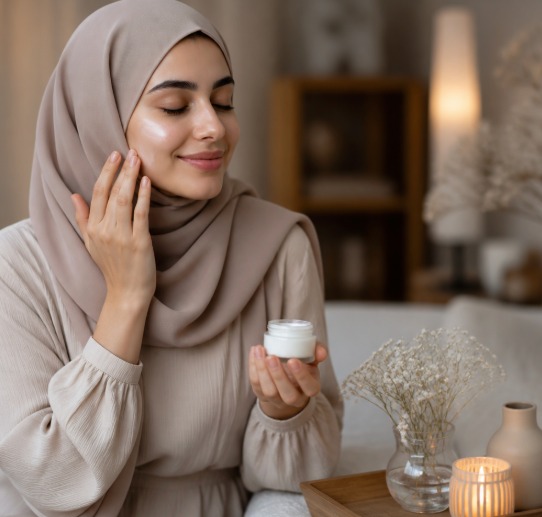
Skincare has always been about results — clearer skin, fewer lines, a more even tone. But something has shifted in how people relate to their routines. The act of applying a product is no longer purely functional. It has become tactile, emotional, and deeply personal. Sensory skincare sits at the center of this evolution, transforming everyday rituals into moments of genuine connection between the skin and the senses. Texture, scent, temperature, and absorption speed are no longer afterthoughts — they are central to why a product works, or why it doesn’t.
The Science Behind Sensory Experience in Skincare
The skin is the body’s largest sensory organ, and it communicates constantly. When you apply a product, your nervous system registers temperature, pressure, and texture before any active ingredient has had a chance to absorb. This neurological response is not trivial — it influences how relaxed or stimulated you feel, how deeply you breathe, and even how well your skin barrier responds to treatment. Products that feel pleasant to apply tend to be used more consistently, which is ultimately what drives results.
Formulators who understand this design products with deliberate sensory profiles. A serum might be engineered to feel weightless on contact but leave a subtle warmth as it penetrates. A moisturizer might transform from a balm to a silky fluid the moment it meets skin temperature. These are not gimmicks — they are intentional design choices that make the experience of skincare more rewarding and, by extension, more effective.
Texture as a Functional Signal
Texture communicates information. A gel-cream hybrid signals hydration without heaviness. A dense balm signals barrier repair and protection. When a product’s texture aligns with its purpose, users trust it more intuitively. This alignment between sensory cue and clinical function is one of the hallmarks of well-designed sensory skincare. It removes the guesswork and replaces it with a kind of embodied knowledge — you feel what the product is doing, not just read about it on the label.
Moving Beyond Trend-Chasing Toward Intentional Routines
The beauty industry has long been driven by novelty. A new ingredient emerges, brands rush to feature it, consumers buy in, and the cycle repeats. But there is growing evidence that this trend-chasing model is not serving skin health. Constant product switching disrupts the microbiome, overwhelms the barrier, and makes it nearly impossible to identify what is actually working. Shifting from trend-chasing to routine-based skincare is one of the most meaningful changes a person can make for their long-term skin health. Consistency, not novelty, is what produces lasting results.
Sensory skincare supports this shift naturally. When a routine feels genuinely pleasurable — when the products you use engage your senses in a satisfying way — you are far more likely to maintain it. The ritual becomes something you look forward to rather than something you endure. This psychological dimension of skincare is often underestimated, but it is one of the most powerful drivers of adherence.
Building a Routine Around Sensory Compatibility
Choosing products that work well together sensorially is just as important as choosing products that work well together chemically. A heavy oil applied before a water-based serum creates pilling and frustration. A strongly fragranced toner followed by a fragrance-free moisturizer can create an olfactory conflict that makes the routine feel disjointed. Thinking about sensory compatibility — how products feel, smell, and layer together — helps build routines that are cohesive and enjoyable from start to finish.
Night Routines and the Sensory Advantage
Evening skincare is where sensory design has perhaps its greatest impact. The nighttime routine is not rushed — it is a deliberate wind-down, a transition from the demands of the day to the restorative quiet of sleep. Products applied at night have the opportunity to work in alignment with the skin’s natural repair cycle, and the sensory experience of applying them can actively support relaxation.
Rich, emollient textures that feel indulgent on the skin signal to the nervous system that it is time to slow down. Subtle botanical scents can reinforce this effect. For those looking to elevate their evening routine, exploring expert-recommended night creams is a useful starting point for understanding what high-quality sensory formulation looks like in practice. The best night creams are not just effective — they feel like a reward.
The Role of Absorption in Sensory Satisfaction
How quickly and completely a product absorbs is one of the most underrated aspects of sensory experience. A moisturizer that sits on the surface and feels greasy hours later creates a lingering discomfort that undermines the entire routine. Conversely, a product that absorbs too quickly may leave the skin feeling tight or stripped. The ideal absorption rate is one that feels satisfying — a gradual melting into the skin that leaves a comfortable, nourishing finish. This is a technical achievement that requires sophisticated formulation, and it is one of the clearest markers of quality in sensory skincare.
Bonjil and the Sensory Skincare Philosophy
Not every brand approaches skincare with this level of intentionality, but those that do tend to build lasting loyalty. Bonjil is one such brand. Their approach centers on the belief that skincare should engage the whole person — not just the surface of the skin. Products are formulated with both efficacy and experience in mind, recognizing that the two are inseparable. The brand’s commitment to quality is evident in the care taken with texture, scent, and finish across their entire range.
For those who want to explore what this philosophy looks like in practice, sensory skincare from Bonjil offers a curated collection designed to make every step of a routine feel as good as it performs. This is skincare that respects both the intelligence of the skin and the intelligence of the person caring for it.
Conclusion: Feeling Is Believing
The future of skincare is not louder claims or more dramatic before-and-after photography. It is a deeper understanding of how the skin experiences the world and how products can be designed to meet that experience with precision and care. Sensory skincare is not a niche category — it is a more honest and complete way of thinking about what skincare is and what it can do. When a routine feels right, you stick with it. When you stick with it, your skin transforms. The sensory dimension of skincare is not a luxury add-on. It is the foundation on which every effective routine is built.