



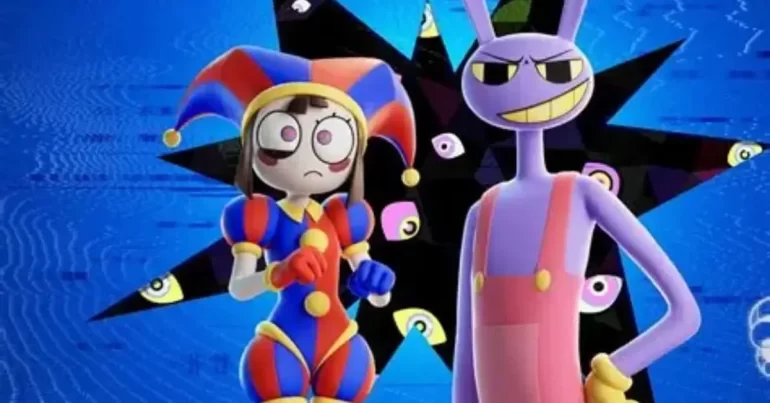
Some animated shows give fans characters to watch. Others give them worlds they immediately want to become part of.
The Amazing Digital Circus falls firmly into the second category.
Its strange virtual setting, colorful character designs and unpredictable mixture of comedy and darker psychological themes have created exactly the kind of fictional universe that encourages viewers to imagine what their own character would look like inside it.
Pomni, Jax, Ragatha, Kinger and the rest of the cast may be the characters we follow on screen, but spend enough time around the Digital Circus fandom and you will quickly encounter another group entirely: original characters created by fans.
They have names, personalities, designs, backstories and sometimes surprisingly elaborate relationships with the existing cast.
The Digital Circus has effectively become a character-creation playground.
The World Makes Almost Any Character Possible
One reason original characters work so naturally within The Amazing Digital Circus is that the world does not demand a single visual style.
The characters are already wildly different from each other.
One resembles a jester. Another is a rabbit-like figure. Ragatha resembles a rag doll, while Kinger is essentially a chess piece brought to life.
That variety gives fan creators enormous freedom.
If every character in the series looked like variations of the same species or followed the same visual rules, creating an original character would involve working inside relatively strict boundaries.
The Digital Circus does almost the opposite.
A fan-created character could be based on a toy, game piece, object, animal, mascot or something considerably stranger and still feel like it could plausibly exist in the same universe.
The question is less: ‘Does this design fit?’ And more: ‘What would happen if this person became this particular thing after entering the circus?’
That is a much more entertaining creative problem.
Naming the Character Is Part of the Fun
Once you have the basic idea, one surprisingly difficult part remains.
What do you call them?
The existing Digital Circus characters have short, memorable names that suit their designs without feeling overly complicated. That makes naming a fan character harder than simply combining a few random fantasy words.
You want something strange enough to belong in the circus while still sounding like an actual character name.
Some fans brainstorm manually, while others experiment with tools such as a TADC character name generator to produce ideas they can modify, combine or use as inspiration.
The useful part is not necessarily accepting the first generated name.
It is getting past the blank-page problem.
A generated name might suggest a personality. A personality might inspire a costume. That costume could create an entire backstory.
Suddenly what began as a random character concept has an identity.
Original Characters Let Fans Enter the Story
There is another reason OCs become so popular around fictional universes like this one.
They allow the audience to participate.
Watching Pomni attempt to understand the Digital Circus is one experience. Imagining how your own character would react to Caine announcing another ridiculous adventure is something else entirely.
Would your character panic? Would they enjoy the chaos? Would they constantly fight with Jax? Would they immediately start searching for an exit? Would they become friends with Ragatha? Or would they gradually become one of the most unstable people in the circus?
Original characters turn those questions into stories.
Fans can write scenes, create artwork, make animations or simply imagine interactions that will obviously never exist in the official series.
That participatory side of fandom is hardly new, but The Amazing Digital Circus is particularly suited to it because its central premise already involves ordinary people being transformed into unusual digital characters.
Creating an OC almost feels like asking: What would the Digital Circus turn me – or someone I invented – into?
A Good OC Needs More Than a Cool Design
The visual concept usually comes first.
Maybe you imagine a wind-up toy character. Maybe a broken arcade mascot. Maybe something inspired by playing cards, puppets, old computer graphics or circus equipment.
But a memorable character needs more than an interesting silhouette.
Personality matters.
The best fan-created characters usually have some kind of contradiction.
A terrifying-looking character might actually be extremely timid. A cheerful mascot could secretly despise every adventure. A character built around speed might be terrified of moving too quickly. Someone who constantly jokes could be using humor to avoid thinking about the fact that they are trapped.
Those contradictions are what make characters feel less like designs and more like personalities.
This is where fans who have the basic idea but want help expanding it sometimes use a Digital Circus character creator as a starting point for combinations of traits, character concepts and creative directions.
Again, the most interesting results usually come when the creator treats generated suggestions as ingredients rather than finished characters.
Change things. Combine ideas. Reject the obvious choices.
The goal is to end up with something that feels like yours.
The Best Characters Have a Problem
Look at memorable characters across animation, action movies, comics or games and there is almost always something they want but cannot easily have.
That same rule works surprisingly well when creating an original Digital Circus character.
Instead of starting with twenty personality traits, start with one problem.
Maybe your character desperately wants everyone to like them. Maybe they refuse to accept that escape could be impossible. Maybe they are obsessed with discovering how the circus works. Maybe they have become completely comfortable inside the digital world and secretly do not want to leave.
Now the character has something that can create conflict.
Put them into an adventure and their personality begins making decisions for you.
A character obsessed with escaping will respond differently to Caine’s games than one who treats the circus like an endless amusement park.
That difference is where stories come from.
Relationships Make an OC Feel Real
Another mistake in character creation is designing the character completely in isolation.
Instead, ask how they react to everyone else.
Give them one person they genuinely like. One person they cannot tolerate. One person they misunderstand. One person they are slightly afraid of.
Suddenly you have a network of possible scenes.
A great fictional character is rarely defined only by what they say about themselves. We understand them through how they behave around other people.
This is particularly useful in an ensemble-driven world like The Amazing Digital Circus, where wildly different personalities are constantly forced into the same adventures.
Your OC does not need to be everyone’s best friend. In fact, they probably should not be.
Conflict is more interesting.
The Strange Appeal of Making Characters for a Horrible Place
There is something slightly funny about the popularity of Digital Circus OCs when you consider the actual situation.
This is not exactly a universe you should want to visit.
The bright colors and cartoon designs hide a much darker premise: people are trapped inside a digital environment, struggling with their identities while an artificial intelligence sends them through bizarre adventures.
And yet fans constantly imagine themselves there.
That is part of the appeal.
The world is visually playful enough to invite creativity while psychologically strange enough to generate stories.
If the Digital Circus were simply a cheerful virtual amusement park, there would be much less to explore.
The tension between adorable character designs and existential panic is what gives the universe its personality.
An OC can participate in both sides.
They can look completely ridiculous while having surprisingly serious fears underneath.
That contrast feels perfectly at home.
Fan Creativity Keeps Fictional Worlds Alive
The biggest entertainment franchises eventually become larger than the stories their creators release.
Fans draw characters who never existed. They write alternate versions of events. They imagine crossovers. They build costumes. They create games. They argue about theories. And, inevitably, they insert their own characters into the world.
That is not a distraction from enjoying the original work.
For many people, it is part of enjoying it.
A fictional universe becomes particularly powerful when viewers stop treating it as something they only consume and start treating it as somewhere they can create.
The Amazing Digital Circus has exactly the right ingredients for that kind of fandom: recognizable aesthetics, flexible character rules, strong personalities and a world strange enough that almost anything can happen.
Which means somewhere right now, someone is probably designing another unfortunate cartoon character about to discover that joining the Digital Circus was a terrible idea.
And they are probably having a great time doing it.