



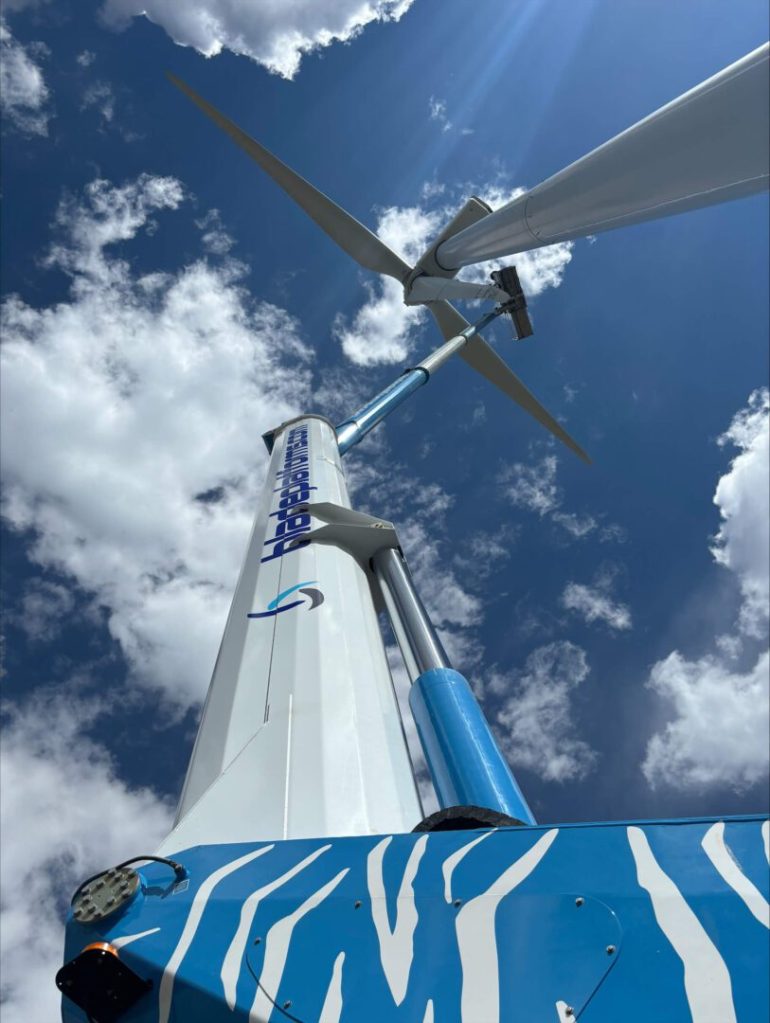
Working in industrial settings is inherently risky, and shipyards are no different. Advanced machinery and tools are used for vessel construction, maintenance, and repair. At the same time, safety and logistical requirements cannot be ignored. Today, aerial work platforms, such as boom lifts, are widely used. A mobile aerial platform significantly contributes to safety, efficiency, and productivity at jobsites like shipyards, where many tasks are performed at height.
Boom Lifts
These mechanical devices can safely elevate workers to desired heights. Their hydraulic arms are built with a bucket or a platform on one end. Operators can maneuver these arms horizontally and vertically as needed. Boom lifts come in articulating and telescopic models, each made for a distinct purpose. Telescopic boom lifts have straight arms, which can be raised vertically to access narrow or tricky areas. Articulating lifts feature jointed arms, allowing operators to maneuver them easily through tight spaces and around obstacles. To be precise, any of these models can be used in shipyards after assessing task requirements and common challenges.
As you know, ships are massive, complex structures made up of multiple levels and sections, often reaching hundreds of feet in length. Areas such as undercarriages, funnels, masts, and superstructures can make your job extremely challenging without the proper equipment. You are also aware of the challenges posed by environmental factors, such as unpredictable weather, saltwater, and slippery surfaces. Amid all this, crews must meet tight deadlines while maintaining smooth workflow, whether building a new vessel or repairing an existing one. Compliance risks are well known. However, boom lifts can help address many of these challenges. Crews can work safely and efficiently at height to complete construction, maintenance, or repair projects in shipyards.
The use of boom lifts in shipyards
You can use a boom lift for tasks such as hull painting, superstructure welding, and electronic system installation on the mast, among others. Workers can safely and confidently access heights using the aerial lift’s stable platform. With articulating boom lifts, you can manage most of the complex structures of the ship. During ship construction, components are fabricated separately before assembly. With the support of boom lifts, even large sections can be installed smoothly. They make everyone’s job quicker and safer, whether it is a welder, an engineer, or another specialist. Traditional scaffolding often restricts workers’ movements due to fall risks, but these lifts allow crews to operate more efficiently by providing both vertical and horizontal access to the jobsite.
Ships must be properly maintained during dry-docking or while docked.Boom lifts can assist with tasks such as inspections, repainting, surface preparation, and corrosion control. You can use telescopic lifts to perform tasks on a naval carrier, cruise ship, or tanker, and articulating lifts to access interior sections or engine rooms. These lift options ensure that all tasks are completed on time and with precision.
At https://www.bladeplatforms.com/, you can explore all types of aerial work platforms. Since shipyards have a unique environment, it is important to consider a lift’s height and outreach, terrain type, maneuverability, and power source.