


The Hoodie Nobody Planned to Wear Every Day
You didn’t set out to make a hoodie your uniform. It happened slowly. First it was one grey pullover for cold mornings, then a heavier one for stadium nights, and by winter you’d rotated through four without noticing. That’s the funny part about graphic hoodies right now — they crept in through the side door, tied to a favorite song or a tour weekend, and turned into the piece you reach for before anything else. My own pick sits on the desk chair as I write this, sleeves a bit stretched from being pulled over gloves at a show in November. Nobody announced a trend. But count the graphic hoods at any coffee shop between October and March — the ratio is wild. Music-driven pieces, small brand drops, heavyweight cotton with something meaningful printed across the chest. Honest limitation up front: not every graphic hoodie is worth the money, and this article is really about spotting the ones that are.
When Artist Merch Stopped Being a Souvenir
There was a long stretch where band merch meant a scratchy tee with a print that cracked after four washes. That era is mostly done. Take Zach Bryan merch as one of the clearest examples in country and folk-rock — the range covers heavyweight pullovers, crewnecks, lyric tees, and trucker caps that lean into actual album art rather than throwaway prints, and the fabric sits closer to a mid-tier streetwear label than a tour truck. That matters because fans finally get to wear the music without a wardrobe compromise. Furthermore, the pricing on fan-focused stores tends to sit well under what stadium merch tables charge. My favorite is still the grey heartbreak pullover; the ink sits flat instead of shiny, which reads more vintage than merch-table. Small honest note: sizes on artist stores can run a touch large through the body, so if you’re between two, order down.
How to Spot a Hoodie Worth Keeping
Product photos are the worst place to judge a hoodie. After buying too many that didn’t survive a season, I’ve settled on a checklist I run before checkout:
- Weight matters, but so does drape. Look for 380 GSM or heavier cotton, and check reviews that mention how it hangs after a wash.
- Print method beats print size. Puff print, embroidered patches, and discharge printing outlast plastisol every time.
- Cuffs and hem tell you the truth. Rib knit should feel firm between your fingers. Thin ribbing means the hoodie loses shape by month two.
- Hood construction is where corners get cut. A proper hoodie has a two-panel lined hood with real drawcords through metal eyelets.
- Check the stitch count on high-stress seams. Underarm and shoulder seams should show double-needle stitching, not a single loose line.
- Read the return policy carefully. Brands that stand behind their build offer 30 days minimum. Anything shorter is a small warning flag.
Run those six, and you’ll skip roughly 80% of the disappointing purchases most people make in their first year.
The Heavyweight Cotton Conversation
Everyone throws around “heavyweight” like it means something specific. Weight is measured in grams per square meter — GSM — and the range that earns the label starts around 380 and climbs past 500. Below 300 GSM, you’re wearing a thick t-shirt with a hood attached, which is useless in a stadium in February. My daily pullover clocks in around 420, and the honest experience is that it takes two full days to air-dry after a rain. Trade-off accepted. Meanwhile, the upside is that these fabrics keep their color longer and actually block wind in a way lightweight blends never will. Cotton blends with a small percentage of polyester tend to hold shape a bit better than pure cotton but breathe a touch less. However, if you sweat a lot or live somewhere humid, 100% cotton heavyweight will feel more comfortable across a long day.
What Actually Survives Wear, Wash and Time
You can tell a lot about a hoodie’s future in the first five minutes of handling it. Certain details predict longevity almost perfectly:
- Puff embroidery and chain-stitch patches hold up for years, even through machine washing on cold.
- Discharge printing dyes the ink into the fabric instead of sitting on top, so it doesn’t crack when you stretch.
- Ribbed underarm gussets — the little diamond of extra fabric — signal the pattern maker actually cared about movement.
- Metal-tipped drawcords with real eyelets never fray, unlike heat-sealed plastic tips that split within months.
- Bar tacks at pocket openings stop the front pouch from ripping when you keep keys or a phone there.
Meanwhile, watch for these red flags: shiny plastic prints, unlined hoods, single-needle stitching, and stores that photograph products only on models. Flat-lay shots reveal construction; runway shots hide flaws.
The Streetwear Labels Building Something Different
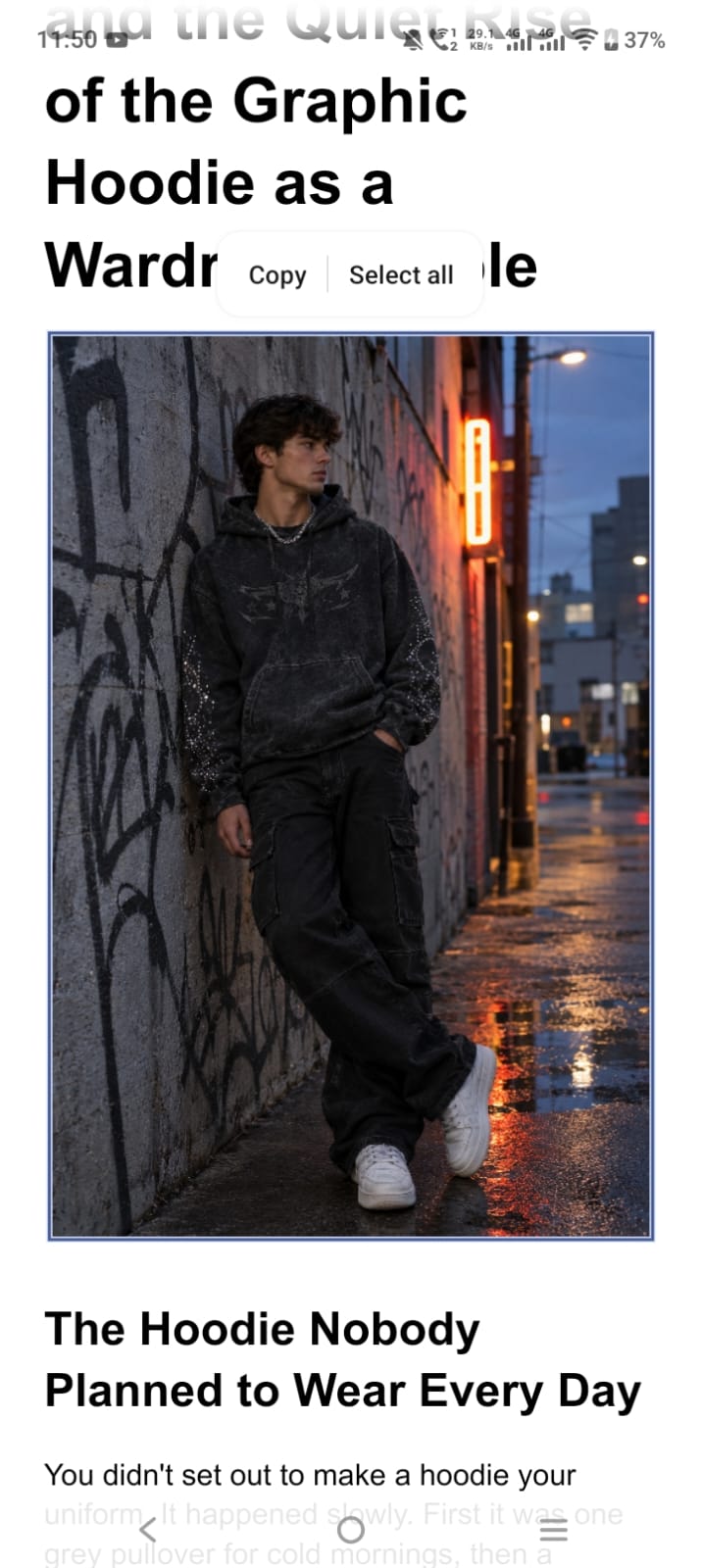
Beyond artist stores, a fresh crop of independent labels is doing hoodie work that deserves attention. One example worth pointing at is the Mixed Emotion Hoodie range, which pulls together acid-wash treatments, rhinestone detailing, cropped fits, and clean sleeve pieces under one identity — a much broader design vocabulary than most emerging labels attempt in their first few seasons. That range matters because it lets you build a whole outfit inside one brand’s language rather than mixing four labels that never line up. My personal opinion — take it with a grain of salt — is that rhinestone hoodies are the sleeper hit of the current cycle. They looked gimmicky at first glance, but in person, the way they catch stage lighting is genuinely nice. However, the honest catch with newer labels is stock: popular colorways move quickly, so if a piece speaks to you, waiting can mean losing the size.
Building a Rotation Instead of Collecting One-Offs
The move most people miss is treating hoodies like sneakers — you’re not buying one, you’re building a rotation. Two or three pieces sharing a rough palette will outperform seven random impulse buys every time. My personal setup right now is four pullovers: a heavy black for going out, a grey vintage-wash for daily wear, a cream for warmer days, and a lightweight zip-up that lives in the car. That’s it. When you buy this way, cost per wear plummets. A $100 hoodie worn 80 times in a year works out to $1.25 per wear, which is cheaper than fast-fashion pieces that get worn six times before falling apart. Furthermore, a tight rotation means each hoodie gets a rest between wears, which massively extends its life. If you’re starting, one heavyweight pullover in black or charcoal covers about 70% of scenarios.
Caring for the Hoodies You Actually Love
Once you own a hoodie worth keeping, the care routine matters more than the purchase did. Cold water, inside-out, gentle cycle. That single habit will add years. Hot water and tumble drying wreck cotton — they shrink fibers, fade prints, and turn plush interiors into flat, sad fuzz. My routine looks like this: wash every third or fourth wear, always with a color-safe detergent, always cold, always inside-out. Then air dry on a padded hanger. The rack takes overnight; the dryer takes forty minutes and costs you a full year of the garment’s life. Furthermore, spot-clean stains with a soft toothbrush rather than throwing the whole piece in for one coffee spot. If pilling starts, a proper fabric shaver runs about $15 and restores the surface in ten minutes. Honest note: no care routine can save a poorly built hoodie, which is why the buying decision matters most.
Final Words
The graphic hoodie won because it does everything a wardrobe workhorse should — keeps you warm, carries something meaningful, ages well, pairs with almost anything. Both the artist-driven side and the small-label streetwear side are building better products than they were five years ago. Buy fewer, buy heavier, and wear them until your friends start recognizing the piece before they recognize you.
FAQs
How many hoodies do I actually need in a rotation? Three to four is the sweet spot. Any more and pieces collect dust. Any fewer and you’re wearing the same one until it wears out.
Are artist-merch hoodies really the same quality as streetwear brands now? The best ones absolutely are. The bottom-shelf artist merch still exists, but it’s easier than ever to skip.
What weight should I look for in a proper hoodie? 380 GSM at minimum for something that reads as heavyweight. Below 300 is closer to a hooded sweatshirt than a real hoodie.
Can I put a graphic hoodie in the dryer? You can, but you shouldn’t if you want it to last. Air-drying on a padded hanger takes overnight and doubles the life of the piece.
Are rhinestone hoodies a passing trend or worth buying now? The well-made ones with securely set stones are worth it. Cheap glue-on rhinestones shed in the first wash, so ask the brand how they set them.