



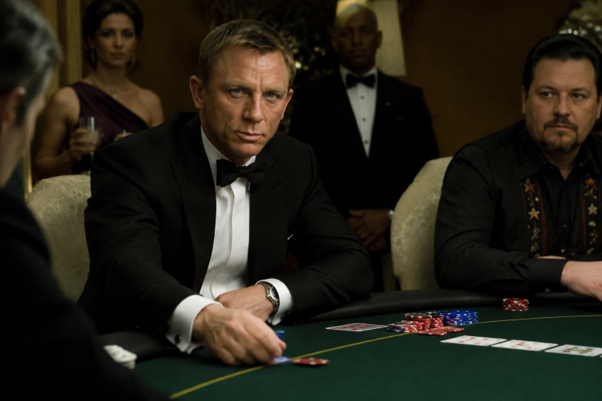
You know the scene. The hero is down to his last chips, the villain smirks across the table, and the music tells you something enormous is coming. He shoves everything on a hunch, because the script needs him to, and the river card lands like a thunderbolt. Cut to the slow exhale, the stunned table, the walk away from the explosion of a payout he never mathematically deserved.
Cinema has sold that version of betting for decades, and honestly, thank goodness. Nobody buys a ticket to watch a man compare prices. From the tuxedo poker of Bond to the sweaty, self-destructing chaos of Uncut Gems, movies frame wagering as fate with a soundtrack: you feel it, you risk it all, and the universe decides if you’re the main character. It’s gorgeous nonsense, and it has quietly shaped how a generation of viewers assumes betting actually works. So the question deserves a proper answer: does real-world sports analysis run on anything like movie logic? Short answer: no, and the ways it doesn’t are more interesting than the trope.
The myth Hollywood needs
Film runs on compressed stakes. A screenwriter has two hours to give you triumph or ruin, which is why movie gamblers always bet everything, always at the last second, always on instinct. The Casino Royale poker showdown is a masterclass in the form: four players, one monstrous pot, and a hand so improbable that real card rooms would talk about it for a decade. As a drama, perfect. As a model of how anyone wins over time, it’s a lottery ticket wearing a dinner jacket.
The tell is what movies never show: sample size. A film gambler’s career is one night. Real handicapping is thousands of small decisions across a season, where no single result proves anything and the goal isn’t a miracle, it’s a margin. Even Rounders, the card movie players actually respect, spends its whole runtime torn between grinding discipline and the one big score, and the score wins because the genre demands it. Movie wins are always singular and enormous for the same reason; “made slightly better decisions than the market for six months” fits nowhere in a trailer. Instinct makes a great third act; over five hundred bets it’s just variance with better lighting.
The Moneyball turn nobody filmed properly
Ironically, Hollywood already made the counter-argument. Moneyball is the rare sports movie whose hero wins with a spreadsheet, and the real-world movement behind it, the objective study of baseball that SABR’s sabermetrics tradition formalized, is the actual blueprint for modern sports analysis. Notice how hard the film had to work to make it watchable, inventing shouting matches in scouting rooms to dramatize regression analysis; the method itself is undramatic by design. The skill isn’t sensing destiny; it’s finding spots where the market’s number and the evidence disagree, taking those spots methodically, and letting a long season sort it out.
That approach used to demand exactly what the movies mock: obsessives with private spreadsheets. Not anymore. In cinema, heroes win on wild instinct; in reality, open-access resources like the betting tools on shurzy.com show what the working version looks like. There are free dashboards where anyone can compare odds across sportsbooks, read the day’s AI-generated predictions, and check prop trends without building a model themselves. No montage, no thunderbolt river card, just probability made readable. The platform doesn’t even take bets, which tells you what business it’s actually in: information. Whether the information beats the market on a given night is never guaranteed, and that’s rather the point; the work lives in small, repeatable judgments, not in miracle rivers.
Three real skills the movies skip
- Shopping the line. No film hero has ever compared prices at three books before the big wager, yet identical outcomes are priced differently across sportsbooks every single day, and consistently taking the best available number is the most reliable edge the field offers. It’s also catastrophically uncinematic.
- Tracking who’s actually playing. Availability news, rest patterns and travel spots move markets before most fans notice. The real-world equivalent of the hero’s mystical read is a person who saw the starting lineup two minutes early. In the movies, this character is a guy in a bar who knows the trainer; in reality, it’s a notification.
- Betting the same boring amount. Movie gamblers double down after losses because escalation is drama. Disciplined bettors stake fixed units so that one brutal beat can’t write the ending, which is why they’re still solvent in act three and why nobody has ever filmed them.
Roll credits
Hollywood isn’t wrong to prefer the thunderbolt; it’s in the catharsis business, and a well-lit all-in will always beat a well-managed bankroll on screen. But the real-world version of this skill looks less like Bond and more like an analyst with a free dashboard, patient staking and a long memory. Luck writes the great scenes; the long, unfilmable middle of the story belongs to patience and data. And if a studio ever shoots the truthful version, ninety minutes of a person calmly declining bad prices, it will bomb beautifully, and the few viewers applauding will be the ones who recognized themselves.