



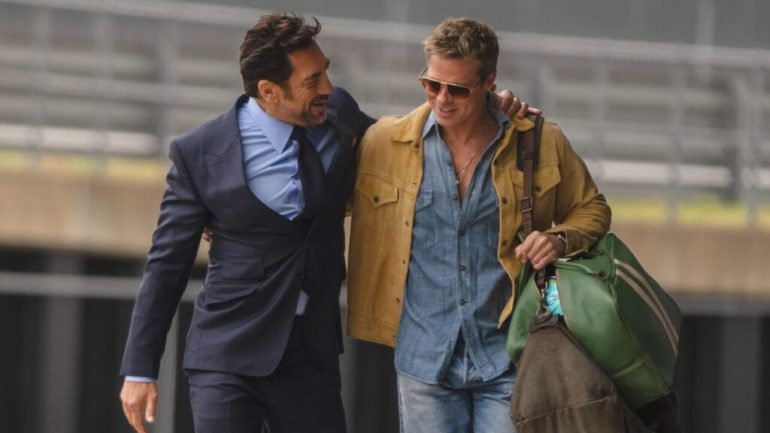
Among the most memorable moments of every classic movie is the image of a character walking away with a bag. An image without dialogue, but one that tells the viewer a whole lot, the character has. A leather travel bag contains all the information that the script does not. The history of cinema has understood that what the character carries speaks volumes about who they are, as much as what they actually say. There is no other prop that communicates the same degree of importance as a well-used leather bag.
Whether in a high-flying action scene or a smoky noir film, the Leather Travel Bag has been part of some of the best moments of cinematic history. This common occurrence is not merely a coincidence. Movie directors, costume designers, and production crews have made this choice with intent; the way a leather bag conveys a feeling, an emotion, a message that a synthetic material will never communicate. A man who is carrying an old leather travel bag does more than just walk through an airport; he walks through the airport with the recognition that he has done something. There is a narrative to tell.
Why Leather Bags Work So Well On Screen
Before diving into specific scenes, it’s worth asking: why leather? Why not canvas, nylon, or hard-shell luggage?
The most important quality of leather as it relates to the film is texture. Leather is a three-dimensional material that reflects light differently than other textiles, providing this surface with an immediate, tactile connection to the image on the screen. As leather gets creased, scratched, and darkened at the points where it was handled, it tells a visual story about that piece of luggage’s life.
Costume designers call it “character breakdown,” the deliberate aging and distressing of wardrobe and props to reflect who the character is, not just what they look like. A brand new rolling suitcase says someone who travels for business. A scarred, brass-buckled leather bag says someone who lives in motion.
Indiana Jones and the Bag That Crossed Continents
No conversation about leather and cinema starts anywhere other than Indiana Jones. Harrison Ford’s battered satchel, technically a leather messenger bag, became one of the most iconic prop designs in Hollywood history. It appears in every film in the franchise, and by Raiders of the Lost Ark alone, it had already logged more screen miles than most actors.
The visual effects of the leather bag are amazing. It helps anchor the character Indy to a time period; it establishes practicality over vanity; and it shows the audience that the bag has been to many places. The distressed leather on the bag has an authenticity about it that can only be described as archaeological instead of theatrical. Thus, as Jones runs away with the bag in hand, the viewer knows that he has done so on many occasions prior.
The overall effect of all elements of the Indiana Jones franchise demonstrates to future filmmakers that leather accessories are an essential part of an actor’s character through their wardrobe.
The Italian Job (1969): The Cool of a Leather Duffel Bag
Michael Caine’s Charlie Croker in the original The Italian Job remains one of cinema’s sharpest-dressed criminals. And in a film built on style, the Mini Coopers, the suits, the sheer audacity of the plan, the Leather Duffel Bag becomes a recurring visual anchor for the heist itself.
In a caper movie, the leather duffel bag represents something significant, the receptacle for that which is at stake in the scenario. It is taken from one person to another, tossed from rooftop to rooftop, crammed into various trunk compartments to be guarded as ferociously as one would guard his or her own life! In the “language” of heist movies, the duffel represents the mission itself. The duffel’s form: cylindrical, unstructured, slightly slouched, gives it a “lived-in” feel instead of a “corporate” feel. This is why it keeps reappearing in these kinds of films: a hard-sided case would appear to belong to a member of someone’s accounting department; a leather duffel would appear to belong to someone who has been involved in this kind of mission previously and is fully confident about what their role in completing the mission would be.
Ronin (1998): Leather and the Language of Professionals
John Frankenheimer’s Ronin is one of the most underrated action films ever made, and it understands luggage the way most films understand dialogue. Robert De Niro’s Sam is a former intelligence operative operating in the grey zone of European crime. Everything about him is
calibrated, economical, and worn-in, including the dark leather bag he carries throughout the film.
The bag is never glamorized in Ronin. It goes across Paris and Nice with its owner’s anonymity while sitting in car boots and being thrown upon hotel beds. The key is to exercise restraint. The bag is not noticeable. It just includes what must be contained. The decision to use a black, structured leather travel bag instead of anything ostentatious for a movie about professionals working undercover is just as much a character choice as De Niro’s casting.
The film reminds us that leather doesn’t always mean luxury. Sometimes it means competence.
Up in the Air (2009): One Bag, One Life
Jason Reitman’s Up in the Air uses luggage as its central metaphor, literally. Ryan Bingham, played by George Clooney, delivers lectures about emptying your life into a bag you can carry. The film opens with him moving through airports with the fluid ease of someone who has reduced existence to a single carry-on.
His bag is sleek, structured leather. Dark. Minimal hardware. No excess. It is, in the world of the film, a philosophical statement made physical. Bingham has engineered his entire life around what fits inside it. When the bag is eventually joined by more luggage, someone else’s luggage, you know the film has arrived at its crisis point.
Up in the Air uses leather as shorthand for a specific kind of controlled, self-sufficient masculinity. The bag isn’t about style. It’s about the terrifying freedom and loneliness of carrying everything you need and nothing you don’t.
No Country for Old Men (2007): The Bag That Started Everything
The Coen Brothers’ No Country for Old Men hinges entirely on a bag. Llewelyn Moss stumbles onto a drug deal gone wrong in the Texas desert and finds a leather satchel stuffed with two million dollars. He takes it. Everything that follows is a consequence.
The way the Coen Brothers shoot the bag is interesting in that they do not glamorize the bag at all. The bag will find itself in a motel, in the dirt of the desert, as well as in the hands of Llewelyn when he’s experiencing pure fear. The leather of the bag has an aged look and feel, giving it the appearance of being dangerous rather than luxurious. The continued pursuit of the bag by Anton Chigurh is due not only to the amount of money in it, but more due to the fact that the bag will never announce itself as being dangerous, but instead will remain in a position of lying about waiting for someone to take it.
It is one of cinema’s great prop performances. A leather bag that functions as a ticking clock.
John Wick (2014): The Return Bag
John Wick doesn’t say much. He doesn’t need to. When he comes out of retirement, he moves through the film with the economy of someone who has been here before, and the weathered leather duffel he packs before heading back into violence is one of the film’s most quietly effective moments.
The bag isn’t glamorous. It’s functional and dark and clearly not new. When John Wick packs a leather bag, you understand immediately that the man has packed bags like this before, that the ritual of it is familiar, even routine. It transforms what could be a simple logistics scene into a character study. The bag signals that this isn’t impulsive. This is deliberate. This is a professional returning to work.
Recent Cinema Still Gets It Right
Hollywood hasn’t lost the thread. Some of the most compelling bag moments of the past few years prove that filmmakers still understand what leather communicates on screen.
1.The Gray Man (2022):
Ryan Gosling’s Sierra Six is a man who exists in no one place for long. His kit bag: dark, worn leather, minimal branding, travels with him through assassinations across multiple continents. Like the character himself, the bag is designed to be overlooked. It doesn’t match the suits of the men chasing him. That’s precisely the point. It looks like someone who actually works for a living, not someone performing the idea of a spy.
2.Killers of the Flower Moon (2023):
Martin Scorsese directed a sprawling epic about crime in Oklahoma during the 1920s that features a careful recreation of all the physical details of the time period. Leather bags and leather cases are not simply props in this film, but rather, they are period artifacts that create a physical sense of place and location during a time when leather was the only type of bag you could use for serious travel. Therefore, when any character is walking around through Osage territory carrying a leather bag, that character is metaphorically carrying with them the entire history and feeling of that time period: dirty, real, and unapologetically material.
3.Carry-On (2024):
The breakout action/thriller on Netflix features Taron Egerton as the star performer. The movie is constructed completely around one piece of luggage getting on a plane on Christmas Eve. The tension in this movie is all about what is inside that bag and by whom it is being controlled; the bag itself is not new mechanics, but the movie proved once again that there is still a fascination
with citizens and viewers of film and TV about what people carry, as evidenced by the opening weekend of 97 million views over ten days.
What Filmmakers Know That the Rest of Us Are Still Learning
The consistent thread across all these films: Indiana Jones, Ronin, John Wick, and No Country for Old Men, is that leather travel bags are chosen for what they mean, not just how they look. They communicate history, competence, seriousness, and a particular kind of style that has nothing to do with trends.
That’s the thing about full-grain leather. It doesn’t try to impress anyone. It just gets better with use, darker at the stress points, softer at the handles, carrying the marks of wherever it’s been. On screen, that reads as authenticity. In real life, it reads the same way.
There’s a reason the best leather travel bags, the ones built from quality hides with solid hardware and real craftsmanship, end up looking better at ten years than they did on day one. Cinema figured that out long before the rest of the world caught up.
The Frame Doesn’t Lie
Great films are built on details. The shoes a character wears, the car they drive, the way they hold a weapon, all of it is chosen. And the bag they carry is no different.
Leather has earned its place in cinema’s visual language because it behaves the way life behaves, it takes on marks, develops character, and tells a story without being asked to. Whether it’s crammed with two million in dirty money or packed methodically before a reckoning, a leather travel bag on screen is never just a bag.
It’s a biography. And the best ones look like they’ve already lived one.