



Introduction
As more people are interested in non-mass-produced decorative pieces for their homes, glass art is getting more attention, and there is a lot of confusion about terms. Is glass art the same as decorative glassware? Or do all glass pieces, like sculptures, bowls, and vases, decorating our homes fall into the same category? Glass art and decorative glass are, in fact, different, although there is some overlap. The former refers to pieces of glasswork created by artists and artisans especially for ornamental and aesthetic purposes. Although some are functional as well, they are always made to be admired. They range in size from monumental installations to smaller works, such as jewelry, vases, and tableware.
Decorative glass, on the other hand, focuses on glass that can be ornamental but is primarily functional, such as tumblers, fruit and candy bowls, and even room dividers. With the latter, the glass can be frosted or textured for privacy. While art glass is displayed, decorative glass is often integrated into the room.
What Are the Differences Between Glass Art and Decorative Glass?
Why the Two are Often Confused
Artistic glass and decorative glass are often confused because they are made from similar materials. The line between them is often blurred, but art glass is handcrafted and aims to be one-of-a-kind. Sometimes it can be used, as in tableware, but it is always made to be appreciated. Decorative glass can be ornamental, but it is always functional and often mass-produced. For example, a stained glass panel will be attractive, but it is also functional in that it provides privacy.
Some manufacturers who mass-produce glass also try to duplicate glass art, such as Murano glass, and attempt to sell it as the real thing, but they are unable to truly replicate Murano glass techniques.
Usages
Both of these types of glassware are used to boost the visual appeal of a room. However, they differ in what they focus on. Glass art centers on artistic expression, while decorative glass focuses on the functional improvement in the design of a room.
Art glass is often intended to be the focal point of a room, something that draws all eyes to it. One great option is to hang an artistic mirror, such as an ornamental Murano Glass mirror. Mirrors help illuminate space and make it appear visually larger, as well as provide a great accent in a hallway, living room, or dining room. Or you can put up a blown glass chandelier, or even get a large installation, but each piece is made to be displayed. Yes, it can sometimes be functional, such as with hand-blown bowls or vintage art glass vases, but at the same time, these pieces can be appreciated as works of art.
Art glass is also often considered to be a collector’s item. Collectors can pay over the original price to own one of these items, especially if created by a famous artisan.
Decorative glass, on the other hand, enhances a room’s appearance, but also has a purpose; for example, you can fill a bowl with salad or a vase with flowers.
To summarise, glass art is mainly displayed, although it can be used, while decorative art is integrated into the room and is functional. The former is primarily created with the purpose of being enjoyed as a piece of art, showcasing craftsmanship and creativity. Decorative glass, on the other hand, enhances aesthetic appeal while serving a functional purpose.
Techniques Used
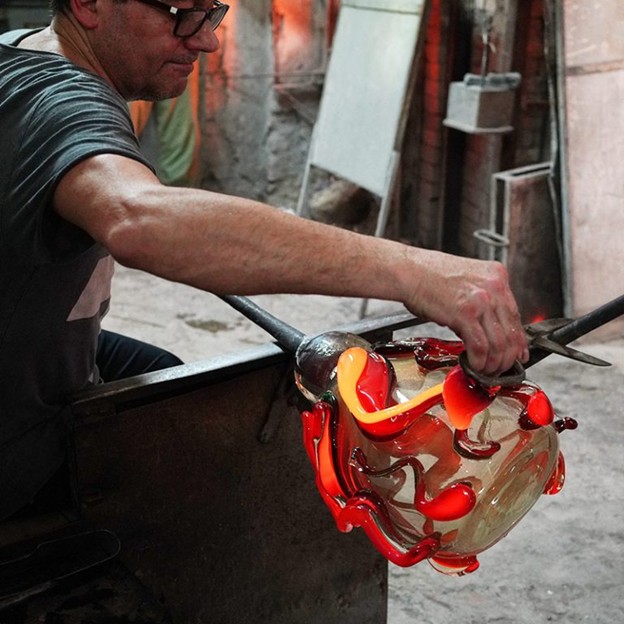
Artistic glass is handmade, and each piece is unique, expressing the artist’s vision. Decorative glass is often mass-produced with repetitive patterns and surface decorations.
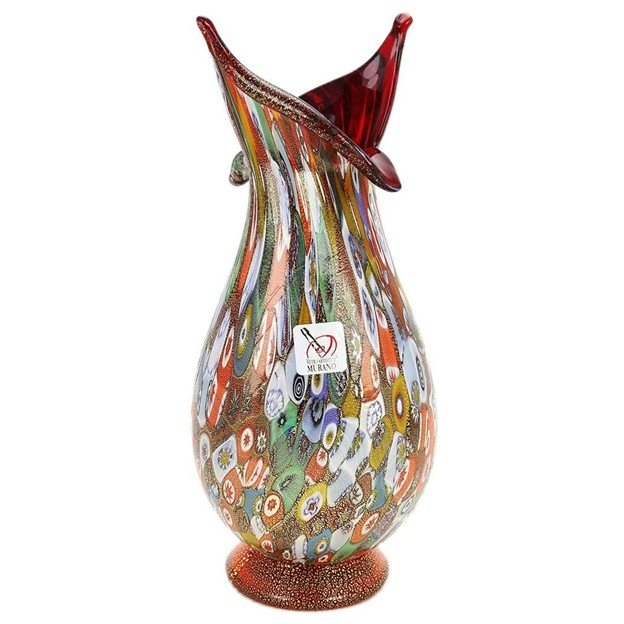
Many pieces of glass art have been created by glassblowing using a variety of techniques, such as Sommerso (colored layers) and Millefiori (flowered patterns). Pieces may also be made by flame working. Using a torch, the maestro melts glass rods to create small sculptures, jewelry, and figurines. Pate de Verre is a casting technique sometimes used. Crushed glass is mixed with a binder, placed in a mold, and fused. This gives a textured appearance.
Decorative glass techniques generally make the surface of the glass more beautiful, rather than the patterns being integrated into the glass. Sandblasting, for example, involves using a high-pressure sandblaster to produce frosted, matte, or 3D relief designs on the glass. Engraving is also used to create detailed patterns on tableware, bowls, and vases.
With artistic glass, metal oxides are added to the molten glass to create different colors. With decorative glass, the surface is often painted. Pigments containing ground glass are applied to the surface, and then the pieces are fired in a kiln. This is commonly used to make stained glass.
Differences in Light Play and Color
Glass art focuses on clarity and the absence of reflection so that you can easily see the artwork. With crystal glass, light is diffracted and produces a beautiful rainbow effect.
When it comes to color, glass art generally features bold and complex colors, created by mixing metal oxides into the molten glass. Decorative glass comes in a wider range of colors, including pastels and vivid back-painted shades that can be either bold or soft.
Difference in Price
The price of handcrafted artistic glass is considerably higher than that of factory-made decorative glass pieces because it is made using expert craftsmanship. Artisans, such as those from Murano, Italy, train for many years to perfect their craft. Decorative glass is often mass-produced, so it is much cheaper.
Well-Known Glass Artists
Harvey K, Littleton
Harvey Littleton was the founder of the Studio Glass Movement in the U.S., which showed that glass art could also be created in a small studio, not only in an industrial setting. In 1962, he developed a formula for melting glass at a lower temperature, enabling artisans to produce their work in a studio setting. This led him to introduce glass blowing to college and university craft programs. In 1983, Littleton was awarded the gold medal of the American Craft Council.
Dale Chihuly
Dale Chihuly, born in 1941, is a respected American glass artisan who shook up the Studio Glass Movement by creating large-scale glass installations that are colorful, full of energy, and complex. They have fluid, organic shapes such as those found in gardens and the ocean. His works include Seaforms and Persians.
In 1971, Chihuly founded the Pilchuck Glass School in the state of Washington, which soon became a leading center for glass education.
Chihuly was blinded in one eye in a car accident in 1976. He stopped blowing glass and instead directed a team of artisans to produce his designs.
Chihuly has had work featured in museums worldwide, as well as in the New York Botanical Gardens.
Lino Tagliapietra
Born in 1934 in Murano, Tagliapietra is regarded by many as the greatest glassmaker of his time. He started working with glass at the tender age of 11 and became a master artisan when he was just 21.
In 1979, he visited Seattle and introduced students at the Pilchuck Glass School to the techniques of Venetian glassblowing, thus shaping the identity of the craft in the U.S.
Tagliapietra is well-known for his exciting use of surface textures, vibrant colors, and lace-like patterns. His major works include Endeavor and Dinosaur.
William Morris
William Morris, born in 1957, was a revolutionary in that he created glass that appeared like organic materials, such as bone, stone, and sinew. He is well-known for his large-scale sculptures inspired by nature and ancient civilizations. His work explores mortality, archaeology, and the relationship between man and beast.
Morris was a master glassblower for Dale Chihuly for 10 years before opening his own studio. He retired in 2007, but his work remains highly prized by collectors. You can see some of his art in the Metropolitan Museum of Art in New York and in the Corning Museum of Glass, also in New York.
Carlo Scarpa
Carlo Scarpa (1906 – 1978) was an Italian architect and glass art designer. He was well-known for combining modern design with traditional Venetian traditionalism. He was involved with two Murano glassmakers, MVM Cappellin (1926 – 1931) and Venini (1932 – 1947). He drew inspiration from ancient Roman mosaics, Byzantine art, and Chinese ceramics.
Scarpa pioneered many new techniques, including Corroso (corroded) vases, which were treated with acid during the cooling process. This gives a matte, textured, and frosty appearance. He also developed Mezza Filigrana, which creates delicate and thin glassware with internal swirling lines. Another technique he developed was Battuto, which is a finish applied through grinding, giving a texture that looks like woven fabric. Many of his designs are still produced by Venini.
While it may be easy to use the terms “glass art” and “decorative glass” interchangeably, it is important to understand that they are not the same thing. There are many differences between artistic glass and decorative glass, including the purpose of each, the techniques used, the colors, and the prices. There is nothing wrong with decorative glass, particularly if you are looking for attractive but functional glasswork to decorate your home or office without breaking the bank. But if you want a stunning piece of artwork that will become an instant focus of attention and the topic of conversation, we recommend that you invest in handmade glass art.