



Marcus T. | Film location researcher and action cinema writer, 11 years covering Pacific Northwest production. Tested July 2026.
Oregon keeps showing up in action movies. Not always as Oregon, not always honestly, but it keeps showing up. The coast doubles for Australia. The high desert stands in for Nevada. Portland gets a few frames of bridge cable and then the screenplay moves on. For fans who care about location authenticity. And action movie fans absolutely do. This is worth pulling apart.
Because there’s a version of Oregon that Hollywood invented, and then there’s the place that actually exists.
The Landscapes Hollywood Actually Gets Right
Credit where it’s due: Oregon’s raw geography is almost impossible to misrepresent badly. The Columbia River Gorge, running about 80 miles east of Portland, photographs so dramatically that even a second-unit crew with a Canon 5D and a tight deadline can make it look extraordinary. Multnomah Falls has appeared in more production stills than any location scout can probably count at this point.
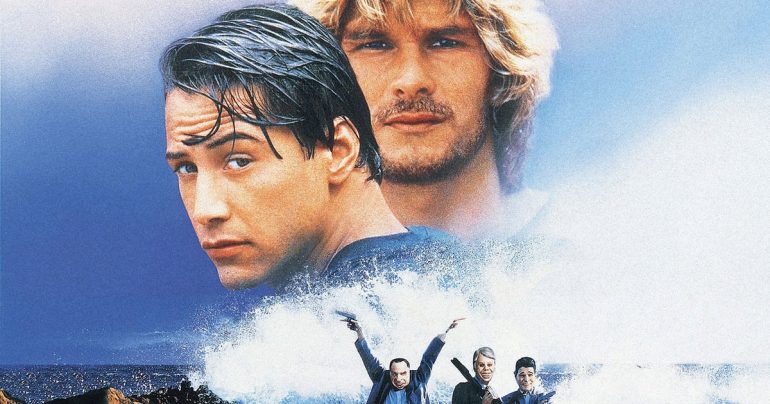
Point Break (1991) is the clearest example of Oregon geography being used honestly. Even when the script isn’t. Ecola State Park in Cannon Beach became Keanu Reeves’s fictional California surf break. Portland Monthly’s film critics catalogued it in their rundown of essential Oregon films alongside dozens of other productions that leaned on the coastline for visual credibility. The irony is the film never once says it’s in Oregon. But the cliffs, the sea stacks, the particular grey of the Pacific light. Anyone from the state recognises it immediately.
That honesty at the landscape level is real. The problems start when cameras turn toward the people.
Where the Script Completely Loses the Plot
Portland in action movies is almost always one of two things: a gritty urban hellscape crawling with organised crime, or a quirky progressive backdrop that the hero passes through on the way somewhere more dramatically interesting. Neither version is quite right, and the second one is more insulting than the first.
The gritty version at least engages. Leverage, the TNT series that ran from 2008 to 2012, actually filmed in Portland and let the city be itself. The bridges, the Pearl District, the food carts. The production team lived there. It showed. When a film crew flies in for two weeks and slaps a Portland establishing shot onto a story set in a generic American city, the difference is visible in every scene.
Then there’s the Indigenous representation problem, which is worse than a continuity error. The Pacific Northwest has a rich and complex Indigenous filmmaking tradition that Hollywood has largely ignored in favour of shorthand imagery. A generation of Indigenous directors working out of Oregon and Washington are finally telling their own stories, but mainstream action cinema is still decades behind. Worth noting that this gap isn’t abstract: it affects how audiences worldwide understand the region.
The Urban Identity Problem
Here’s what most action films get catastrophically wrong about Portland specifically: the city is not interchangeable with Seattle, and it’s definitely not interchangeable with San Francisco.
Portland has a specific neighbourhood-level geography that matters. The disconnect between the east side and the west side of the Willamette isn’t just a river crossing. It’s a cultural and economic fault line that any story set there should reckon with. When a screenplay locates a chase sequence in “Portland” and the geography makes no physical sense, locals notice. And increasingly, so do film critics who do their homework.
Journalism outlets that cover Oregon day-to-day tend to capture this texture far better than screenwriters working from Google Maps. Willamette Week has been reporting on Oregon’s real social and cultural landscape for decades, building the kind of granular local knowledge that a three-week location scout simply can’t replicate. The gap between that ground-level reporting and what ends up on screen is where most of Hollywood’s Oregon misrepresentations live.
Gambling involves risk. Please play responsibly and only wager what you can afford to lose. If gambling is becoming a problem, visit BeGambleAware.org.
The High Desert Gets a Pass (Mostly)
Central Oregon is actually treated with more respect than Portland in the action cinema canon. Bend and the surrounding high desert have been used as stand-ins for the American Southwest in a handful of lower-budget productions, and the substitution works precisely because the landscape is genuinely alien and dramatic. Smith Rock State Park, with its volcanic tuff formations rising 500 feet from the Crooked River canyon, photographs like something from a different planet.
The issue here is subtler. When Oregon’s high desert becomes a generic “Western landscape,” it erases the specific ecology and history of the place. The juniper and sage, the particular quality of the light at altitude. These are details a good production designer would fight to keep. Most action productions just want the rocks.
That said: the rocks are genuinely impressive. Some trade-offs are acceptable.
What the Best Oregon-Set Films Actually Do
The productions that get Oregon right share one quality: they let the state be strange on its own terms.
Gus Van Sant’s work is the obvious benchmark. Not action cinema, but instructive. My Own Private Idaho (1991) is set partly in Portland and partly on the road, and it never tries to make Oregon look like somewhere else. The strangeness is the point. The city’s particular light, the way rain changes the colour temperature of everything, the social geography of Burnside and Old Town. All of it is used as dramatic material, not as backdrop.
For action cinema specifically, the bar is lower, and that’s not entirely a criticism. A film like The Hunted (2003), with Tommy Lee Jones tracking Benicio del Toro through the Oregon wilderness, actually uses the specific terrain as a plot element. The dense forest cover of the Coast Range isn’t generic Pacific Northwest. It’s chosen because it makes the tracking sequences work in a particular way. That’s honest filmmaking.
The Columbia River Gorge’s documented geography. The waterfalls fed by snowmelt, the wind corridors that make it one of the world’s premier windsurfing destinations, the sharp transition from rainforest to semi-arid plateau within a few miles. Is specific enough that a production willing to engage with it would find material that no other location can replicate.
Most don’t engage. Most take the view and leave.
The Authenticity Gap Is Closing
There’s a reason to be cautiously optimistic. Streaming platforms have changed the economics of location shooting in ways that benefit places like Oregon. A limited series that sets itself in Portland now has financial reasons to actually be in Portland. The production tax credits, the crew base, the ability to shoot over multiple seasons and build genuine familiarity with a place.
The Action Elite’s reviews section has been tracking this shift in how smaller action productions are using locations more honestly than studio tentpoles. That’s not a coincidence. Audiences have gotten better at spotting fakery, partly because they’ve seen the real places on social media, partly because critics are doing more rigorous location journalism.
The result is slow but real. Oregon is getting slightly harder to fake.
FAQ
Which action movies were actually filmed in Oregon? Point Break (1991) used Cannon Beach extensively for its surf sequences. The Hunted (2003) filmed in and around Portland and the Oregon wilderness. Several Leverage episodes shot on location in Portland between 2008 and 2012. A handful of lower-budget thrillers have used Central Oregon’s high desert as a stand-in for the American Southwest.
Why does Hollywood misrepresent Oregon so often? Partly budget, partly ignorance. A production flying in for two weeks can’t build the local knowledge to get a place right. Screenwriters often write generic “Pacific Northwest” settings that could be anywhere from Seattle to Northern California. Oregon has a specific cultural and geographic identity that takes time to understand.
Does Oregon have production tax incentives for filmmakers? Yes. Oregon offers a production tax credit that applies to both film and television productions meeting certain spending thresholds in the state. The credit has attracted multiple productions that might otherwise have shot in cheaper markets or on studio backlots in Los Angeles.
What does Oregon actually look like compared to how movies portray it? Far more varied. The state contains temperate rainforest, high desert, volcanic peaks, a dramatic Pacific coastline, and a major urban centre. Most films pick one of these and ignore the rest, or use multiple Oregon locations as stand-ins for several different fictional places within the same story.
Which Oregon location gets used most often in action cinema? The Columbia River Gorge and the Oregon Coast, particularly the stretch around Cannon Beach and Ecola State Park, appear most frequently. Smith Rock in Central Oregon has grown in prominence as location scouts look for dramatic rock formations without travelling to Utah or Arizona.