



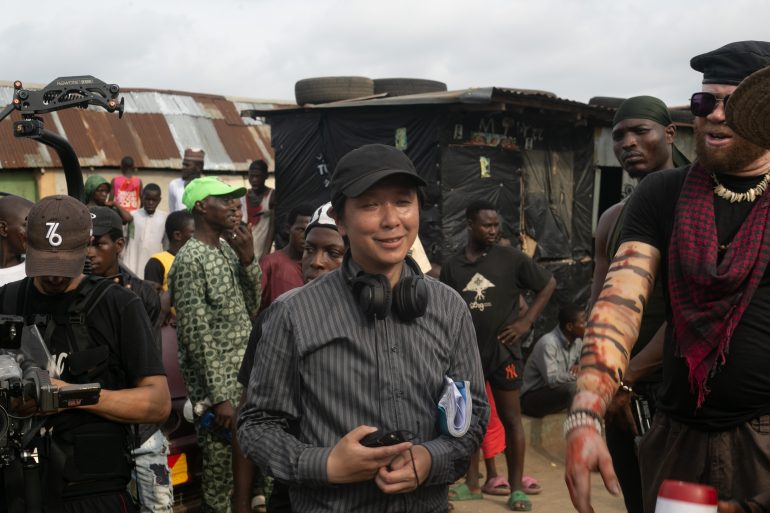
A writer, director, producer and distributor with more than 20 years of industry experience, Chee has built a reputation for delivering ambitious action cinema outside the traditional Hollywood system. Through Action Xtreme, the UK’s first dedicated action studio, he is developing a new generation of international action films. His latest feature, Son of the Soil, represents a groundbreaking UK-Nigeria collaboration that combines action filmmaking with authentic African storytelling.
Chee stopped by to chat with us about making the film.
Thank you so much for taking the time to chat with me today.
My pleasure.
We’re going to be discussing your new movie, Son of the Soil; where did the idea and inspiration for Son of the Soil come from initially?
So, I was always intrigued about Africa and just the opportunity to work there. People had mentioned it to me in the past. And so I was really intrigued and excited about having this opportunity, the classic revenge trope where you got this character coming back to his hometown, coming into this new land. And so that was where the idea originally developed. Razaaq Adoti, who plays the lead Zion, we’d worked together on a film called The Experiment, which I directed him in, and we really enjoyed working together. He’s British Nigerian and so the idea really was then about building a vehicle around him. He’d spent a little bit of time with his childhood in Nigeria but hadn’t really been back for a while. So, yeah, it was an evolution process of then working with him and building a story around him.
Just from the very opening few seconds of the film, there’s this air of tension where anything chaotic could happen at any time. What was the shoot like there? I mean how tense was it actually in reality?
I’ll give a point. It was for me like shooting like a really big independent film. I think that was the real DIY can-do attitude over there. It was really, really amazing to see. We worked entirely with a local crew. The only exception of one of my production team and my DOP who would come over to shoot the film. But every day was a challenge. You’re like working to a different rhythm to how people work. It’s adapting to different processes in different countries. Certainly, there’s lots of challenges, heat, I guess, the scale of what we were trying to achieve. That was really ambitious. But it was great. I think we were fortunate to have a really, really passionate crew who helped band together to make it. I mean, it was, again, certainly, yeah, various challenges and long days and getting things pulled together because we were literally moving locations pretty much every day. That was something I wanted to do. Sometimes I think with independent films, I guess early on, people tell you to make something independent, one location, two actors. And I think with this, we really want to show off Nigeria, show off Lagos and really create a sense of scale. So, that was key with the approach.
You’ve got some great choices of music and for the score. How did you decide what music was right for creating the atmosphere in the film? How did you work with the composer and start getting the right music?
Yeah, I think there was something, again, really leaning into the experience of the creatives over there. And I think I mean, the tension was definitely something it was really, really key. I think just in terms of constantly, I think having that sense of threat and I think building, you never quite know what’s going to happen next. I think that was something that was really, really key. And I think with that with the music was really just about enhancing and amplifying this journey of Zion. To some degree, what I wanted to achieve was you’re almost being introduced to this world through Zion Ladejo, who’s, I guess, homecoming, returning back. And so I think it was very intentional in terms of what he sees, what he discovers and the different characters of good and bad that he encounters. And so I think music was really, really key in terms of building that almost a lifeline, I think, and that heartbeat to this world that he descends into and then this underworld.
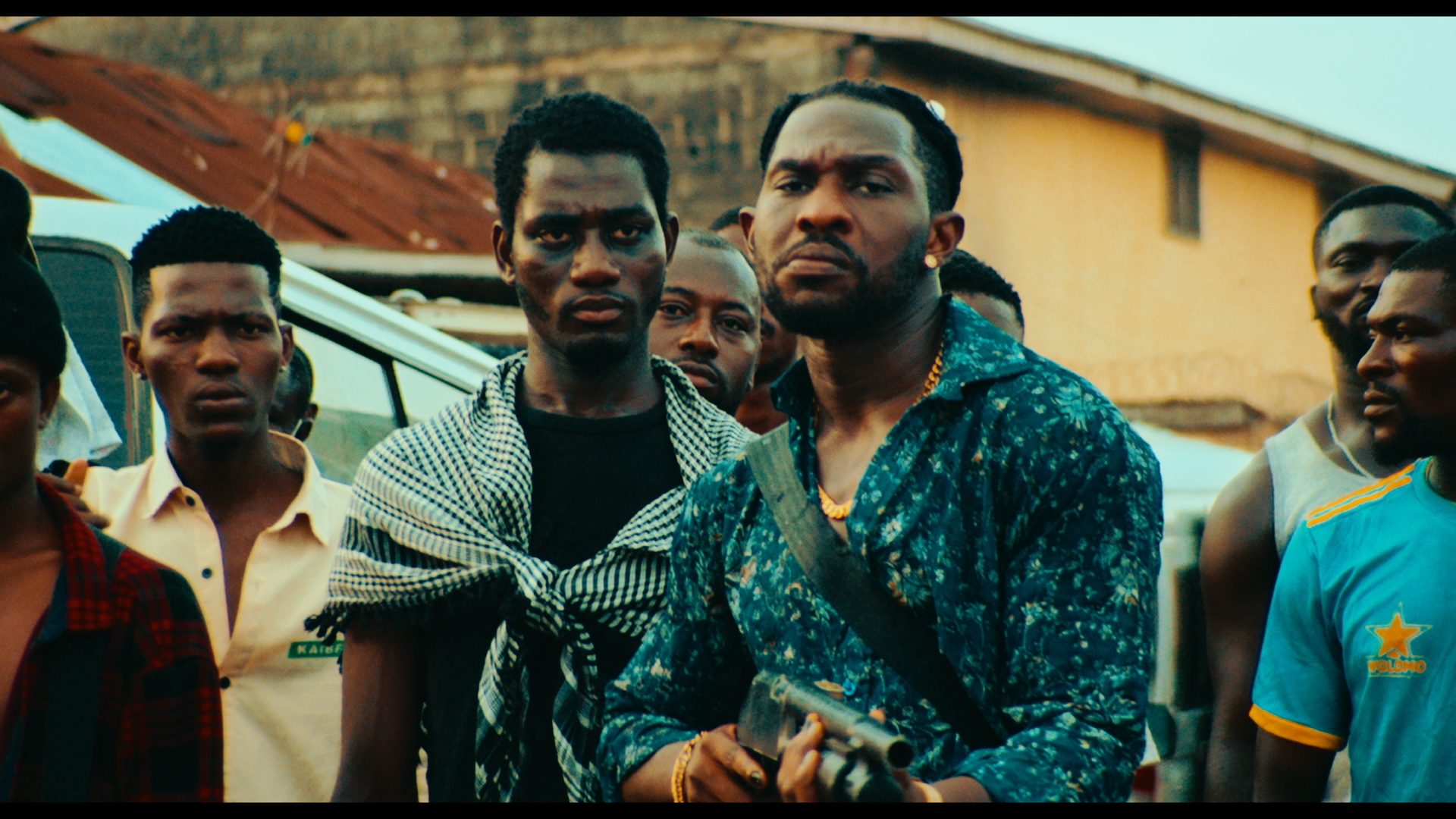
One of my favourite characters, apart from Zion, was Shaka, who’s one of the most terrifying villains I think I’ve seen on screen for quite some time. He’s played by Taye Aramoro. How did you go about casting him and why was he so perfect for the role?
Yeah, so his manager, who’s also a producer, Wingonia, on the film, line producer and producer on the film, had shared some of his materials. And there was a little clip that I saw him in, which was really just the intensity. It’s very different to the roles he normally plays. He’s often doing more drama, almost like romantic comedy role. So, this was something like really outside of something that he was used to. And I think it was really interesting. I think like with Shaka, you’re with this character. What we wanted to do was build something that was, I guess, a bad guy that you’d like to hate. He’s got charisma and charm. I think that was something. It was very collaborative in terms of working with the costume, the hair and makeup to build that look. All those dreads that he’s wearing are all extensions. And I think like the actual character, it was just something that we just really built and layered it together. And yeah, I thought he did such an amazing job of that. So, yeah, it was a really great experience. I think, when you have that opportunity to work with actors who are really receptive and really open to finding the character and helping you to layer in different nuances. But it was interesting. We approach this character or one of the conversations we were saying was, even though from the outside, he’s a bad guy. But really, he’s just on the streets trying to survive. It’s a product of just surviving and getting by day to day. I thought that was really interesting in terms of going on that journey with him.
Absolutely. Now, the film’s got some really hard-hitting action scenes and violence. Can you talk about putting some of the set pieces together and dealing with weapons?
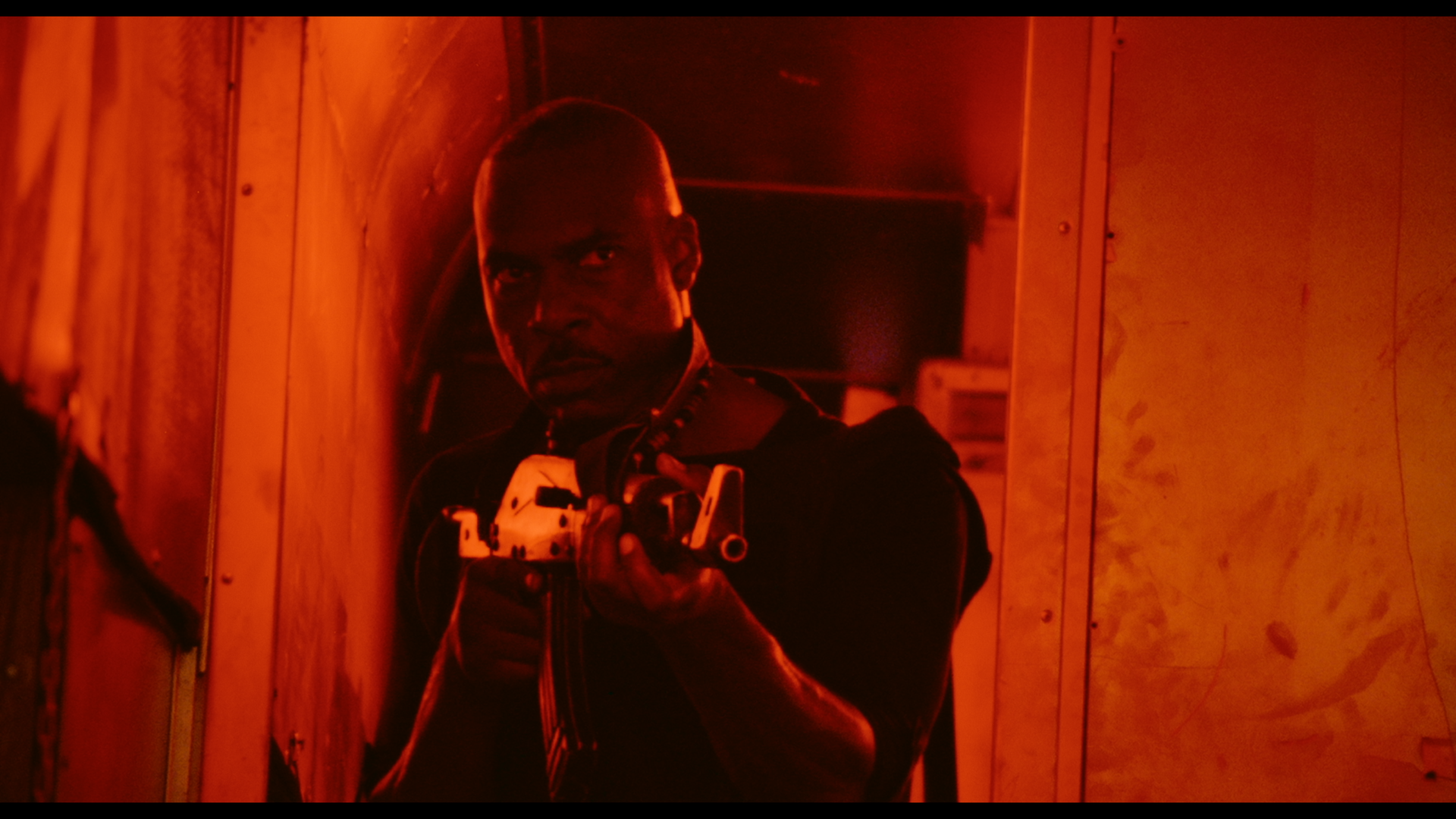
Yeah. We had a great stunt coordinator over there, who we’d worked with, and I think at the core, what we’re looking at initially is how do you try and elevate action? How do you create something different? I think it was really about for me taking what we were seeing in front. So, it was like we have the chase but how can we take maybe a classic car chase sequence and flip it a little bit? So, it was really about then adding fun and those were all live streets as well. So, it was like trying to balance, running it safely, but building, carving out a certain section to run through. I think similar to that and then I think like with the boat sequence as well, like the speedboat chase, I think it was just about how can we just up the ante and make the most of what we were seeing around things like the train sequence or something that we, Raz, the lead had helped secure. We really wanted to make the most of that as well as the streets. There’s the big sequence, I guess without giving too much away, like the big street battle sequence. We shot that in a day; all these action sequences were shot in a day. And that sequence, we had a lot of local gangs actually as extras in that film as well. And they really were amazing but just having the chance to have them on screen, but they really pulled together to be part of the film. I think that was really fun. And we would train them in how to screen fight as well. And we were working with our stunt team to integrate that. A lot of the people there also were just people on the streets and how to shape that. But yeah, for me, I think it was about how to offer audiences something different. I think something exciting. I think something a little bit unique. And I think with such an amazing backdrop in Nigeria, that certainly helped make things a lot easier. But yeah, it was just things like hand-to-hand fights and vehicle chases and guns. I think it was just like some explosions; it was just how to create a spectacle. That was the key.
Yeah. Were there any unexpected moments on the set that changed your approach to making certain scenes?
Yeah, I think every day was certainly challenging. You had to adapt and things like all film sets, like things change and locations, sometimes don’t quite work out. So, yeah, there is definitely an element where you’re having to really roll with like either weather or just things changing. I think one of the things within the streets is that we had to work a lot with local communities in terms of getting permission to film there. We were fortunate to have a really good location manager to make it possible. There were certainly days where you’re trying to visualize things and things change. Then you suddenly have four hours to make the sequence happen. So, the boat chase sequence is something which we had quite limited time so hatching a plan with my DOP and finding out how we can get the sequence and get excitement. But yeah, I think the joy of making films is you take the good with the bad. And so you roll with the punches and you mold things together, I think, in terms of how to bring it on screen.
Finally, what would you like the audience to take away from the film?
I would like them to have a good time. For me, I was always just fascinated by this character, this homecoming. I think there’s tremendous opportunity in Africa, in Nigeria, in particular, in terms of creating more action films. So, I think that’s something which I’m hoping that there’ll be a little resurgence. And I think in terms of with Son of the Soil, we’ll showcase what opportunities there were. Again, there was an amazing cast and crew that helped bring this film together. And so, we’re hoping that I think people enjoy the journey. I think it’s really about family at the core of it. I think it’s about community and society and people coming together, I think to create change, and I hope people enjoy the work that we created.
Thank you very much for taking the time to chat with me today and all the best with the film.
Thanks for your support. I appreciate it.
Son of the Soil is out on Digital this week.