



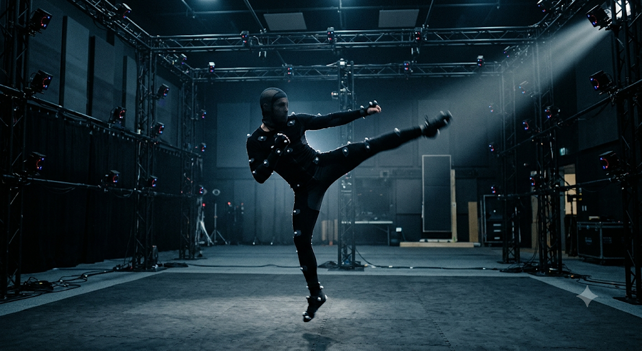
Every convincing punch in a modern fighting game started as somebody’s actual punch. Long before the pixels, stunt people crawled into unflattering suits, threw real elbows at nothing, and let a camera steal their timing. The relationship between action cinema and game combat runs deeper than most players ever consider.
The Actors Who Fought Before the Pixels Did
Midway wanted Jean-Claude Van Damme. In 1991 the studio was chasing a licensed tie-in built around Universal Soldier, and Van Damme was the biggest name in staged violence around. The deal fell apart before cameras rolled, either his schedule or the negotiations, depending on which account you trust.
So Midway turned to local martial artists nobody outside a dojo had heard of, filmed them on Hi8 tape, and digitized the footage frame by frame into what became Mortal Kombat. Every strike had to land clean on the first usable take, the same unglamorous standard behind something as mundane as a working Verde casino login before a session even starts. Daniel Pesina, one of those unknowns, ended up playing four characters at once simply because nobody else was in the room.
Mortal Kombat went on to sell north of 100 million copies, and its finishing moves got graphic enough to help trigger the 1993 congressional hearings that produced the ESRB rating system. Van Damme did eventually show up decades later as a playable Johnny Cage skin.
Some circles really do close.
When Stunt People Started Wearing Dots
The digitizing trick behind Mortal Kombat was a technical dead end, but the instinct never left. By the time CD Projekt Red built The Witcher 3, stunt performer Maciej Kwiatkowski was doing something far more ambitious than throwing punches at a lens. He shaped Geralt’s entire fighting style himself, blending real swordwork with the exaggerated flow only fantasy combat allows.
Kwiatkowski did not stop at the hero either. He and a small stunt team ended up performing nearly every humanoid character in the game, monsters included. Ever wonder why some boss fights feel like they carry a real person’s weight behind them? This is usually why.
- A single stunt performer often plays dozens of side characters, not just the lead, because training someone new for five minutes of screen time rarely fits the budget.
- Fight directors credited on shows like The Witcher and Marvel’s Secret Invasion now also turn up in the credits of games from Rockstar Games and Frontier Developments.
- Intimacy coordinators, a role that started in film and television, have begun appearing on game productions too, Baldur’s Gate 3 among them, once combat and dialogue capture happen in the same sessions.
Recognition works the same way it does anywhere built on repeat visits. A returning fighter’s rhythm becomes familiar the way a regular’s favorite sign-in screen does, whether that is a boss character or something like Верде казино to somebody who checks in every week without a second thought. None of this makes a game look like a movie by accident. It makes the fighting feel inhabited.
Martial Artists Who Became Game Designers
Sloclap took a stranger route for Sifu, released in 2022. Rather than hiring stunt performers to imitate martial arts for a camera, the studio hired an actual Pak Mei kung fu master, Benjamin Colussi, and let him design the combat system from the ground up.
Colussi trained in France before travelling to Foshan, China, to study under master Lao Wei San, eventually becoming his chosen heir. He built somewhere between 160 and a rounder 200 distinct moves for the main character, reports vary on the exact figure, covering bare hands, a staff, a baseball bat, and a machete.
What made Sifu land differently was a refusal to fake it. Colussi calls most screen kung fu opera kung fu, showy but physically dishonest, and the team built its system around a short list of priorities instead.
- Every move had to look convincing to someone who actually studies the style, not just to a casual viewer.
- Every move had to remain usable inside a real time combat loop, not just a scripted cutscene.
- Every move needed a reason tied to a specific weapon or situation rather than existing for decoration.
Sifu sold half a million copies in its first 48 hours and passed 4 million by May 2025. Chad Stahelski, the stunt coordinator turned director behind John Wick, is now producing a Netflix adaptation of the game through his company 87eleven. Hard to find a cleaner loop than that.
Next time a game’s credits scroll past a stunt team, look twice. Somebody on that list probably threw a real punch long before your character ever did.