



There is something inherently cinematic about a crowded casino floor. The flashing neon lights, the rhythmic chiming of slot machines, the sea of tailored suits, and the underlying tension of people risking everything. It is a environment built for drama, but for action cinema purists, it represents something far better: the perfect arena for absolute chaos.
The entertainment world loves these spaces for their intensity. Just as modern digital enthusiasts hunt down the best bitcoin casino sites to experience fast-paced, high-tech action from the comfort of home, Hollywood filmmakers treat the brick-and-mortar casino as the ultimate playground for practical stunts and intricate fight choreography. When a firefight or a martial arts brawl spills across a gaming floor, the structural elements of the environment elevate the action from a standard street fight into a visually stunning masterpiece.
Let’s break down exactly why these set pieces hit so hard, and look at the absolute best times directors turned the velvet ropes into a battleground.
The Anatomy of Casino Chaos: Why It Works
From a production design standpoint, a casino floor offers a goldmine of environmental geometry. You have heavy, felt-topped tables for cover, pristine glass mirrors to shatter, and vertical layers like mezzanine balconies that stunt coordinators dream about.
According to historical production breakdowns archived on Wikipedia, the transition of action cinema in the late 1990s and 2000s relied heavily on using recognizable, high-contrast urban backdrops to make stunts feel more grounded yet spectacular. A casino fulfills this perfectly. The sensory overload of the setting creates an incredible audio-visual contrast. The moment the first gunshot rings out, the sudden silence of the crowd followed by the uninterrupted, ironic chiming of electronic games creates a bizarre, eerie soundscape that amplifies the violence.
1. John Wick: Chapter 4 (2023) – The Berlin Club & Casino
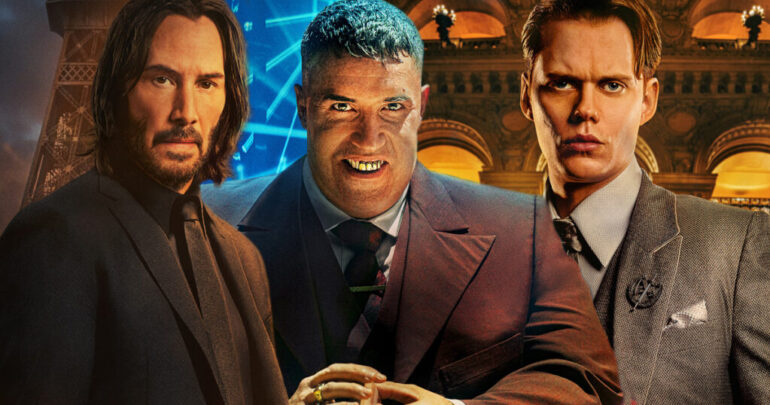
When Chad Stahelski sets a scene in a gaming house, you know you are getting something legendary. In John Wick: Chapter 4, John travels to Berlin to confront Killa, a grotesque High Table senior official played by an unrecognizable Scott Adkins.
The Rewatch Test
I recently rewatched this sequence on a massive 4K monitor to study the stunt transitions. The scene starts with a tense card game but explodes into a multi-level martial arts showcase surrounded by massive indoor waterfalls and hundreds of oblivious, dancing extras.
What makes this scene legendary is how Stahelski uses the environment. Scott Adkins, despite wearing a massive fat suit, performs devastating spin kicks, sending Keanu Reeves crashing directly into gaming tables and tumbling down concrete stairs. The contrast between the flooding water, the flashing strobe lights, and the heavy-impact judo throws is pure sensory overload. It feels less like a movie scene and more like a beautifully orchestrated ballet of brutality.
The Verdict: The Berlin sequence proves that modern action cinema doesn’t need to rely on shaky cam. By utilizing the vertical space and neon aesthetic of a high-end club-casino, Stahelski created one of the most memorable martial arts set pieces of the decade.
2. Rush Hour 2 (2001) – The Red Dragon Showdown
On the complete opposite end of the tonal spectrum lies the climax of Rush Hour 2. Jackie Chan and Chris Tucker navigate the fictional Red Dragon Casino in Las Vegas, resulting in a sequence that perfectly blends top-tier prop comedy with lethal martial arts.
As we often discuss in our look at classic martial arts cinema tropes, Jackie Chan’s greatest superpower is his ability to turn any random object into a defensive weapon. The Red Dragon sequence is a masterclass in this philosophy. Chan slides through cash-ier windows, weaves around roulette wheels, and uses bundles of counterfeit money to redirect enemy strikes.
The pacing is snappy, the kinetic energy is relentless, and the stunts are performed at breakneck speed with zero digital assistance. When Chan and Tucker finally escape by swinging from a massive dragon decoration as the building explodes behind them, it solidifies the casino as the ultimate staging ground for block-buster spectacle.
3. Skyfall (2012) – The Floating Casino of Macau
James Bond and casinos go together like tuxedos and martinis, but Sam Mendes took things to a visual peak in Skyfall. The sequence where Bond (Daniel Craig) arrives at the floating Golden Dragon Casino in Macau is widely considered one of the most visually stunning moments in the entire 007 franchise.
The Cinematography Breakdown
My goal during a recent analysis of this scene was to track the lighting shifts. The entire venue is lit by three hundred floating lanterns and massive neon dragons reflecting off dark water. It feels incredibly atmospheric—like a dimly lit, velvet-roped VIP lounge where danger is lurking behind every pillar.
When the action inevitably kicks off in the casino’s pit, it isn’t a frantic shootout. Instead, it’s a brutal, close-quarters scuffle involving tactical positioning and predatory movement. Bond fighting off mercenaries while falling into a pit filled with Komodo dragons sounds ridiculous on paper, but the elegant cinematography and tight choreography make it feel incredibly intense and sophisticated.
The Evolving Stage of Action
As cinema continues to evolve, filmmakers are constantly looking for ways to reinvent classic spaces. The traditional, smoky Vegas floors of 1970s cinema have given way to the hyper-stylized, techno-industrial gaming arenas of modern global action. But whether it’s an elegant European parlor or a sprawling Asian entertainment complex, the core appeal remains completely unchanged.
Casinos represent an environment of volatile unpredictability. They are places where fortunes change in a split second—making them the perfect thematic mirror for an action hero fighting against impossible odds.
Gambling involves risk. Please play responsibly and only wager what you can afford to lose. If you feel gambling is becoming a problem, visit BeGambleAware.org.