



Action cinema is often reduced to pure kinetic chaos. You get screeching tires, shattering glass, automatic weapon fire, and bone-crunching martial arts choreography. There’s an undeniable craft to all this chaos on screen.
However, when an action thriller really resonates with audiences and becomes a classic, it doesn’t do so with violence alone. The action movie becomes art when its defining moments rely on mental chess. That’s why the greatest heroes and antagonists are predatory thinkers who fully dismantle their opponents psychologically before delivering the final blow.
The Power of the Calculated Bluff
Feints are at the bottom of these mind games. Crime thrillers and heist cinema use feints all the time, where one side tries to distract or mislead the enemy. When they do it right, we get true high-stakes psychological warfare that keeps us glued to the screen.
Consider the iconic diner confrontation in Michael Mann’s Heat from 1995. You get two acting powerhouses, Al Pacino and Robert De Niro, sitting across the table from each other. There’s no physical escalation, and no one pulls a firearm. The men test each other’s psychological limits, laying absolute ultimatums that would dismantle lesser men but still disguising them as casual conversation.
You find this level of tactical control and mental fortitude in competitive card games, mainly poker. It’s no wonder that we often see poker in various iconic scenes in action movies, including the famous poker tournament scene in Casino Royale with Daniel Craig. Convincing a seasoned rival that you have the upper hand when you don’t requires great skill and practice. That’s why learning how to bluff effectively in poker is a major part of the game, and it’s precisely where we can see true masterful deception at play.
Michael Mann’s Heat and Casino Royale are not isolated examples. We get similar mastery of deception in Spike Lee’s heist movie, Inside Man, from 2006. Clive Owen’s character seizes a bank, but his main weapon is not an actual weapon, but full informational asymmetry. He conducts the entire New York City police department like an orchestra. He leads their every move, feeding them breadcrumbs only. Rather than stop him, he effectively forces them to serve his escape plan.
Weaponizing Vulnerability
Action thrillers hit a mark when they manage to turn an apparent disadvantage into a solid trap. We all have a soft spot for underdogs, don’t we; but the masterstroke truly comes when they’re secretly holding leverage.
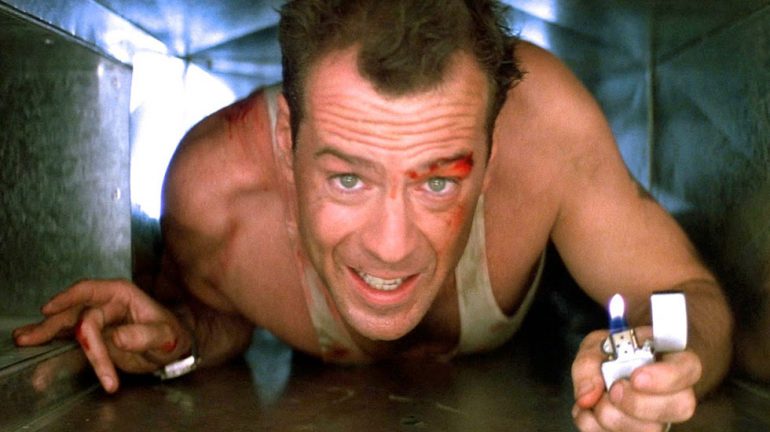
Probably the best example of this is the famous Die Hard from 1988. Bruce Willis’ John McClane’s tactical genius is constantly overshadowed by his physical punishment. He’s a barefooted team of one whose main advantage against Alan Rickman’s Hans Gruber is psychological harassment and nothing else.
However, this dynamic reaches chilling heights in Bryan Singer’s The Usual Suspects from 1995. The whole narrative centers on an interrogation room bluff. Kevin Spacey’s character presents himself as a cripple who’s terrified of the mythical Keyser Söze. He plays into Chazz Palminteri’s Agent Kujan’s intellectual arrogance, feeding his ego until he makes the conclusions Verbal Kint wants him to make.
Bottom Line
Audiences keep returning to such masterful action cinema not only to watch amazing fight scenes. Yes, you want to see John McClane shoot yet another terrorist with a foreign accent. But more than that, you want to see human intellect, not just mere strength and fighting prowess, triumph over impossible odds. That’s what makes it truly compelling.
Firepower destroys a target, but strategic manipulation fully dismantles the threat and turns the movie into pure gold. That is where action cinema transcends spectacle, the battlefield becomes the mind, and the smartest player is the one who survives.