



Why Scott Adkins Directing Brawler Matters More Than Another Sequel
Scott Adkins has thrown more screen kicks than almost anyone alive. Undisputed. Ip Man 4. The Accountant 2, if you count the fight he nearly stole from Affleck. But this month he did something he has never done before. He stepped behind the camera.
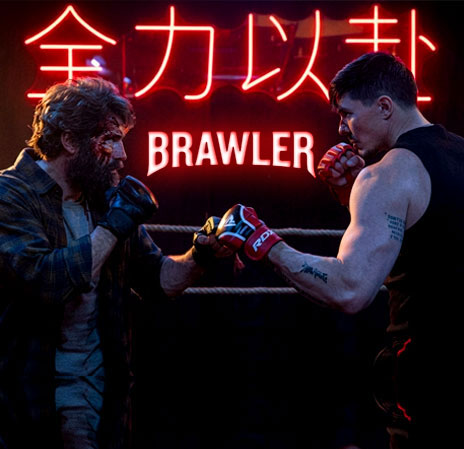
Deadline confirmed in May that Adkins is making his directorial debut on Brawler, an MMA-underworld thriller costarring Lewis Tan. He is not just directing. He is starring too, which means he has to trust his own choreography from both sides of the lens for the first time in a career built on trusting other people’s.
That is not a small thing. Actors who fight for a living rarely get handed the chair. And when they do, it usually says more about the industry than about one movie.
The Real Risk Isn’t the Movie, It’s the Career Bet
Here’s the thing nobody says out loud in trade coverage. A sequel is safe. A known IP with a built-in audience barely counts as a swing. Directing your own original film, especially one you’re also headlining, is the opposite. There’s no franchise cushion if it flops. No built-in fanbase forgiving a rough cut.
Adkins is 49. He has spent two decades being the best kicker in the room, rarely the smartest voice in it, at least on paper. Brawler changes that math entirely. If it lands, he joins a short list of action performers who successfully made the jump to filmmaker. If it doesn’t, critics will say he should have stuck to his lane.
That tension, between the fighter who trusts their body and the fighter who has to trust their judgment, mirrors something combat sports fans already understand instinctively: the gap between skill and stakes only closes once real risk enters the picture.
MMA-underworld stories work because they dramatize a truth real fight fans already live with. A fighter’s record means nothing until the bell rings and money is actually on the line. That’s the appeal of MMA-adjacent fiction, and it’s also why so many fans who follow real fight cards obsessively also follow the business side, including how fast their winnings actually land in their account after a result goes their way. Anyone who has waited three business days for a withdrawal to clear on a slow platform knows the frustration doesn’t stop when the final bell does. If speed matters to you as much as the fight itself, the ranked options on this rundown of fast-payout platforms are worth exploring, you can check it out here for how the faster operators actually compare on clearance times.
Gambling carries real risk. Only wager what you can afford to lose, and treat any platform, fast or slow, the same way you’d treat a fighter’s promotional record: verify it before you trust it.
Why Stunt Performers Rarely Get the Chair
There’s a quiet bias in how Hollywood assigns trust. Writers get to direct. Producers get to direct. Actors who came up through drama school get to direct almost as a formality once they hit a certain level of fame. Stunt performers and martial artists, historically, do not get that same courtesy.
Chad Stahelski and David Leitch broke that pattern with John Wick, and it took them years of pushing before financiers took the leap seriously. The Hollywood Reporter’s oral history of the franchise’s tenth anniversary documents just how hard that fight was, with financing hurdles that had nothing to do with talent and everything to do with perception. Leitch has said in multiple interviews since that stunt-trained directors bring something specific to the table: an instinct for geography and consequence that traditionally trained directors often fake their way through.
Adkins doesn’t have Stahelski’s decade of second-unit credits. What he does have is thirty years of understanding exactly how a fight should feel from the inside, not just how it should look from a monitor. That’s a different skill set, and Brawler is the first real test of whether it translates.
What Actually Changes When the Fighter Holds the Camera
Most fight scenes in mainstream action films get cut for confusion. Quick edits hide the fact that the lead actor can’t actually throw the moves being credited to them. Adkins has never had that problem as a performer. The open question is whether he can direct a scene he’s not physically inside of, and whether he trusts another performer’s timing the way he trusts his own.
Three things will tell you whether Brawler works:
- Does the camera hold on wide shots long enough to prove the fights are real, the way Adkins’ own performances always have.
- Does Lewis Tan get room to lead scenes, or does the film quietly orbit around Adkins even in moments he’s not fighting.
- Does the underworld plot earn its stakes, or does it lean on the fight choreography to paper over a thin script.
None of those questions have answers yet. Brawler hasn’t landed a release date as of this writing, which is normal for a project barely four months out from its Deadline announcement.
A Wider Shift, Not a One-Off
Adkins isn’t operating in isolation here. Alan Ritchson stars in and increasingly shapes the direction of Reacher. Dolph Lundgren, who reunites with Adkins later this year in One Last Shot, has spent the back half of his career pushing into producing and directing his own projects rather than waiting to be cast. Far Out Magazine’s recent piece on stunt performers moving into the director’s chair frames this as an industry-wide correction, not an isolated vanity project trend. Studios are slowly realizing that people who’ve spent decades getting hit for a living understand consequence in a way film school doesn’t always teach.
Whether Brawler becomes the film that cements Adkins as a genuine filmmaking talent or just an interesting footnote in his filmography, the attempt itself matters. It’s a data point in a longer argument about who Hollywood trusts to tell action stories, and for once the answer might be the people who’ve been living inside the stunts the whole time.
If you’re tracking how the stunt community keeps reshaping what counts as credible action filmmaking, Hollywood Suppressors Are a Lie breaks down another corner of that same authenticity debate, this time around gunplay instead of fists.
FAQ
When does Brawler come out? No release date has been confirmed as of September 2026. Deadline’s original report placed the announcement in May, with production details still emerging. Expect festival or trade coverage before a wide release window firms up.
Has Scott Adkins directed before? No. Brawler is his first credited directorial feature. He’s built his career as a performer and fight choreographer across dozens of films, but this marks his first time running a production from behind the camera as well as in front of it.
Who else is in Brawler besides Adkins? Lewis Tan costars alongside Adkins. Tan is known for his work in Mortal Kombat and Wu Assassins, and the pairing gives the film two credible screen fighters rather than one lead carrying the choreography alone.
Why do so few stunt performers become directors? Historically, financiers have trusted writers and traditionally trained directors over stunt professionals, regardless of experience. That’s shifted somewhat since Stahelski and Leitch proved the model with John Wick, but it remains an uphill climb for most action performers.
Is Brawler connected to any existing franchise? No. It’s an original MMA-underworld story, which raises the stakes compared to a sequel since there’s no built-in audience or IP recognition to fall back on if the film underperforms.
Adkins has spent three decades proving he can take a hit and sell it. Brawler is the first time he’s betting that he can also call the shot before it lands. That’s a bigger swing than another Undisputed sequel would have been, and genre fans should be paying closer attention to how it lands than the trailer cycle usually earns.
By Marcus T. | Action genre journalist, 11 years covering stunt work and DTV cinema. Tested September 2026.