



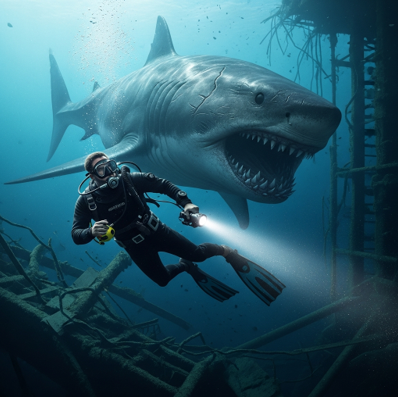
There’s something about the water that puts us all on edge, isn’t there? I’ve always reckoned it’s the lack of control. On land, we can run, hide, or at least see what’s coming. But once you’re submerged in the deep blue, the rules change entirely. You’re in a world that wasn’t built for you; a place where you’re no longer at the top of the food chain. This primal fear is exactly why filmmakers keep returning to the ocean. From the terrifying simplicity of a shark fin breaking the surface to the high-tech chaos of an underwater research station, the “Big Catch” trope has evolved into its own powerhouse genre.
We aren’t just talking about fishing trips anymore. Modern action cinema has transformed the aquatic hunt into a high-stakes mission where the “catch” is often the difference between life and death. Whether it’s a prehistoric monster or a rogue submarine, the tension is the same. It’s that breathless wait for the strike, that moment where you realise you’ve hooked something much bigger than you can handle.
The Deep Blue Gauntlet: The Ocean as a Relentless Antagonist
If you look back at the history of aquatic thrillers, two films stand out as the benchmarks for this high-octane survival style: Deep Blue Sea and The Meg. These aren’t your typical slow-burn horror movies; they’re survival gauntlets. They take the vast, open ocean and somehow make it feel claustrophobic.
In Deep Blue Sea (1999)), the threat isn’t just nature; it’s nature improved by human arrogance. Genetically engineered sharks that can think and plan? That’s a nightmare scenario if ever I saw one. The brilliance of that film lies in how it uses the setting. You’re trapped in a sinking facility, surrounded by water that wants to get in and predators that want to get you out. It’s relentless. The ocean isn’t just a backdrop; it’s an active participant in the destruction.
Then you have The Meg. This movie takes the concept of the “Big Catch” and scales it up to ridiculous proportions. It taps into that collective “what if” we all feel when we look at the deep ocean. What if something survived down there? The Megalodon is the ultimate antagonist because it’s a force of nature that cannot be reasoned with. It turns the entire coastline into a buffet, and the protagonists are forced to play a high-stakes game of cat and mouse where the “cat” is seventy feet long. These films work because they understand the basic rhythm of an aquatic mission: the quiet, the ripple, and the sudden, explosive strike.
Archetypes of the Abyss: The Fisherman vs. The Gambler
When we look at the characters who populate these stories, we usually see two distinct archetypes. On one hand, you have the “Quiet Fisherman.” Think of Quint from Jaws. He’s a man of patience, grit, and hard-earned knowledge. He knows the sea, he respects the beast, and he’s willing to wait for the perfect moment. His approach is methodical. For him, the big catch is a job, even if it’s a personal one.
On the other side of the coin, you have the “High-Stakes Gambler.” This is a newer breed of action hero, exemplified by characters like Arthur Bishop in The Mechanic or even Jason Statham’s Jonas Taylor in The Meg. These characters don’t just wait for the fish to bite; they jump into the water with a grenade. They take calculated risks that would make a sane person’s blood run cold. They aren’t looking for a quiet afternoon on the boat; they’re looking for the big haul, and they’re willing to put everything on the line to get it.
I find this contrast fascinating. The fisherman represents the old-school respect for the elements, while the gambler represents the modern action ethos: speed, risk, and high reward. Many of us can relate to that feeling of being “all-in.” Whether you’re watching a character dive into a shark-infested cove or seeing a heist crew plan their final job, the tension is identical. It’s that “make or break” moment that keeps us glued to our seats.
Top 5 “Big Catch” Missions: Life or Death on the Water
Some scenes just stay with you, don’t they? Those moments where the hunt turns into a desperate struggle for survival. Here are my top five “Big Catch” missions that defined the genre:
- The Barrel Sequence (Jaws): It’s a masterclass in tension. The yellow barrels popping up and being dragged under the water tell you everything you need to know about the shark’s power without even seeing it. It’s the ultimate “hook.”
- The Kitchen Chase (Deep Blue Sea): A perfect example of the environment being the enemy. LL Cool J trying to outrun a shark in a flooded kitchen is both absurd and terrifying. It’s high-stakes survival at its most frantic.
- The Glider Chase (The Meg): When Jonas Taylor has to lure the Megalodon into a specific spot using a tiny underwater glider, the scale of the risk is palpable. One wrong move and he’s literally bite-sized.
- The Final Buoy (The Shallows): This film is a bit more intimate, but the mission is just as intense. Blake Lively trapped on a buoy with a Great White circling is the purest distillation of the “Big Catch” trope. It’s just human vs. nature in a very small space.
- The Submarine Breach (The Hunt for Red October): While it’s not about a literal fish, the “catch” here is a massive nuclear sub. The tension of the underwater “hunt” between two masters of their craft is as high-stakes as it gets.
The Gamification of Risk: From Heists to Harpoons
It’s interesting to see how the tension we feel in these movies has started to bleed into other forms of entertainment. We see it in casino heist movies all the time; the meticulous planning, the “one shot” at success, and the moment where everything could go sideways. This “all-in” mentality is a core part of what makes modern action cinema so addictive.
The way a shark circles its prey in a film is almost identical to the way a director builds tension in a high-stakes poker scene. You’re looking for a sign, a “tell,” or a moment of weakness. Modern entertainment has really leaned into this gamification of risk. We don’t just want to watch someone win; we want to feel the weight of the potential loss. The cinematic anticipation of a shark strike, that breath-holding silence before the water explodes, is remarkably similar to the mechanical “hook” of a game. You’re waiting for that specific alignment of events that leads to the big payoff.
We’ve seen this cross-genre influence everywhere. The rhythm of a thriller is now designed to mimic the “hit” of a win. It’s about the build-up, the near-misses, and finally, the big haul. This connection is why people who love action movies often enjoy other forms of high-tension entertainment. It’s all about the thrill of the hunt.
Reeling in the Rewards: Bridging the Gap
At the end of the day, whether we’re watching a blockbuster on the big screen or engaging with an interactive experience at home, we’re all looking for that same feeling of the “Big Catch.” We want to be the one who reels it in. We want to see the plan come together and the risk pay off.
The tension of a cinematic “Big Haul” is mirrored perfectly in interactive experiences like Monopoly Casino, where games like Fishin’ Frenzy allow fans to step into the role of the fisherman themselves. It bridges that gap between being a spectator and being the one holding the rod. You get to experience that same “hook” and the anticipation of what might be coming up from the depths.
For fans who enjoy the intersection of classic cinematic tropes and interactive, risk-based entertainment, Monopoly Casino has become a bit of a go-to destination. It’s a place where the themes of the “Big Catch” aren’t just something you watch, but something you participate in.
The ocean will always be a source of mystery and danger for us. As long as there are depths we haven’t explored and “big catches” left to find, the action cinema world will keep diving back in. And honestly? I wouldn’t have it any other way. There’s nothing quite like the feeling of being out on the water, even if it’s just from the safety of your sofa, waiting for that next big strike.
***
Please gamble responsibly. For more information and support, please visit BeGambleAware. 18+ only.