


Action cinema has always needed great villains to function properly, and the best ones do far more than simply oppose the hero. A truly memorable antagonist gives the audience someone to fear, someone to study, and occasionally someone to quietly admire against their better judgment. Without that kind of performance anchoring the conflict, even the most technically accomplished action film tends to fall flat.
The hero gets the poster, the trailer, and the closing shot. But it is the villain who sets the tone, establishes the threat, and determines how seriously the audience takes the entire film. The performances that follow change how viewers understand what an action movie antagonist can actually be.
Alan Rickman in Die Hard — The Standard That Started Everything
Hans Gruber remains the benchmark against which nearly every action villain since 1988 has been measured. Alan Rickman brought extraordinary theatrical precision to a role that could easily have been a one-note heavy and instead delivered a character who was intelligent, charming, and genuinely menacing all at once. His calm, unhurried delivery made every threat feel credible, and his visible contempt for the people around him felt lived-in rather than performed.
What made Gruber so effective was the sense that he was smarter than almost everyone in the building and was fully aware of it. Rickman played that superiority without letting it tip into camp. His performance was grounded even during the film’s most outlandish moments. It remains one of the most complete villain portrayals in the history of mainstream American cinema.
The Cold and Calculating Type
Dennis Hopper in Speed
Howard Payne is not a subtle creation, and Dennis Hopper never pretended otherwise. He leaned into the role’s theatricality with obvious enjoyment and delivered a villain who was manic, clever, and deeply resentful of being underestimated by the systems and institutions around him. Hopper understood that Speed needed a villain who could hold the screen against the film’s forward momentum, and he calibrated his performance to match that energy.
Javier Bardem in Skyfall
Silva, the villain Javier Bardem plays in Skyfall, is widely regarded as one of the strongest antagonists in the entire James Bond franchise. Bardem brought a theatrical quality to the role without ever letting it tip into parody, as he grounded the character in genuine psychological damage while still making him deeply compelling to watch. His introductory scene, delivered in a single unbroken take as he walks toward the camera across a vast space, is one of the most confident villain entrances in modern action cinema.
The character works because Bardem plays him as a man who genuinely believes he is right and because his grievances against M carry a certain logic that is difficult to dismiss. Silva became such a recognizable figure in culture that even viewers who are more likely to browse NFL betting odds that can be found here tend to remember him. That kind of crossover recognition is rare for a Bond villain, and it speaks entirely to the quality of what Bardem put on screen.
Villains Who Stole the Film Entirely
Heath Ledger in The Dark Knight
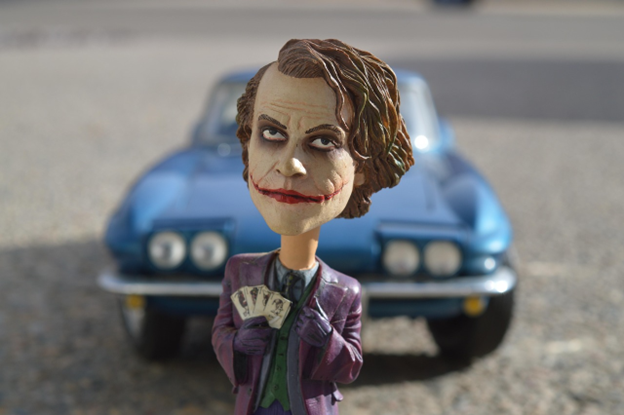
Few villain performances in the history of the genre have generated as much sustained discussion as Heath Ledger’s portrayal of the Joker in Christopher Nolan’s 2008 film. He won a posthumous Academy Award for Best Supporting Actor for the role, and the recognition was near-universal. The character he created was unpredictable, philosophically coherent, and genuinely frightening.
Ledger reportedly kept an extensive character journal throughout the preparation. He developed the Joker’s voice, physicality, and psychology from the ground up rather than leaning on previous interpretations. The result was a performance that felt improvised and dangerous, even when it was precisely controlled.
Gary Oldman in Air Force One
Gary Oldman has played more memorable screen villains than almost any other actor of his generation, and his performance as Egor Korshunov in Air Force One stands among his finest work in the genre. He brought genuine political conviction to a role that the screenplay could easily have reduced to a flat terrorist.
Oldman gave Korshunov a worldview and a set of grievances that made him feel like a fully realized person. The menace he generated came not from physical size but from intensity and absolute unpredictability — qualities that are far harder to manufacture convincingly on screen.
What Separates a Great Villain From a Forgettable One
The performances that endure share a few qualities worth identifying. Each of these actors brought genuine specificity to their characters rather than relying on genre shorthand, made choices that felt personal rather than mechanical, and treated the material seriously even when the films themselves were operating in a more heightened register. That level of craft is what separates a performance people carry with them from one that fades the moment the credits roll.