



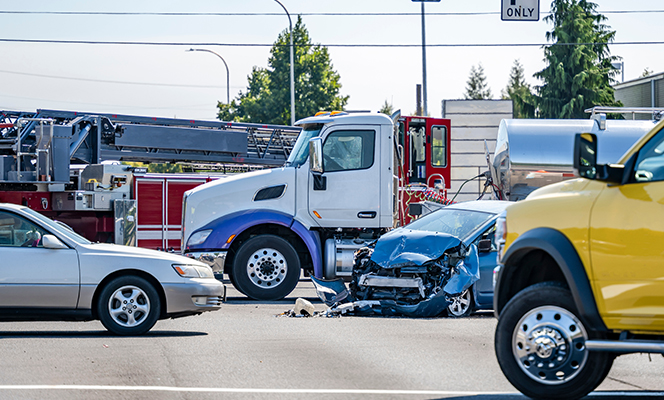
On a soundstage, the 18-wheeler tips, the stunt coordinator calls it, and a medic walks the driver back to video village. Ten years ago, the real version wasn’t that far off in spirit. A patrolman took statements, a paper logbook got copied, an insurance adjuster called the next week, and the case moved at the speed of the mail. That world is gone.
The rig you tangle with today is a rolling computer. It clocks your collision to the tenth of a second, uploads it to a carrier with a rapid-response team on call, and starts overwriting the good parts of the record before you’re out of the ER. What used to be a slow paperwork fight is now a race against a data retention clock. That changes what you have to decide, and how fast.
Decide Whether This Looks Like a Movie Wreck or a Federal Investigation
On screen, a semi crash is a set piece. In real life, it’s a regulated event with federal fingerprints on it. Commercial trucks operate under FMCSA rules, which means the driver’s hours, the engine’s behavior, and the carrier’s schedule are all provable, not narrated.
Treating it like a fender bender is the mistake. The other side isn’t. Their investigator is often on scene before the tow truck is.
Decide How Fast to Move on the Data Before It Overwrites Itself
The single biggest change from a decade ago is the retention window. ELD records are required to be kept for only about six months, and some engine and telematics feeds cycle off much sooner than that. Without a formal preservation demand, the most useful evidence in your case can age out while you’re still in physical therapy.
That’s why timing matters more than paperwork. Waiting isn’t neutral. It’s a choice with a countdown attached.
Decide What You Say While the Cameras Are Still Rolling
Modern rigs run dash cams, cab cams, and telematics that flag hard braking and lane departures. Anything you say at the scene, on a recorded insurer call, or in a text to a friend can end up sitting next to that footage. The old advice was to be polite and vague. The new advice is more specific.
Decide Who You’re Actually Up Against
In the movie, it’s you versus the trucker. In court, it’s rarely that clean. The driver is one defendant. The motor carrier is another.
Then there’s the broker who arranged the load, the maintenance contractor, the shipper who packed the trailer, and sometimes a parts manufacturer.
Deciding who to name isn’t a formality. It’s the difference between chasing one insurance policy and reaching the layers of coverage a catastrophic injury actually needs.
Decide How Much to Trust What You Read Online
After a bad crash, people search. A lot. And the internet is full of pages built to rank first, not to help first. Google itself has spent years pushing back on that, publishing guidance on how to tell content written for a real audience from content written for an algorithm.
The practical version: if a page answers the question you actually asked, in plain language, with named authors and a real address behind it, that’s usually a decent sign. If it reads like it was reverse-engineered from a keyword, close the tab. Your case deserves better sourcing than that.
Decide When a Lawyer Belongs in the Conversation
The old instinct was to wait, see how the insurer behaves, and lawyer up only if things got ugly. The problem is that most of the evidence that decides a truck case is already gone by the time things get ugly.
In Pennsylvania, that usually means calling a truck accident attorney in Harrisburg early enough that the preservation letter goes out before the ELD data cycles.
You don’t hire a lawyer because you’re planning to sue. You hire one because a carrier’s investigator is already working, and somebody needs to be working on your side of the ledger.
Where the Credits Don’t Roll
The stunt driver gets up, dusts off, and grabs a coffee. You don’t. The choices you make in the first days after a real truck crash decide what your file looks like a year from now, and whether the record still exists to tell your version of the story. Make them like the clock is running, because it is.