



There is a reason screenwriters keep going back to the casino. It is a building designed from the ground up to take money off people and then keep it, which means the moment you decide to walk in and take it back you have a plot. You have a vault. You have cameras. You have a room full of men in dinner jackets who will be very unhappy in about ninety minutes.
The casino job is basically its own sub-genre at this point, and it has been going on far longer than most people realise. The BFI’s excellent 10 great heist films rundown makes the point that the heist picture is one of the oldest reliable engines in crime cinema, and the casino version is the flashiest branch of the family tree. So here are ten of them, counted down, from the daft to the definitive.
-
Money Plane (2020)
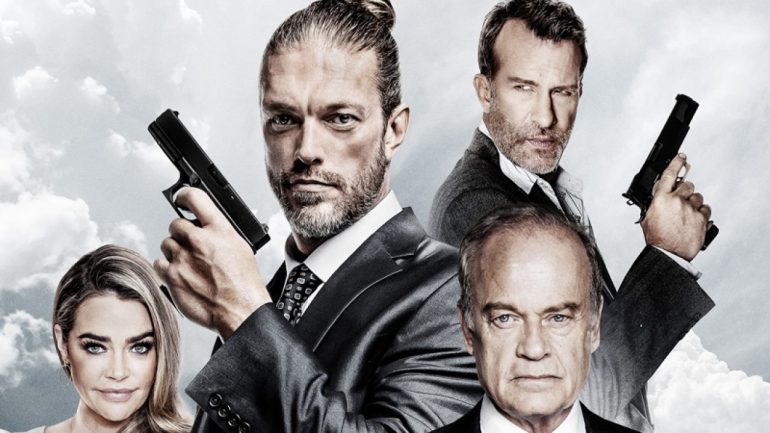
We are starting at the bottom on purpose, because this one has to be seen to be understood. Money Plane is about a casino on a plane. Not a plane going to a casino. A casino, in the air, full of the world’s worst criminals betting on things you should not be able to bet on. Adam Copeland, better known to a lot of you as Edge, plays a thief who owes forty million to Kelsey Grammer, and Kelsey Grammer is having the time of his life. Eighty two minutes long, went straight to streaming in July 2020, and it developed a proper cult following almost immediately. The Ringer even ran a full oral history of the thing, which tells you everything. It is not a good film. It is a tremendous one.
-
5 Against the House (1955)
Phil Karlson made hard, mean little pictures and this is one of them, adapted from a Jack Finney novel. Four college lads visit Harold’s Club in Reno, overhear somebody boasting that the place cannot be robbed, and one of them decides to prove otherwise, mostly for the sport of it because he does not even need the money. Guy Madison, Kim Novak, Brian Keith and William Conrad. Keith is the one to watch, a veteran coming apart at the seams, and the film gets genuinely nasty in the last twenty minutes. Early example of the whole form, and still tighter than a lot of what followed it.
-
From Vegas to Macau (2014)
Wong Jing put Chow Yun-fat back at a card table and the region lost its mind. Released for Chinese New Year in 2014, it took around ninety six million dollars internationally, spawned two sequels, and it is exactly the kind of film that gets sniffed at by serious critics and adored by everybody who actually likes movies. Chow plays a legendary gambler pulled into taking down a money laundering operation, Nicholas Tse and Chapman To do the running around, and the whole thing is a card game, a shootout and a comedy routine happening in the same shot. If your only reference for gambling cinema is American, this is the correction.
-
3000 Miles to Graceland (2001)
Five men rob the Riviera in Las Vegas during International Elvis Week, dressed as Elvis impersonators, on the reasonable logic that the building is already full of hundreds of them. Three point two million dollars. Then Kevin Costner starts shooting his own crew and the film turns into a chase across the western states. Demian Lichtenstein directed, Kurt Russell and Courteney Cox are in it, and critics absolutely buried it at the time. It has aged into something better than its reputation, mostly because Costner playing a total psychopath is a thing we did not get nearly enough of. The heist itself is only twenty minutes and it is the best twenty minutes in the picture.
-
Croupier (1998)
We have written about this one before at length so I will keep it short, but any list like this that leaves it off is being dishonest. Mike Hodges’ film is the only entry here told from behind the table rather than in front of it, and the robbery, when it finally comes, is small, grubby and goes wrong in the least glamorous way possible. Clive Owen barely moves his face for ninety minutes. It is the anti-Ocean’s, and it is weirdly the most convincing casino in this entire list.
-
Seven Thieves (1960)
Henry Hathaway directed Edward G. Robinson and Rod Steiger, robbing the casino at Monte Carlo of four million dollars. Robinson is a disgraced professor, Steiger is his protege fresh out of prison, Joan Collins is doing the distracting and Eli Wallach is along for the ride. A hundred and two minutes, shot in CinemaScope, adapted from a Max Catto novel with the fantastic title The Lions at the Kill. What makes it work is that the plan is genuinely clever and the film respects you enough to let you follow it. Hathaway had made True Grit and Kiss of Death, so the man knew how to point a camera at a room full of liars.
-
Ocean’s Thirteen (2007)
The interesting one, because technically nobody robs a vault. Al Pacino’s Willy Bank shafts Reuben out of his stake in a new Strip property, Reuben has a heart attack, and Danny’s crew decide the punishment is not theft but humiliation. So they rig the games. Every game. They break the house edge on opening night and let the punters take the building apart from the inside, then go after the Five Diamond Award for good measure. It is a heist film where the target is a man’s reputation, which is a genuinely clever swerve for a third instalment, and Pacino is doing that thing where he is bored and menacing at the same time. Three hundred and twelve million worldwide.
-
Ocean’s 11 (1960)
Lewis Milestone. Frank Sinatra, Dean Martin, Sammy Davis Jr, Peter Lawford and Joey Bishop. Eleven veterans of the 82nd Airborne rob five Las Vegas casinos, the Sahara, the Riviera, the Desert Inn, the Sands and the Flamingo, simultaneously at midnight on New Year’s Eve, using a city wide power cut as cover. Sammy Davis Jr drives a bin lorry. They planned it like a military operation because they are soldiers, and that is the bit the film takes seriously even when it is not taking anything else seriously.
And then the ending happens, which I will not spoil for anyone who has not seen it, except to say it is one of the great cosmic jokes in crime cinema and it definitely would not get made today.
-
Bob le Flambeur (1956)
Jean-Pierre Melville, and the granddaddy of nearly everything above it on this list. Roger Duchesne is Bob, an ageing gambler on a rotten streak, and his last desperate idea is to rob the casino at Deauville during Grand Prix weekend when the vaults are stuffed. Melville shot Paris at dawn like nobody had before, and the French New Wave took notes.
The ending is perfect and I am going to spoil it, sorry. Bob sits down at the tables while he is waiting for the job to start, and he starts winning. And winning. He is so deep into the hot streak that the heist collapses around him and he does not notice until it is too late, and by then the casino staff are carrying out his winnings by the armful. Handcuffed in the back of a police car, he reckons he can afford a very good lawyer now, and maybe he will sue. The gambler gets everything he wants from the wrong direction entirely.
-
Ocean’s Eleven (2001)
It had to be. Soderbergh took the Rat Pack film, threw out the plot, kept the swagger, and made the most rewatchable crime picture of its decade. A hundred and sixty million dollars sitting under the Bellagio, three casinos sharing one vault, Andy Garcia being immaculately horrible, Clooney and Pitt doing the entire film in a register of amused calm. Every single crew member gets a job, a personality and a good line.
What it achieved, and this is the hard part, is a heist you can follow beat by beat while still being surprised. Most modern heist films cheat by hiding information from you. This one shows you almost everything and still lands the turn. Twenty five years old and nothing has bettered it.
Honourable mentions
Snake Eyes for the Atlantic City fight night, Casino for the counting room sequence which is the most educational ten minutes ever filmed about how a floor really loses money, The Killing for the racetrack rather than the casino, and Rounders for the card game, though nobody steals anything in it. Bandits deserve a nod too. Ocean’s Twelve does not, and we can all agree on that.
Where the vault went
The odd thing about revisiting all of these is how they look now. The cash room, the trolleys, the man with the clipboard, the physical stack of notes going into a physical box in a physical basement. That world still exists but it is a much smaller part of the business than it was when Melville was filming it, on account of most gambling having quietly relocated into a pocket. The mobile casino did to the casino floor roughly what streaming did to the video shop, and it happened in about the same amount of time.
That is not a small change either. Somewhere like Swift Casino runs its whole mobile casino straight through a phone browser, over a thousand games, no download, no dress code, no man on the door, and no vault for anybody to crack. Swift Casino is UKGC licensed and there is a whole live dealer section where a real person turns the cards over on a stream, which is the closest the modern version gets to the rooms these films were shot in. It is a much duller target for a screenwriter, obviously. You cannot really stage a set piece around a mobile casino, because there is nothing to blow up and nowhere to abseil from. Nobody wants to watch Clooney phishing a login. But it does mean the casino heist movie is slowly becoming a historical genre, like the western, and there is something quite nice about that.
If you do fancy a go yourself after a night of these, set your limit before you start rather than after, which is advice roughly every film on this list is quietly giving you anyway.